Buy used Master of Business Administration (MBA) books online in India
Buy Second Hand Books, Used Books Online In India
Indian Financial System
The Indian Financial System: Markets, Institutions and Services, 5/e is a comprehensive text that encompasses new developments in the financial system and discusses various components such as financial markets and institutions, instruments, agencies and regulations in an analytical and critical manner. The book is divided into four sections, each constituting the various topics under the umbrella of financial systems. It details the relationship between financial system and economic growth, historical perspective of the Indian financial system, objectives of financial sector reforms, elements of financial markets, new financial instruments such as floating rate bonds, zero coupon bonds, securitized paper, etc., management of non-performing assets by banks, factoring and forfaiting, housing finance and leasing and hire purchase to name a few.
Principles of Economics
PRINCIPLES OF ECONOMICS Sixth Edition became a best seller after its introduction and continues to be the most popular and widely used text in the economics classroom. Instructors found it the perfect complement to their teaching. A text by a superb writer and economist that stressed the most important concepts without overwhelming students with an excess of detail was a formula that was quickly imitated but has yet to be matched. The sixth edition features a strong revision of content in all thirty-six chapters. Dozens of new applications emphasize the real-world relevance of economics for today rsquo s students through interesting news articles realistic case studies and engaging problems. The premier ancillary package is the most extensive in the industry using a team of instructors preparers that have been with the project since the first edition. About the AuthorN. Gregory Mankiw N. Gregory Mankiw is Professor of Economics at Harvard University. He has taught macroeconomics microeconomics statistics and principles of economics. Professor Mankiw is a prolific writer and a regular participant in academic and policy debates. His research includes work on price adjustment consumer behavior financial markets monetary and fiscal policy and economic growth. His published articles have appeared in academic journals such as the AMERICAN ECONOMIC REVIEW JOURNAL OF POLITICAL ECONOMY and QUARTERLY JOURNAL OF ECONOMICS and in more widely accessible forums including THE NEW YORK TIMES THE WASHINGTON POST THE WALL STREET JOURNAL and FORTUNE. In addition to his teaching research and writing Professor Mankiw has been a research associate of the National Bureau of Economic Research an adviser to the Federal Reserve Bank of Boston and the Congressional Budget Office and a member of the ETS test development committee for the advanced placement exam in economics. From 2003 to 2005 he served as chairman of the President 39 s Council of E
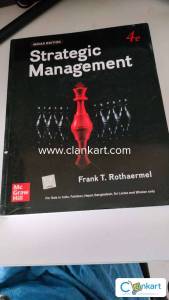
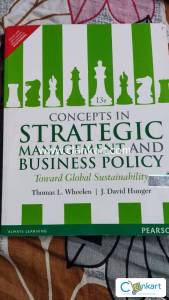
strategic management
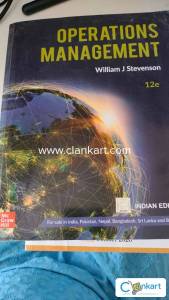
The thoroughly revised and updated book, now in its second edition, continues to present a comprehensive view of the concepts and applications of various quantitative models used in the study of operations and supply chain management. It provides a complete account of location and layout models, production planning models, production control models, cycle inventory models, safety stock models and transportation models. A separate chapter on real-life situations provides the user with the knowledge of specific areas where the models have been applied in decision-making processes. The various techniques to solve operations and supply chain management problems are also discussed. The text is supported by a large number of illustrative examples, exercises and review questions to reinforce the students’ understanding of the subject matter. Designed as a textbook for the students of mechanical and industrial engineering, the book would also be useful to postgraduate students of management. NEW TO THE SECOND EDITION • Two new chapters on ‘Production Control—Additional Approaches’ (Chapter 6) and ‘Materials Planning and Lot Sizing’ (Chapter 8) • Forecasting and Aggregate Planning are described in two separate chapters • Each chapter includes new sections, additional examples, illustrations, short questions and exercises • Provides solutions to the exercises
HRD Audit by TV Rao
HRD Audit provides a framework and methodology that enables corporations to conduct an internal audit of their human resource function. T V Rao presents a unique HRD (human resources development) score card approach that organizations can use to assess and benchmark their level of HRD and its alignment with business goals.This accessible book is illustrated throughout with examples, illustrations, cases, detailed questionnaires and checklists.
Managerial economics
A comprehensive and student-friendly book that strives to equip young, practising and budding managers to find solutions to the real-world problems through the efficient and effective use of economic tools and techniques. The authors offer a clear and straightforward analysis of the various topics in managerial economics.
Total quantity management
This comprehensive, student friendly book is intended as a tool to achieve quality in organizations. Completing a course based on topics covered in this book will make one confident enough to implement quality management principles in a given situation. A holistic approach, practical relevance, effective learning and a compendium of A to Z of TQM distinguish this well-written text. Inclusion of the findings of research carried out by the authors in industries and educational institutions add flavour to the book. Various examples are drawn from institutional experience, which make the understanding of the concepts easy. The special feature of this book is that every chapter has a case study, in addition to a host of short questions and summary type questions. The questions for group discussion, practical exercises and net based exercises given at the end of every chapter are unique. Intended primarily as a textbook for engineering and management students, this book would also be useful for the in-house training of engineers and managers of various industries and organizations on TQM. The book may be effectively used as a resource material for quality professionals and consultants.
Production and operations by upendra kachru
This book takes a pedagogical approach that is participative and interactive, involving the case study method of learning. Chapters start with an Indian case study of a well known company. This is used as a capstone case for the chapter. The student will find this an easy learning experience as data and additional information for these enterprises is readily available. The selection of such cases makes classroom learning truly suited to the Indian business environment.The value driven approach to Operations Management is used in structuring the text into three modules. The first module discusses the infrastructure function of Operations Management. Infrastructure function is considered to be product, process, capacity and location. Module Two describes the structure of the operations function. This includes quality and other product transformation processes. Module Three focuses on the organization, people and processes i.e. the job, the work, and the workplace. In addition, most of the mathematical techniques have been separated into supplements attached to the relevant chapters. Software solutions for the techniques have been explained in the text. Every mathematical technique is exemplified with a number of solved problems. Unlike many Production and Operations Management texts, this book covers E-commerce, Industrial Safety, Maintenance, Environmental Management (Green Productivity) and new technological trends in the discipline. These sections should add to the significance of exploring how firms can gain competitive advantage and promote sustainable development at the same time. The last section of the book comprises of a selection of cases from The Indian Institute of Management at Ahmedabad. The cases encompass the entire spectrum of Indian Industry the private and the public sectors, professional and family managed business organizations, service and manufacturing industries, single industry and conglomerates. The cases relate to Operations Strategy, Supply Chain Management, Capacity Planning, New Produc
Research methodology by R paneerselvam
This comprehensive text designed for MBA, MCom, MA (Economics), MA (Sociology) and PhD (Management, Commerce, Economics, and Engineering) courses continues to give complete account of concepts and statistical tools of research methodology in its Second Edition. The textbook also serves as a reference for consultants to carryout projects/consultancies in industries or service organizations. DISTINGUISHING FEATURES OF THE BOOK • Written in an easy to read style • Each technique is illustrated with sufficient number of numerical examples • Gives complete account of statistics and aspects of research methodology • Chapter 8 gives complete account of testing of hypotheses • Design and analysis of experiments, advanced multivariate analysis, multidimensional scaling and conjoint analysis, algorithmic research, models for industries and public systems, simulation are unique to this text. • Graded chapter-end questions NEW TO THIS EDITION Introduction of a chapter on SPSS (Chapter 17), is new to this edition which gives readers an idea to obtain statistics for different techniques presented in this text. The different screenshots for different modules of SPSS applied to suitable example problems on sample session for data creation, reports, descriptive statistics, tables, compare means, general linear model, correlation, simple regression, nonparametric tests, classify, data reduction and graphs help readers to understand the features of SPSS. AUDIENCE • MBA • MCom • MA (Economics) • MA (Sociology) and • PhD (Management, Commerce, Economics, and Engineering)