Buy used History & Archaeology Books online in India
Buy Second Hand Books, Used Books Online In India
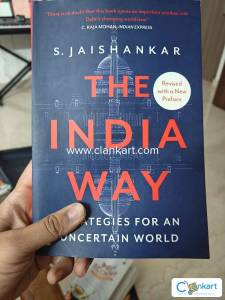
THE INDIA WAY BY S JAISHANKAR
The decade from the 2008 global financial crisis to the 2020 coronavirus pandemic has seen a real transformation of the world order. The very nature of international relations and its rules are changing before our eyes.For India, this means optimal relationships with all the major powers to best advance its goals. It also requires a bolder and non-reciprocal approach to its neighbourhood. A global footprint is now in the making that leverages India’s greater capability and relevance, as well as its unique diaspora. This era of global upheaval entails greater expectations from India, putting it on the path to becoming a leading power.In The India Way, S. Jaishankar, India’s Minister of External Affairs, analyses these challenges and spells out possible policy responses. He places this thinking in the context of history and tradition, appropriate for a civilizational power that seeks to reclaim its place on the world stage.
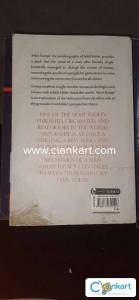
Hitler's Autobiography
Alternate cover edition of this book.Madman, tyrant, animal—history has given Adolf Hitler many names. In Mein Kampf (My Struggle), often called the Nazi bible, Hitler describes his life, frustrations, ideals, and dreams. Born to an impoverished couple in a small town in Austria, the young Adolf grew up with the fervent desire to become a painter. The death of his parents and outright rejection from art schools in Vienna forced him into underpaid work as a laborer. During the First World War, Hitler served in the infantry and was decorated for bravery. After the war, he became actively involved with socialist political groups and quickly rose to power, establishing himself as Chairman of the National Socialist German Worker's party. In 1924, Hitler led a coalition of nationalist groups in a bid to overthrow the Bavarian government in Munich. The infamous Munich "Beer-hall putsch" was unsuccessful, and Hitler was arrested. During the nine months he was in prison, an embittered and frustrated Hitler dictated a personal manifesto to his loyal follower Rudolph Hess. He vented his sentiments against communism and the Jewish people in this document, which was to become Mein Kampf, the controversial book that is seen as the blue-print for Hitler's political and military campaign. In Mein Kampf, Hitler describes his strategy for rebuilding Germany and conquering Europe. It is a glimpse into the mind of a man who destabilized world peace and pursued the genocide now known as the Holocaust.
42 NCERT Books Complete Set Class 6th to 12th Brand New UPSC IAS P
42 NCERT Books Complete Set (Class 6th to 12th)All books are BRAND NEW and completely UNUSED. Not even a single book has been used.Useful for UPSC, IAS, PCS, SSC and other government competitive exam preparation.Subjects include History, Geography, Political Science, Economics, Science and more.Selling as a complete set of 42 books.
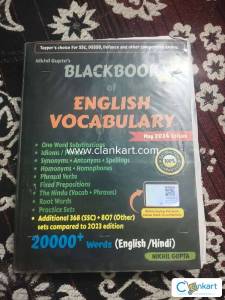
Vocabulary
DID THE GREAT FLOOD OF INDIAN LEGEND ACTUALLY HAPPEN? WHY DID THE BUDDHA WALK TO SARNATH TO GIVE HIS FIRST SERMON? HOW DID THE EUROPEANS MAP INDIA? The history of any country begins with its geography. With sparkling wit and intelligence, Sanjeev Sanyal sets off to explore India and look at how the country’s history was shaped by, among other things, its rivers, mountains and cities. Traversing remote mountain passes, visiting ancient archaeological sites, crossing rivers in shaky boats and immersing himself in old records and manuscripts, he considers questions about Indian history that we rarely ask: Why do Indians call their country Bharat? How did the British build the railways across the subcontinent? Why was the world’s highest mountain named after George Everest? Moving from the geological beginnings of the subcontinent to present-day Gurgaon, Land of the Seven Rivers is riveting, wry and full of surprises. It is the most entertaining history of India you will ever read.
Complete UPSC CSE Foundation & GS Book Bundle (22 Books
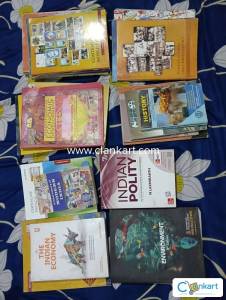
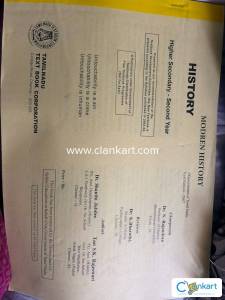
Selling a complete, well-curated set of 22 essential UPSC Civil Services (Prelims + Mains) preparation books in brand-new, crisp condition. None of the books have pen marks, highlighting, torn pages, or folded corners. Ideal for any aspirant starting their GS foundation from scratch.1. Standard Reference Books (6 Books): Indian Polity M. Laxmikanth (7th Edition) A Brief History of Modern India Rajiv Ahir / Spectrum (2024 Edition) The Indian Economy Sanjiv Verma (13th Edition) Certificate Physical and Human Geography Goh Cheng Leong (2nd Edition) Environment Shankar IAS Academy (11th Edition) Oxford Student Atlas for India (5th Edition)2. Essential NCERT Textbooks (15 Books): Polity: Indian Constitution at Work (Class 11), Political Theory (Class 11), Politics in India Since Independence (Class 12), Contemporary World Politics (Class 12) Geography: Fundamentals of Physical Geography (Class 11), India: Physical Environment (Class 11), Fundamentals of Human Geography (Class 12), India: People and Economy (Class 12) Economy: Understanding Economic Development (Class 10), Indian Economic Development (Class 11), Introductory Microeconomics (Class 12), Introductory Macroeconomics (Class 12) Sociology & Art: Indian Society (Class 12), Social Change and Development in India (Class 12), An Introduction to Indian Art / Fine Arts (Class 11)3. Tamil Nadu State Board History Book (1 Book): Class 12 History Textbook (TN Publication)Bundle Details: Condition: Unused / Like New (clean pages, tight binding) Suggested Price: 3,799 Total Weight: ~8.7 kg (packed securely in a double-walled box for safe transit; 10 kg shipping slab) Selling as a complete combo only. Serious buyers may message for photos of the book covers and spines.
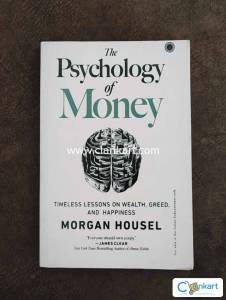
The Psychology of Money
Timeless lessons on wealth, greed, and happiness doing well with money isn’t necessarily about what you know. It’s about how you behave. And behavior is hard to teach, even to really smart people. How to manage money, invest it, and make business decisions are typically considered to involve a lot of mathematical calculations, where data and formulae tell us exactly what to do. But in the real world, people don’t make financial decisions on a spreadsheet. They make them at the dinner table, or in a meeting room, where personal history, your unique view of the world, ego, pride, marketing, and odd incentives are scrambled together. In the psychology of money, the author shares 19 short stories exploring the strange ways people think about money and teaches you how to make better sense of one of life’s most important matters.
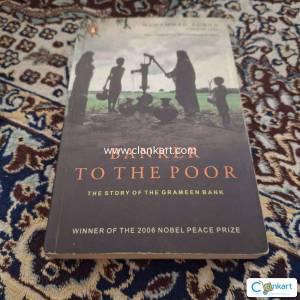
Banker To The Poor
Muhammad Yunus is that rare thing: a bona fide visionary. His dream is the total eradication of poverty from the world. In 1983, against the advice of banking and government officials, Yunus established Grameen, a bank devoted to providing the poorest of Bangladesh with minuscule loans. Grameen Bank, based on the belief that credit is a basic human right, not the privilege of a fortunate few, now provides over 2.5 billion dollars of micro-loans to more than two million families in rural Bangladesh. Ninety-four percent of Yunus's clients are women, and repayment rates are near 100 percent. Around the world, micro-lending programs inspired by Grameen are blossoming, with more than three hundred programs established in the United States alone. Banker to the Poor is Muhammad Yunus's memoir of how he decided to change his life in order to help the world's poor. In it he traces the intellectual and spiritual journey that led him to fundamentally rethink the economic relationship between rich and poor, and the challenges he and his colleagues faced in founding Grameen. He also provides wise, hopeful guidance for anyone who would like to join him in "putting homelessness and destitution in a museum so that one day our children will visit it and ask how we could have allowed such a terrible thing to go on for so long." The definitive history of micro-credit direct from the man that conceived of it, Banker to the Poor is necessary and inspirational reading for anyone interested in economics, public policy, philanthropy, social history, and business. Muhammad Yunus was born in Bangladesh and earned his Ph.D. in economics in the United States at Vanderbilt University, where he was deeply influenced by the civil rights movement. He still lives in Bangladesh, and travels widely around the world on behalf of Grameen Bank and the concept of micro-credit.
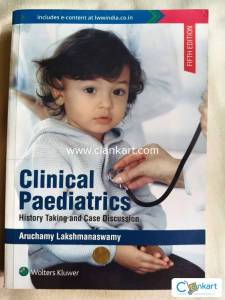
Clinical Paediatrics Aruchamy Laksmanswamy Fifth Edition
Specially designed for medical students, this book presents a succinct exposition of the clinical methods (history taking, examination and investigations) involved in the diagnosis and management of common paediatric cases. In a simple and easy-to-understand language, the book explains the fundamentals of: History taking and examination relevant to each system followed by a discussion on common paediatric disorders with emphasis on aetiology, pathogenesis, clinical features, investigations, management, prognosis and follow-up. New chapter “X-rays at a glance” to help the students in “spot diagnosis” of some common clinical conditions. The anthropometry percentile tables for length/height, weight, head circumference and BMI and growth charts by WHO and IAP included in the chapter “Growth and Development”. New section on pandemic added in “Respiratory chapter”. Asthma management updated as per October GINA 2021 guidelines All topics thoroughly revised and updated especially immunisation schedule, diarrhoea, acute rheumatic fever, congenital heart defects, leukemias and lymphomas and percussion methods to identify splenomegaly. Viva voce section at the end of each chapter along with a complementary online question bank with answers for quick self-assessment. Online videos for common procedures and examination methods followed in paediatrics. Simple, point-wise style of presentation with important features summarised in tables and boxes.
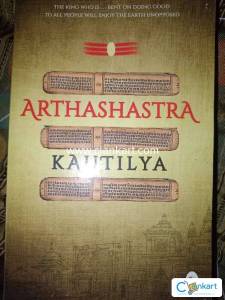
Arthshastra
The Arthashastra is an ancient Indian treatise on statecraft, economic policy and military strategy, written in Sanskrit. It identifies its author by the names 'Kauṭilya' and 'Vishnugupta', both names that are traditionally identified with Chanakya (c. 350–283 BC), who was a scholar at Takshashila and the teacher and guardian of Emperor Chandragupta Maurya, founder of the Mauryan Empire. The text was influential until the 12th century, when it disappeared. It was rediscovered in 1904 by R. Shamasastry, who published it in 1909. The first English translation was published in 1915.Roger Boesche describes the Arthaśāstra as "a book of political realism, a book analysing how the political world does work and not very often stating how it ought to work, a book that frequently discloses to a king what calculating and sometimes brutal measures he must carry out to preserve the state and the common good."Centrally, Arthaśāstra argues how in an autocracy an efficient and solid economy can be managed. It discusses the ethics of economics and the duties and obligations of a king. The scope of Arthaśāstra is, however, far wider than statecraft, and it offers an outline of the entire legal and bureaucratic framework for administering a kingdom, with a wealth of descriptive cultural detail on topics such as mineralogy, mining and metals, agriculture, animal husbandry, medicine and the use of wildlife. The Arthaśāstra also focuses on issues of welfare (for instance, redistribution of wealth during a famine) and the collective ethics that hold a society together.