Buy used Business & Economics books online in India
Buy Second Hand Books, Used Books Online In India
Did You Ever Read A Book That Tells How to Startups A Business
Hello, ladies and gentlemen, I am Pramod Maloo, founder of Kreative Machinez. I would like to share some thoughts about a practical, structured guide on how to master digital marketing. My main goals are to allocate funds efficiently, establish steady momentum, and clarify messagingall without depending on large teams or pricey agencies. I provide you practical frameworks to help you get your first clients, develop a weekly routine that you can repeat, and leverage early observations into development so you can take charge of your online presence and expand more intelligently.The more you read, the more you learn. "The Start-up Founder's Guide to Digital Marketing" offers complete, practical guidance to help entrepreneurs master digital marketing and grow their business with confidence.Check out now https://www.amazon.in/dp/9373071424?listing
Project Management A Managerial Approach ; Meredith, Mantel, Shafer
Designed for project management courses for business students, Project Management: A Managerial Approach, 9th Edition guides students through all facets of the steps needed to successfully manage a project. The authors’ managerial perspective addresses the basic nature of managing all types of projects as well as the specific techniques and insights required for selecting, initiating, executing, and evaluating those projects.
Marketing Management by Philip Kotler used in Business Schools
For the MBA Marketing Management course and/or undergraduate capstone marketing strategy course. This is the #1 selling marketing management textbook worldwide because it consistently delivers on its brand promise: to be the first to reflect changes in marketing theory and practice.
Self help reading
About 95 percent of workers in industrialized countries are employees, make less than $40,000 per year, and save about $2,000 per year. At first glance, these figures may look pretty impressive, especially to people who make less than $40,000. But the truth is, 95 percent of the people in this world aren't getting ahead they're just getting by.Just look at the financial condition of the "average" U.S. citizen at age 65: 36 percent are dead, 54 percent are broke or dependent on others, 5 percent are still working, 4 percent are financially independent, and 1 percent are wealthy. Only 5 percent are financially well off!If you had the opportunity to become a 5%-er, would you take advantage of it? If your answer is "yes," read on, because that's what this book is about.Copycat Marketing 101 will make you aware that most people are 95%-ers because they've been taught to copy people who are in jobs that mean salary caps and financial dependence. In short, most people are copycatting the wrong plan!In this book, you'll learn that the current system most people copycat is designed to create temporary income not true wealth because it's based on linear growth of trading time for dollars. You'll learn that the key to true wealth is leverage, and you will learn about a dynamic form of leverage that wealthy people have been copying for centuries called exponential growth.Best of all, you'll learn how average people can break out of the time-for-money trap by copycatting a simple, duplicatable system of wealth creation that will open the door to financial freedom, once and for all!
The Indian Economy by Sanjiv Verma
Please READ DESCRIPTION Before Buying. The item is Brand New Paperback International/South Asian Edition textbook with 100 % identical Contents as US Edition. Shipped Same Day. Will be dispatched fast. 100% Satisfaction. Great Customer Service, Buy with Confidence, Front Cover May Differ. Ships to PO or APO. May have printed "NOT FOR SALE OUTSIDE of INDIA" or Territorial Disclaimer.
Development As Freedom
By the winner of the 1998 Nobel Prize in Economics, an essential and paradigm-altering framework for understanding economic development—for both rich and poor—in the twenty-first century. Freedom, Sen argues, is both the end and most efficient means of sustaining economic life and the key to securing the general welfare of the world's entire population. Releasing the idea of individual freedom from association with any particular historical, intellectual, political, or religious tradition, Sen clearly demonstrates its current applicability and possibilities. In the new global economy, where, despite unprecedented increases in overall opulence, the contemporary world denies elementary freedoms to vast numbers—perhaps even the majority of people—he concludes, it is still possible to practically and optimistically regain a sense of social accountability. Development as Freedom is essential reading.
Missing in Action
In Search of an Adarsh Indian StateIn India, public policies are all around us. Despite this pervasiveness, yeh public sab nahin jaanti hai (the public doesn't know it all).Questions are rarely asked of the Indian State—the institution that makes rules, bends them and punishes others for breaking the laws it creates. The privileged can afford not to think about the State because we have given up on it. The not-so-privileged have resigned themselves to a State that provides short-term benefits.Either way, we seldom pause to reflect on why the Indian State works the way it does.Missing in Action aims to change such perceptions through sketches from everyday experiences to illustrate India's tryst with public policymaking. It acquaints the reader with some fundamental concepts of the public policy discipline. It explains the logic (or the lack of it!) of the Indian State's actions, shortcomings, constraints, and workings.Jargon-free and accessibly written, the book achieves the difficult task of both entertaining and educating.There have been many books about Indian society, but none so far about the Indian state. Missing in Action fills that gap, and how! Kotasthane and Jaitley are two of our finest thinkers, and their writing combines a surgeon's precision with a poet's art of revealing the unseen. They paint both the big picture and the small details. This book is a masterpiece that will be essential reading 50 years from now. If you want to understand India, you should read Missing in Action .Amit Varma, Creator of The Seen and the Unseen Podcast and The India Uncut BlogMissing in Action is a thoroughly engaging, entertaining, and educational book. The book helps readers understand why the Indian State is the way it is-powerful yet ineffective, well-intentioned yet weak, and ambitious yet underperforming. A must-read for everyone!Rohini Nilekani, Philanthropist, Author of Samaaj Sarkaar a citizen-first approachThe policy outcomes are the result of the three important society, market and the Government. This wond
Connect the Dots
Librarian note: An alternative cover for this ISBN can be found here.Mahima Mehra did it. Ranjiv Ramchandani did it. Kalyan Varma did it.“ CONNECT THE DOTS “ is the story of 20 enterprising individuals without an MBA, who started their own ventures. They were driven by the desire to prove themselves. To lead interesting, passionate, meaningful lives. Their stories say one thing loud and clear. You don’t need a fancy degree or a rich daddy to dream big and make it happen. It’s all in your head, your heart, your hands.
The Magic of Thinking BIG
More than 6 million readers around the world have improved their lives by reading The Magic of Thinking Big. First published in 1959, David J Schwartz's classic teachings are as powerful today as they were then. Practical, empowering and hugely engaging, this book will not only inspire you, it will give you the tools to change your life for the better - starting from now. His step-by-step approach will show you how to:- Defeat disbelief and the negative power it creates- Make your mind produce positive thoughts- Plan a concrete success-building programme- Do more and do it better by turning on your creative power- Capitalise on the power of NOWUpdated for the 21st century, this is your go-to guide to a better life, starting with the way you think.
ZERO TO ONE
Peter Thiel is the co-founder of PayPal and the first outside investor in Facebook. In the Spring of 2012, he gave a lecture course at Stanford for software engineers, calling on them to think boldly and broadly about how they might use their skills to shape the future, and imparting the lessons he has gleaned from his own experience. One of the students in that class - Blake Masters - took notes and posted them online. The blog posts became a huge success, with hundreds of thousands of hits, and became the basis for Zero to One.We live in an age of technological stagnation, even if we're too distracted by our new mobile devices to notice. Progress has stalled in every industry except computers, and globalization is hardly the revolution people think it is. It's true that the world can get marginally richer by building new copies of old inventions, making horizontal progress from '1 to n'. But true innovators have nothing to copy. The most valuable companies of the future will make vertical progress from '0 to 1', creating entirely new industries and products that have never existed before. Zero to One is about how to build these companies.A business book that also provides insight into the world of start-ups from a Silicon Valley icon, Thiel shows how to pursue your goals using the most important, most difficult, and most underrated skill in every job or industry: thinking for yourself.
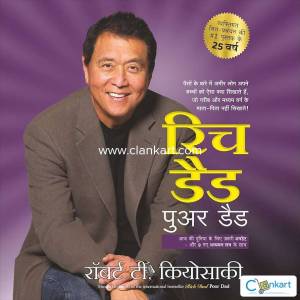
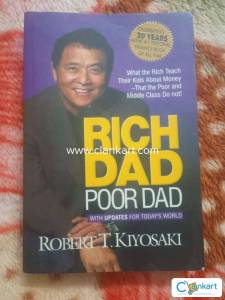
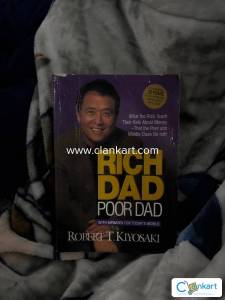
RICH DAD POOR DAD WITH UPDATES
April 2017 marks 20 years since Robert Kiyosaki’s Rich Dad Poor Dad first made waves in the Personal Finance arena.It has since become the #1 Personal Finance book of all time... translated into dozens of languages and sold around the world.Rich Dad Poor Dad is Robert's story of growing up with two dads — his real father and the father of his best friend, his rich dad — and the ways in which both men shaped his thoughts about money and investing. The book explodes the myth that you need to earn a high income to be rich and explains the difference between working for money and having your money work for you.20 Years... 20/20 HindsightIn the 20th Anniversary Edition of this classic, Robert offers an update on what we’ve seen over the past 20 years related to money, investing, and the global economy. Sidebars throughout the book will take readers “fast forward” — from 1997 to today — as Robert assesses how the principles taught by his rich dad have stood the test of time.In many ways, the messages of Rich Dad Poor Dad, messages that were criticized and challenged two decades ago, are more meaningful, relevant and important today than they were 20 years ago.As always, readers can expect that Robert will be candid, insightful... and continue to rock more than a few boats in his retrospective.Will there be a few surprises? Count on it.Rich Dad Poor Dad...• Explodes the myth that you need to earn a high income to become rich• Challenges the belief that your house is an asset• Shows parents why they can't rely on the school system to teach their kids about money• Defines once and for all an asset and a liability• Teaches you what to teach your kids about money for their future financial success
Poor economics
Why do the poor borrow to save? Why do they miss out on free life-saving immunizations, but pay for unnecessary drugs? In Poor Economics, Abhijit V. Banerjee and Esther Duflo, two practical visionaries working toward ending world poverty, answer these questions from the ground. In a book the Wall Street Journal called “marvelous, rewarding,” the authors tell how the stress of living on less than 99 cents per day encourages the poor to make questionable decisions that feed—not fight—poverty. The result is a radical rethinking of the economics of poverty that offers a ringside view of the lives of the world’s poorest, and shows that creating a world without poverty begins with understanding the daily decisions facing the poor.