Buy used Business & Economics books online in India
Buy Second Hand Books, Used Books Online In India
Technical Analysis of the Financial Markets
John J. Murphy has updated his landmark bestseller Technical Analysis of the Futures Markets, to include all of the financial markets.This outstanding reference has already taught thousands of traders the concepts of technical analysis and their application in the futures and stock markets. Covering the latest developments in computer technology, technical tools, and indicators, the second edition features new material on candlestick charting, intermarket relationships, stocks and stock rotation, plus state-of-the-art examples and figures. From how to read charts to understanding indicators and the crucial role technical analysis plays in investing, readers gain a thorough and accessible overview of the field of technical analysis, with a special emphasis on futures markets. Revised and expanded for the demands of today's financial world, this book is essential reading for anyone interested in tracking and analyzing market behavior.
Joe Navarro, FBI Special Agent (Ret.) and author of the international
A former FBI hostage negotiator offers a new, field-tested approach to negotiating – effective in any situation.After a stint policing the rough streets of Kansas City, Missouri, Chris Voss joined the FBI, where his career as a kidnapping negotiator brought him face-to-face with bank robbers, gang leaders and terrorists. Never Split the Difference takes you inside his world of high-stakes negotiations, revealing the nine key principles that helped Voss and his colleagues succeed when it mattered the most – when people’s lives were at stake.Rooted in the real-life experiences of an intelligence professional at the top of his game, Never Split the Difference will give you the competitive edge in any discussion.
Buisness maharajas
The inside track to India's most powerful tycoons The eight business maharajas profiled here are among Asia's most powerful industrial tycoons, Their combined turnover runs into billions of rupees, and between them they employ some 650,000 people, while indirectly affecting the lives of millions more. Sip a cup of tea, drive to work, listen to music, build a house and the chances are that in these and a myriad other ways you are using products that they manufacture or market. By any yardstick, the achievements of these men would rank among the great business stories of our time. How did these men build their enormous empires? What are their management secrets? How did they thrive and prosper even as others failed? What is their vision for the future? Top business writer and industry insider Gita Piramal draws on exhaustive interviews and in-depth research to discover the answers to these and related questions in her profiles of the men who will lead the country's push to become an industrial superpower in the 21st century.
Deep work cal network
Deep work is the ability to focus without distraction on a cognitively demanding task. It's a skill that allows you to quickly master complicated information and produce better results in less time. Deep Work will make you better at what you do and provide the sense of true fulfillment that comes from craftsmanship. In short, deep work is like a super power in our increasingly competitive twenty-first century economy. And yet, most people have lost the ability to go deep-spending their days instead in a frantic blur of e-mail and social media, not even realizing there's a better way.In Deep Work, author and professor Cal Newport flips the narrative on impact in a connected age. Instead of arguing distraction is bad, he instead celebrates the power of its opposite. Dividing this book into two parts, he first makes the case that in almost any profession, cultivating a deep work ethic will produce massive benefits. He then presents a rigorous training regimen, presented as a series of four "rules," for transforming your mind and habits to support this skill.1. Work Deeply2. Embrace Boredom3. Quit Social Media4. Drain the ShallowsA mix of cultural criticism and actionable advice, Deep Work takes the reader on a journey through memorable stories-from Carl Jung building a stone tower in the woods to focus his mind, to a social media pioneer buying a round-trip business class ticket to Tokyo to write a book free from distraction in the air-and no-nonsense advice, such as the claim that most serious professionals should quit social media and that you should practice being bored. Deep Work is an indispensable guide to anyone seeking focused success in a distracted world.
Rich dad poor dad
Rich Dad Poor Dad, the #1 Personal Finance book of all time, tells the story of Robert Kiyosaki and his two dads—his real father and the father of his best friend, his rich dad—and the ways in which both men shaped his thoughts about money and investing. The book explodes the myth that you need to earn a high income to be rich and explains the difference between working for money and having your money work for you.
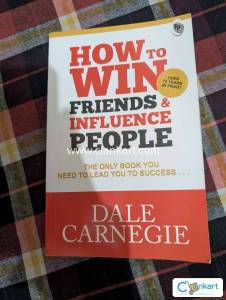
How to win friends and influence people
A classic book that gave birth to the self-help industry, How to Win Friends and Influence People is a phenomenal bestseller, having sold over 15 million copies worldwide and still going strong. It has been translated into 31 languages and is on Time magazine's list of 100 most influential books of all time.Dale Carnegie offers practical and proven advice on how to deal with people and understand them in order to get along well with them to make your life more rewarding.
Rich dad poor dad novel
April 2017 marks 20 years since Robert Kiyosaki’s Rich Dad Poor Dad first made waves in the Personal Finance arena.It has since become the #1 Personal Finance book of all time... translated into dozens of languages and sold around the world.Rich Dad Poor Dad is Robert's story of growing up with two dads — his real father and the father of his best friend, his rich dad — and the ways in which both men shaped his thoughts about money and investing. The book explodes the myth that you need to earn a high income to be rich and explains the difference between working for money and having your money work for you.20 Years... 20/20 HindsightIn the 20th Anniversary Edition of this classic, Robert offers an update on what we’ve seen over the past 20 years related to money, investing, and the global economy. Sidebars throughout the book will take readers “fast forward” — from 1997 to today — as Robert assesses how the principles taught by his rich dad have stood the test of time.In many ways, the messages of Rich Dad Poor Dad, messages that were criticized and challenged two decades ago, are more meaningful, relevant and important today than they were 20 years ago.As always, readers can expect that Robert will be candid, insightful... and continue to rock more than a few boats in his retrospective.Will there be a few surprises? Count on it.Rich Dad Poor Dad...• Explodes the myth that you need to earn a high income to become rich• Challenges the belief that your house is an asset• Shows parents why they can't rely on the school system to teach their kids about money• Defines once and for all an asset and a liability• Teaches you what to teach your kids about money for their future financial success
Management entrepreneurship book
This text provides the knowledge and tools readers need to launch a business so that it has the greatest chance for success. The Foundations of Entrepreneurship; Inside the Entrepreneurial Mind: From Ideas to Reality; Designing a Competitive Business Model and Building a Solid Strategic Plan; Conducting a Feasibility Analysis and Crafting a Winning Business Plan; Forms of Business Ownership; Franchising and the Entrepreneur; Buying an Existing Business; Building a Powerful Marketing Plan; E-Commerce and the Entrepreneur; Pricing Strategies; Creating a Successful Financial Plan; Managing Cash Flow; Sources of Financing: Debt and Equity; Choosing the Right Location and Layout; Global Aspects of Entrepreneurship; Building a New Venture Team and Planning for the Next For any person interested in owning, operating, and managing a small business. This text is also a useful reference for entrepreneurs and managers of small businesses.
Richest man in babylon
The Richest Man in Babylon is a timeless classic in the world of personal finance, offering valuable lessons on wealth-building and financial wisdom. Published as a paperback by GOWOO, this educational novel is compact and easy to carry, with dimensions of 7.6 x 5 inches, making it an ideal read for those looking to gain financial knowledge on the go. Written by George S. Clason, this book provides powerful lessons on managing money, investing wisely, and building wealth through parables set in ancient Babylon. The book’s practical advice is timeless, offering insights that are just as relevant today as they were when first written. With its simple yet profound principles, The Richest Man in Babylon teaches readers how to make smart financial decisions, avoid debt, and achieve long-term success. Each chapter is filled with engaging stories of characters who embody essential financial virtues such as thrift, discipline, and prudence. Whether you are just beginning your financial journey or looking to refine your wealth-building strategies, this book serves as an invaluable resource. The Richest Man in Babylon is a must-read for anyone seeking to take control of their financial future and achieve lasting prosperity.
THE 7 HABBITS OF HIGHLY EFFECTIVE PEOPLE
In The 7 Habits of Highly Effective People, author Stephen R. Covey presents a holistic, integrated, principle-centered approach for solving personal and professional problems. With penetrating insights and pointed anecdotes, Covey reveals a step-by-step pathway for living with fairness, integrity, service, and human dignity -- principles that give us the security to adapt to change and the wisdom and power to take advantage of the opportunities that change creates.
Psychology of money
Timeless lessons on wealth, greed, and happiness doing well with money isn’t necessarily about what you know. It’s about how you behave. And behavior is hard to teach, even to really smart people. How to manage money, invest it, and make business decisions are typically considered to involve a lot of mathematical calculations, where data and formulae tell us exactly what to do. But in the real world, people don’t make financial decisions on a spreadsheet. They make them at the dinner table, or in a meeting room, where personal history, your unique view of the world, ego, pride, marketing, and odd incentives are scrambled together. In the psychology of money, the author shares 19 short stories exploring the strange ways people think about money and teaches you how to make better sense of one of life’s most important matters.
Business school
The book describes what the real values of network marketing business are. It is more than just making money. He says that it is a business having a heart. Rich Dad’s The Business School does not promote any specific network marketing organization, but aims to educate the reader on how to select one.
The 48 Laws of Power by Robert Greene
Amoral, cunning, ruthless, and instructive, this piercing work distills three thousand years of the history of power in to forty-eight well explicated laws. As attention-grabbing in its design as it is in its content, this bold volume outlines the laws of power in their unvarnished essence, synthesizing the philosophies of Machiavelli, Sun-tzu, Carl von Clausewitz, and other great thinkers. Some laws teach the need for prudence ("Law 1: Never Outshine the Master"), the virtue of stealth ("Law 3: Conceal Your Intentions"), and many demand the total absence of mercy ("Law 15: Crush Your Enemy Totally"), but like it or not, all have applications in real life. Illustrated through the tactics of Queen Elizabeth I, Henry Kissinger, P. T. Barnum, and other famous figures who have wielded--or been victimized by--power, these laws will fascinate any reader interested in gaining, observing, or defending against ultimate control.