Buy used Philosophy online in India
Buy Second Hand Books, Used Books Online In India
Nature of Judicial Process
2011 Reprint of 1921 Edition. Full facsimile of the original edition, not reproduced with Optical Recognition Software. In this famous treatise, Cardozo describes in simple and understandable language the conscious and unconscious processes by which a judge decides a case. He discusses the sources of information to which he appeals for guidance and analyzes the contribution that considerations of precedent, logical consistency, custom, social welfare, and the standards of justice and morals have in shaping his decisions. This is a classic text on the subject.
The almanack of naval ravikant
Getting rich is not just about luck; happiness is not just a trait we are born with. These aspirations may seem out of reach, but building wealth and being happy are skills we can learn.So what are these skills, and how do we learn them? What are the principles that should guide our efforts? What does progress really look like?Naval Ravikant is an entrepreneur, philosopher, and investor who has captivated the world with his principles for building wealth and creating long-term happiness. The Almanack of Naval Ravikant is a collection of Naval's wisdom and experience from the last ten years, shared as a curation of his most insightful interviews and poignant reflections. This isn't a how-to book, or a step-by-step gimmick. Instead, through Naval's own words, you will learn how to walk your own unique path toward a happier, wealthier life.
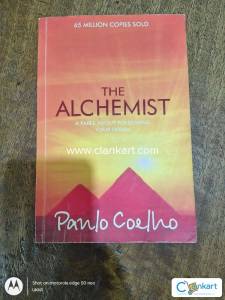
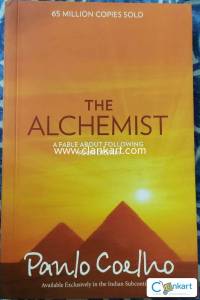
The Alchemist
Like the one-time bestseller Jonathan Livingston Seagull, The Alchemist presents a simple fable, based on simple truths and places it in a highly unique situation. And though we may sniff a bestselling formula, it is certainly not a new one: even the ancient tribal storytellers knew that this is the most successful method of entertaining an audience while slipping in a lesson or two. Brazilian storyteller Paulo Coehlo introduces Santiago, an Andalusian shepherd boy who one night dreams of a distant treasure in the Egyptian pyramids. And so he's off: leaving Spain to literally follow his dream. Along the way he meets many spiritual messengers, who come in unassuming forms such as a camel driver and a well-read Englishman. In one of the Englishman's books, Santiago first learns about the alchemists--men who believed that if a metal were heated for many years, it would free itself of all its individual properties, and what was left would be the "Soul of the World." Of course he does eventually meet an alchemist, and the ensuing student-teacher relationship clarifies much of the boy's misguided agenda, while also emboldening him to stay true to his dreams. "My heart is afraid that it will have to suffer," the boy confides to the alchemist one night as they look up at a moonless night. "Tell your heart that the fear of suffering is worse than the suffering itself," the alchemist replies. "And that no heart has ever suffered when it goes in search of its dreams, because every second of the search is a second's encounter with God and with eternity." --Gail Hudson
21 Lessons for the 21st Century
**FROM THE AUTHOR OF THE MILLION-COPY BESTSELLER SAPIENS**Sapiens showed us where we came from. Homo Deus looked to the future. 21 Lessons for the 21st Century explores the present.How can we protect ourselves from nuclear war, ecological cataclysms and technological disruptions? What can we do about the epidemic of fake news or the threat of terrorism? What should we teach our children?Yuval Noah Harari takes us on a thrilling journey through today’s most urgent issues. The golden thread running through his exhilarating new book is the challenge of maintaining our collective and individual focus in the face of constant and disorienting change. Are we still capable of understanding the world we have created?
Peer e Kamil by Umera Ahmed
Peer-e-Kamil is a novel by Umera Ahmed about two young people, Imama Hashim and Salar Sikander, on a journey of self-discovery. It explores themes of faith, love, and finding purpose, with Imama torn between logic and faith, and Salar, a brilliant but troubled individual, seeking the right path. The story follows their lives over a ten-year period as they embark on a spiritual and transformative quest
Why I am not a Hindu
"‘The most gratifying thing for me [is] that [this book] was listed as a millennium book [by The Pioneer] along with Dr. B. R. Ambedkar’s Annihilation of Caste. Moreover, it has been translated into several Indian languages. In a way it has become a weapon in the hands of Dalitbahujan activists’. -from the Afterword to the second edition. Kancha Ilaiah Shepherd writes with passionate anger, laced with sarcasm, on the caste system and Indian society. He looks at the socioeconomic and cultural differences between the Dalitbahujans and Hindus in the contexts of childhood, family life, market relations, power relations, Gods and Goddesses, death and, not the least, Hindutva. Synthesizing many of the ideas of Bahujans, he presents their vision of a more just society.In this second edition, Ilaiah Shepherd presents an Afterword that discusses the history of this book, often seen as the manifesto of the downtrodden Dalitbahujans. He talks of its reviews as well as of the abuse he has received from its detractors. He reminds us of the need for an ongoing dialogue. As he says, he wrote the book ‘for all who have open minds. My request to Brahmin, Baniya and neo-Kshatriyas [upper class Sudras] is this: You learnt only what to teach others—the Dalitbahujans. Now in your own interest and in the interest of this great country, you must learn to listen and to read what we have to say.’ "
Ikigai : The Japanese Secret to a Long and Happy Life
Bring meaning and joy to all your days with the internationally bestselling guide to ikigai.According to the Japanese, everyone has an ikigai – a reason for living. And according to the residents of the Japanese island of Okinawa – the world’s longest-living people – finding it is the key to a happier and longer life.Inspiring and soothing, this book will bring you closer to these centenarians’ secrets: how they leave urgency behind; keep doing what they love for as long as possible; nurture friendships; live in the moment; participate in their communities and throw themselves into their passions. And it provides practical tools to help you discover your own personal ikigai. Because who doesn’t want to find the joy in every day?
IGCSE ECONOMICS COURSEBOOK
Covers the Cambridge IGCSE syllabus (0455) and the Cambridge O Level syllabus (2281), first examination from 2020. This series helps students understand economic theory, terminology and principles. It matches the Cambridge IGCSE and O Level Economics syllabuses. The coursebook helps students apply tools of economic analysis, make judgements on economic issues, use basic economic numeracy and literacy, and take greater part in decision-making processes in everyday life. Sample questions provide opportunities for students to develop their evaluative skills. It provides a foundation for advanced study in Economics such as A Level. Answers to the coursebook and workbook questions are in the teacher's resource.
Krishna lila
A critical look at widely-believed assumptions and theories held by modern scientists about the origin of life. For people who have come to accept every pronouncement of modern scientists as tested and proven truth, this book will be an eye-opener. Life Comes From Life is an impromptu but brilliant critique of some of the dominant policies, theories and presuppositions of modern science and scientists by one of the greatest philosophers and scholars of the twentieth century, His Divine Grace A. C. Bhaktivedanta Swami Prabhupada. Srila Prabhupada's vivid analysis uncovers the hidden and blatantly unfounded assumptions that underlie currently fashionable doctrines about the origins and purpose of life. This book is based on taped morning-walk conversations between Srila Prabhupada and his disciple Thoudam D. Singh, Ph.D., an organic chemist.
Hatha yoga pradipika
Hatha Yoga Pradipika (Light on Hatha Yoga) includes the original Sanskrit text compiled by Maharshi Swatmarama with a translation and thorough commentary in English by Swami Satyananda and Swami Muktibodhananda. This text elucidates the entire science of hatha yoga (asana, pranayama, shatkarma, mudra and bandha) as it was conceived and practised not only for health and fitness but for awakening the vital energies: pranas, chakras and kundalini shakti.It points out that hatha yoga is not just a physical practice but a process of cellular transmutation from gross to subtle to divine. Thus hatha yoga was considered to be the foundation of all higher yogas. Line drawings and diagrams illustrate the text.
Four chapters on freedom
Four Chapters on Freedom contains the full Sanskrit text of Rishi Patanjali's Yoga Sutras as well as transliteration, translation and an extensive commentary. The Yoga Sutras, containing 196 epithets or threads of Yoga, is the most respected treatise on Yoga. In his commentary on each verse, Swami Satyananda Saraswati fully explains the text and the path of raja yoga.
Textbook for 1st semester ug philosophy
For more than six decades, and for thousands of students, introduction to logic has been the Gold standard in introductory logic texts. In this fifteenth edition, Carl Cohen and Victor rodych update Irving M. Copi’s classic text, improving on its many strengths and introducing new and helpful material that will greatly assist both students and instructors. In particular, chapters 1, 8, and 9 have been greatly enhanced without disturbing the booklets clear and gradual pedagogical approach. Specifically: br>Chapter 1 now uses a simpler and better definition of "deductive validity," which enhances the rest of the book (especially chapters 1 and 8-10, and their new components). br>Chapter 8 now has: simpler definitions of "simple statement" And "Compound statement" More and more detailed examples of the complete truth-table method. Br>chapter 9 now has: a detailed, step-by-step account of the shorter truth-table method (with detailed step-by-step examples for conclusions of different types) a more complete and detailed account of indirect proof a detailed justification for indirect proof treating each of the three distinct ways in which an argument can be valid a new section on br>conditional proof, which complements the 19 rules of inference and Indirect proof explications of proofs of tautologies using both indirect proof and conditional proof a new section at the end of the br>Chapter explaining the important difference between sound and demonstrative arguments. The appendices now include: a new appendix on making the shorter truth-table technique (sttt) more efficient by selecting the most efficient sequence of sttt steps a new appendix on step 1 calculations for multiple-line shorter truth tables a new appendix on unforced truth-value assignments, invalid arguments, and maxims iii-v.