Buy used Philosophy online in India
Buy Second Hand Books, Used Books Online In India
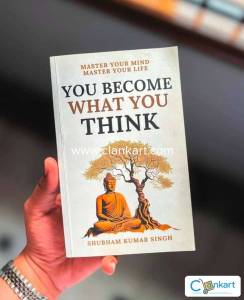
Textbook for 1st semester ug philosophy
For more than six decades, and for thousands of students, introduction to logic has been the Gold standard in introductory logic texts. In this fifteenth edition, Carl Cohen and Victor rodych update Irving M. Copi’s classic text, improving on its many strengths and introducing new and helpful material that will greatly assist both students and instructors. In particular, chapters 1, 8, and 9 have been greatly enhanced without disturbing the booklets clear and gradual pedagogical approach. Specifically: br>Chapter 1 now uses a simpler and better definition of "deductive validity," which enhances the rest of the book (especially chapters 1 and 8-10, and their new components). br>Chapter 8 now has: simpler definitions of "simple statement" And "Compound statement" More and more detailed examples of the complete truth-table method. Br>chapter 9 now has: a detailed, step-by-step account of the shorter truth-table method (with detailed step-by-step examples for conclusions of different types) a more complete and detailed account of indirect proof a detailed justification for indirect proof treating each of the three distinct ways in which an argument can be valid a new section on br>conditional proof, which complements the 19 rules of inference and Indirect proof explications of proofs of tautologies using both indirect proof and conditional proof a new section at the end of the br>Chapter explaining the important difference between sound and demonstrative arguments. The appendices now include: a new appendix on making the shorter truth-table technique (sttt) more efficient by selecting the most efficient sequence of sttt steps a new appendix on step 1 calculations for multiple-line shorter truth tables a new appendix on unforced truth-value assignments, invalid arguments, and maxims iii-v.
The Courage to be Disliked
The Japanese phenomenon that teaches us the simple yet profound lessons required to liberate our real selves and find lasting happiness. The Courage to be Disliked shows you how to unlock the power within yourself to become your best and truest self, change your future and find lasting happiness. Using the theories of Alfred Adler, one of the three giants of 19th century psychology alongside Freud and Jung, the authors explain how we are all free to determine our own future free of the shackles of past experiences, doubts and the expectations of others. It's a philosophy that's profoundly liberating, allowing us to develop the courage to change, and to ignore the limitations that we and those around us can place on ourselves.The result is a book that is both highly accessible and profound in its importance. Millions have already read and benefited from its wisdom. Now that The Courage to be Disliked has been published for the first time in English, so can you.Three million copies sold worldwide.
Good Girl, Bad Blood: The Sequel to A Good Girl's Guide to Murder
An electric debut novel about the daughter of Afghan refugees and her year of nightclubs, bad romance, and self-discovery—a portrait of the artist as a young woman set in a Berlin that can’t escape its history A girl can get in almost anywhere, even if she can’t get out. In Berlin’s artistic underground, where techno and drugs fill warehouses still pockmarked from the wars of the twentieth century, nineteen-year-old Nila at last finds her tribe. Born in Germany to Afghan parents, raised in public housing graffitied with swastikas, drawn to philosophy, photography, and sex, Nila has spent her adolescence disappointing her family while searching for her voice as a young woman and artist. Then in the haze of Berlin’s legendary nightlife, Nila meets Marlowe, an American writer whose fading literary celebrity opens her eyes to a life of personal and artistic freedom. But as Nila finds herself pulled further into Marlowe’s controlling orbit, ugly, barely submerged racial tensions begin to roil Germany—and Nila’s family and community. After a year of running from her future, Nila stops to ask herself the most important Who does she want to be? A story of love and family, raves and Kafka, staying up all night and surviving the mistakes of youth, Good Girl is the virtuosic debut novel by a celebrated young poet and, now, a major new voice in fiction.
Life's amazing secrets
While navigating their way through Mumbai's horrendous traffic, Gaur Gopal Das and his wealthy young friend Harry get talking, delving into concepts ranging from the human condition to finding one's purpose in life and the key to lasting happiness. Whether you are looking at strengthening your relationships, discovering your true potential, understanding how to do well at work or even how you can give back to the world, Gaur Gopal Das takes us on an unforgettable journey with his precious insights on these areas of life. Das is one of the most popular and sought-after monks and life coaches in the world, having shared his wisdom with millions. His debut book, Life's Amazing Secrets, distils his experiences and lessons about life into a light-hearted, thought-provoking book that will help you align yourself with the life you want to live.
The Hindu View Of Life
A timeless treatise on what constitutes the Hindu way of lifeReligion in India appears as a confusing tangle of myths, with many different gods and goddesses worshipped in countless forms.This complexity stems from a love of storytelling, as much as anything else, but it is only the surface expression of Indian faith.Beneath this superficial level can be found a system of unifying beliefs that have guided the lives of ordinary Indian families for generations. In The Hindu View of Life, S. Radhakrishnan one of the most profound philosophers of the twentieth century, explains these and other related concepts intrinsic to a Hindu philosophy of life.
Jonathan Livingston Seagull
This is a story for people who follow their hearts and make their own rules...people who get special pleasure out of doing something well, even if only for themselves...people who know there's more to this living than meets the eye: they’ll be right there with Jonathan, flying higher and faster than ever they dreamed.Jonathan Livingston Seagull is no ordinary bird. He believes it is every gull's right to fly, to reach the ultimate freedom of challenge and discovery, finding his greatest reward in teaching younger gulls the joy of flight and the power of dreams. The special 20th anniversary release of this spiritual classic!
Death Sadguru
Death is a taboo in most societies in the world. But what if we have got this completely wrong? What if death was not the catastrophe it is made out to be but an essential aspect of life, rife with spiritual possibilities for transcendence? For the first time, someone is saying just that.In this unique treatise-like exposition, Sadhguru dwells extensively upon his inner experience as he expounds on the more profound aspects of death that are rarely spoken about. From a practical standpoint, he elaborates on what preparations one can make for one’s death, how best we can assist someone who is dying and how we can continue to support their journey even after death.Whether a believer or not, a devotee or an agnostic, an accomplished seeker or a simpleton, this is truly a book for all those who shall die!>
Upinder Singh History Of Ancient India and Early Medieval College
Established as a classic in its first edition, the second edition of Upinder Singh’s A History of Ancient and Early Medieval India, incorporates the latest discoveries, research, and insights in the field. Drawing on a vast array of textual, archaeological, and visual sources, it weaves together discussions of politics, economy, society, religion, philosophy, art, and ideas into a seamless narrative. The book reveals the complex and dynamic history of the regions of the subcontinent across millennia by focusing on macro-level changes as well the everyday lives of ordinary people. Widely acclaimed as an excellent introduction to the subject for general readers as well as the most comprehensive and authoritative textbook for undergraduate and postgraduate students, this classic maintains its reputation of offering a lucid, detailed, and balanced exposition, equipping readers with skills to critically assess historical evidence, arguments, and debates. The book is a reader’s delight, with excerpts from original sources and a wealth of images and illustrations of India's diverse and rich historical heritage, making an exploration of the past a truly exciting journey.
Karma by sadguru
A new perspective on the overused and misunderstood concept of karma that offers the key to happiness and enlightenment, from the New York Times bestselling author and world-renowned spiritual master Sadhguru. What is karma? Most people understand karma as a balance sheet of good and bad deeds, virtues and sins. The mechanism that decrees that we cannot evade the consequences of our own actions. In reality, karma has nothing to do with reward and punishment. Karma simply means action: your action, your responsibility. It isn't some external system of crime and punishment, but an internal cycle generated by you. Accumulation of karma is determined only by your intention and the way you respond to what is happening to you. Over time, it's possible to become ensnared by your own unconscious patterns of behavior.In Karma, Sadhguru seeks to put you back in the driver's seat, turning you from a terror-struck passenger to a confident driver navigating the course of your own destiny. By living consciously and fully inhabiting each moment, you can free yourself from the cycle. Karma is an exploration and a manual, restoring our understanding of karma to its original potential for freedom and empowerment instead of a source of entanglement. Through Sadhguru's teachings, you will learn how to live intelligently and joyfully in a challenging world.
Development As Freedom
By the winner of the 1998 Nobel Prize in Economics, an essential and paradigm-altering framework for understanding economic development—for both rich and poor—in the twenty-first century. Freedom, Sen argues, is both the end and most efficient means of sustaining economic life and the key to securing the general welfare of the world's entire population. Releasing the idea of individual freedom from association with any particular historical, intellectual, political, or religious tradition, Sen clearly demonstrates its current applicability and possibilities. In the new global economy, where, despite unprecedented increases in overall opulence, the contemporary world denies elementary freedoms to vast numbers—perhaps even the majority of people—he concludes, it is still possible to practically and optimistically regain a sense of social accountability. Development as Freedom is essential reading.
AGHORA book
Aghora: At the Left Hand of God is the first book in the Aghora trilogy. Written almost entirely in Vimalananda's own words, it presents events from his life, tenets of his philosophy, and highlights from his spiritual practices. Designed partly to shock and partly to comfort, but wholly as an offering to his Beloved, Aghora is as clear a picture as possible of a man who was a riddle wrapped up in an enigma. Vimalananda insisted that this book be published only after his demise, that he might be spared pursuit by those whose curiosity might be inflamed by some of the sensational events described within. He believed in devoting his all to the pursuit of the direct perception of Reality, and advised others to be similarly dedicated to attaining personal experience of God. To readers he offered this warning: "Don't take anything I say as gospel truth. I am human, I make mistakes. Test on yourselves what I've told you. Try it out, experience it, and then you will know whether or not I'm telling you the truth."
India's Ancient Past
R.S. Sharma, one of the best-known historians of early India, provides a comprehensive yet accessible text on the ancient period of Indian history. Beginning with topics such as historiography and the importance of Ancient Indian history, he goes on to cover the geographical, econological and linguistic settings, before looking at specific cultures of neolithic, chalcolithic types, the Harappan civilization, the Vedic period, the rise of Jainism and Buddhism, Magadha and the beginning of territorial states, the age of the Mauryas, Satavahanas, Guptas, and Harshavardhana. While taking the reader on this journey through time, he highlights important phenomena such as the beginning of urbanization and monarchy in India, invasions, the Varna system, commerce and trade, developments in philosophy and cultural efflorescence. He ends this insightful volume with a comments on the transition from the Ancient to the Medieval.This book also addresses a number of issues which have become current in discussion on Ancient Inida today, such as the Identity of the Aryan Culture, and Historical Construction. This is a volume meant for all those who want a masterly, lucid, yet eminently readable introduction to and overview on India's early history by one of the master-scholars of Indian history - be it students, tourists, or the interested lay reader
IKIGAI The Japanese Secret to a Long and Happy Life
Bring meaning and joy to all your days with the internationally bestselling guide to ikigai.According to the Japanese, everyone has an ikigai – a reason for living. And according to the residents of the Japanese island of Okinawa – the world’s longest-living people – finding it is the key to a happier and longer life.Inspiring and soothing, this book will bring you closer to these centenarians’ secrets: how they leave urgency behind; keep doing what they love for as long as possible; nurture friendships; live in the moment; participate in their communities and throw themselves into their passions. And it provides practical tools to help you discover your own personal ikigai. Because who doesn’t want to find the joy in every day?
The daily stoic
From the team that brought you The Obstacle Is the Way and Ego Is the Enemy, a daily devotional of Stoic meditations—an instant Wall Street Journal and USA Today Bestseller.Why have history's greatest minds—from George Washington to Frederick the Great to Ralph Waldo Emerson, along with today's top performers from Super Bowl-winning football coaches to CEOs and celebrities—embraced the wisdom of the ancient Stoics? Because they realize that the most valuable wisdom is timeless and that philosophy is for living a better life, not a classroom exercise.The Daily Stoic offers 366 days of Stoic insights and exercises, featuring all-new translations from the Emperor Marcus Aurelius, the playwright Seneca, or slave-turned-philosopher Epictetus, as well as lesser-known luminaries like Zeno, Cleanthes, and Musonius Rufus. Every day of the year you'll find one of their pithy, powerful quotations, as well as historical anecdotes, provocative commentary, and a helpful glossary of Greek terms.By following these teachings over the course of a year (and, indeed, for years to come) you'll find the serenity, self-knowledge, and resilience you need to live well.
The trial by Franz Kafka
Written in 1914 but not published until 1925, a year after Kafka’s death, The Trial is the terrifying tale of Josef K., a respectable bank officer who is suddenly and inexplicably arrested and must defend himself against a charge about which he can get no information. Whether read as an existential tale, a parable, or a prophecy of the excesses of modern bureaucracy wedded to the madness of totalitarianism, The Trial has resonated with chilling truth for generations of readers.