Buy used Philosophy online in India
Buy Second Hand Books, Used Books Online In India
Ayn rand the fountainhead
This modern classic is the story of intransigent young architect Howard Roark, whose integrity was as unyielding as granite...of Dominique Francon, the exquisitely beautiful woman who loved Roark passionately, but married his worst enemy...and of the fanatic denunciation unleashed by an enraged society against a great creator. As fresh today as it was then, Rand’s provocative novel presents one of the most challenging ideas in all of fiction—that man’s ego is the fountainhead of human progress...The revolutionary literary vision that sowed the seeds of Objectivism, Ayn Rand's groundbreaking philosophy, and brought her immediate worldwide acclaim.
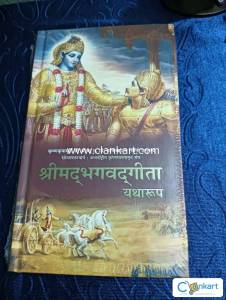
Bhagavad Gita Yatharth roop
The translator provides a blend of literal accuracy and religious insight on the "Bhagavad-Gita". "Bhagavad-Gita" is universally renowned as the jewel of India's spiritual wisdom. Spoken by Lord Krishna, the Supreme Personality of Godhead, to His intimate devotee Arjuna, the "Gita's" 700 concise verses act as a guide to the science of self-realization. It explores revelations of man's essential nature, his environment and, ultimately, his relationship with God.
The power by rhonda bryne (only one time read)
The follow-up to the worldwide bestseller The Secret by Rhonda Byrne This is the handbook to the greatest power in the Universe, The Power to have anything you want. Without The Power, you would not have been born. Without The Power, there wouldn't be a single human being on the planet. Every discovery, invention, and human creation comes from The Power. Perfect health, incredible relationships, a career you love, a life filled with happiness, and the money you need - to be, do, and have everything you want - all come from The Power. The life of your dreams has always been closer to you than you realised, because The Power - to have everything good in your life - is inside you. To create anything, to change anything, all it takes is just one thing…THE POWER.
Why Im A Hindu
In Why I Am a Hindu, one of India’s finest public intellectuals gives us a profound book about one of the world’s oldest and greatest religions. Starting with a close examination of his own belief in Hinduism, he ranges far and wide in his study of the faith. He talks about the Great Souls of Hinduism, Adi Shankara, Patanjali, Ramanuja, Swami Vivekananda, Ramakrishna Paramahamsa, and many others who made major contributions to the essence of Hinduism. He delves deep into Hinduism’s most important schools of thought (such as the Advaita Vedanta). He explains, in easily accessible language, important aspects and concepts of Hindu philosophy like the Purusharthas and Bhakti, masterfully summarizes the lessons of the Gita and Vivekananda’s ecumenism, and explores with sympathy the ‘Hinduism of habit’ practised by ordinary believers. He looks at the myriad manifestations of political Hinduism in the modern era, including violence committed in the name of the faith by right-wing organizations and their adherents. He analyzes Hindutva, explains its rise and dwells at length on the philosophy of Deen Dayal Upadhyaya, its most significant ideologue. He is unsparing in his criticism of extremist ‘bhakts’, and unequivocal in his belief that everything that makes India a great and distinctive culture and country will be imperiled if religious ‘fundamentalists’ are allowed to take the upper hand. However, he also makes the point that it is precisely because Hindus form the majority that India has survived as a plural, secular democracy.A book that will be read and debated now and in the future, Why I Am a Hindu is a revelatory and original masterwork.
Human devolution
In their controversial bestseller Forbidden Archeology, Cremo and Thompson documented evidence showing that humans have existed on earth for hundreds of millions of years and catalyzed a global inquiry. Such anomalous evidence, contradicting Darwinian evolution, catalyzed a global inquiry: “If we did not evolve from apes then where did we come from?”Human Devolution is Michael A. Cremo’s definitive answer to that question: “We did not evolve up from matter; instead we devolved, or came down, from the realm of pure consciousness, spirit.” Basing his response on modern science and the world’s great wisdom traditions, including the Vedic philosophy of ancient India, Cremo proposes that before we ask the question, “Where did human beings come from?” we should first contemplate, “What is a human being?” For much of the twentieth century, most scientists assumed that a human being is simply a combination of ordinary physical elements. In Human Devolution, Cremo says it is more reasonable to assume that a human being is a combination of three distinct substances: matter, mind, and consciousness (or spirit). He shows how solid scientific evidence for a subtle mind element and a conscious self that can exist apart from the body has been systematically eliminated from mainstream science by a process of “knowledge filtration.”
Beyond illusion and doubt
From socrates to sartre, western philosophers have grappled with the ultimate questions: "what is the meaning of life?" "does god exist?" "what is the supreme good, and how can we achieve it?" but, as brilliant as their writings are, there have been no conclusive answers from western thinkers. In these series of conversations, srila prabhupada, one of the greatest philosophers of the twentieth century, gives an insight analysis and critique of the salient ideas of some of the eminent western philosophers, as seen from a vedic perspective. He outlines the process of bhakti yoga by which we can transcend illusion and doubt in our own lives and proceed with certainty on the path to perfection.
Marcus Aurelius Meditations
Written in Greek, without any intention of publication, by the only Roman emperor who was also a philosopher, the Meditations of Marcus Aurelius (AD 121-180) offer a remarkable series of challenging spiritual reflections and exercises developed as the emperor struggled to understand himself and make sense of the universe. Ranging from doubt and despair to conviction and exaltation, they cover such diverse topics as the nature of moral virtue, human rationality, divine providence, and Marcus' own emotions. But while the Meditations were composed to provide personal consolation and encouragement, in developing his beliefs Marcus Aurelius also created one of the greatest of all works of philosophy: a timeless collection of extended meditations and short aphorisms that has been consulted and admired by statesmen, thinkers and readers through the centuries.
MBA all books available
Description The fifth edition of Research Methods for Business Students brings the theory,philosophy and techniques of research to life and enables studentsto understand the practical relevance of the research methods. Ahighly accessible style and logical structure have made this the'student choice' and run-away market leader. The book is written for students on undergraduate andpostgraduate degree programmes in business, or business-relateddisciplines. For Sale in Indiansubcontinent only Case Studies and Focus on Student Research illustrate how student research can be conducted Research in the News and Focus on Management Research give examples of research in both academic and commercial environments Checklists, Questions and "Progressing your Research Project" give practical advice on the step-by-step process of conducting research Guidance on use of SPSS, NVivo and internet searching on the companion website How to use this book Guided tour Preface Contributors The nature of business and management research and structure of this book Formulating and clarifying the research topic Critically reviewing the literature Understanding research philosophies and approaches Formulating the research design Negotiating access and research ethics Selecting samples Using secondary data Collecting primary data through observation Collecting primary data using semi-structured, in-depth and group interviews Collecting primary data using questionnaires Analysing quantitative data Analysing qualitative data Writing and presenting your project report Appendices Glossary Index Mark Saunders is Professor of Business Research Methods at School of Management, University of Surrey. Philip Lewis and Adrian Thornhill are former Principal Lecturers, Gloucestershire Business School, University of Gloucestershire.
Man's search for meaning
Psychiatrist Viktor Frankl's memoir has riveted generations of readers with its descriptions of life in Nazi death camps and its lessons for spiritual survival. Based on his own experience and the stories of his patients, Frankl argues that we cannot avoid suffering but we can choose how to cope with it, find meaning in it, and move forward with renewed purpose. At the heart of his theory, known as logotherapy, is a conviction that the primary human drive is not pleasure but the pursuit of what we find meaningful. Man's Search for Meaning has become one of the most influential books in America; it continues to inspire us all to find significance in the very act of living.
Beyond order by Jordan B Peterson
The long-awaited sequel to 12 RULES FOR LIFE, which has sold more than five million copies around the world In 12 Rules for Life, acclaimed public thinker and clinical psychologist Jordan B. Peterson offered an antidote to the chaos in our lives: eternal truths applied to modern anxieties. His insights have helped millions of readers and resonated powerfully around the world.Now in this much-anticipated sequel, Peterson goes further, showing that part of life's meaning comes from reaching out into the domain beyond what we know, and adapting to an ever-transforming world. While an excess of chaos threatens us with uncertainty, an excess of order leads to a lack of curiosity and creative vitality. Beyond Order therefore calls on us to balance the two fundamental principles of reality - order and chaos - and reveals the profound meaning that can be found on the path that divides them.In times of instability and suffering, Peterson reminds us that there are sources of strength on which we can all draw: insights borrowed from psychology, philosophy, and humanity's greatest myths and stories. Drawing on the hard-won truths of ancient wisdom, as well as deeply personal lessons from his own life and clinical practice, Peterson offers twelve new principles to guide readers towards a more courageous, truthful and meaningful life.
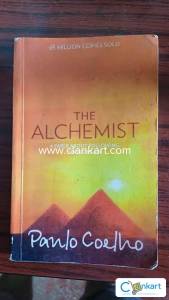
THE ALCHEMIST at 100
Like the one-time bestseller Jonathan Livingston Seagull, The Alchemist presents a simple fable, based on simple truths and places it in a highly unique situation. And though we may sniff a bestselling formula, it is certainly not a new one: even the ancient tribal storytellers knew that this is the most successful method of entertaining an audience while slipping in a lesson or two. Brazilian storyteller Paulo Coehlo introduces Santiago, an Andalusian shepherd boy who one night dreams of a distant treasure in the Egyptian pyramids. And so he's off: leaving Spain to literally follow his dream. Along the way he meets many spiritual messengers, who come in unassuming forms such as a camel driver and a well-read Englishman. In one of the Englishman's books, Santiago first learns about the alchemists--men who believed that if a metal were heated for many years, it would free itself of all its individual properties, and what was left would be the "Soul of the World." Of course he does eventually meet an alchemist, and the ensuing student-teacher relationship clarifies much of the boy's misguided agenda, while also emboldening him to stay true to his dreams. "My heart is afraid that it will have to suffer," the boy confides to the alchemist one night as they look up at a moonless night. "Tell your heart that the fear of suffering is worse than the suffering itself," the alchemist replies. "And that no heart has ever suffered when it goes in search of its dreams, because every second of the search is a second's encounter with God and with eternity." --Gail Hudson
Self Help books to grow yourself
Taylor Swift said once, “The scary news is, you are on your own now. But the cool news is, you are on your own now” The fear of loneliness has been injected into our minds since we were kids. We have learned that the kid who eats, & sits alone, and has no friends is pathetic. In every book/movie, the kid with no friends is always featured as a weak character who needs to be saved. No one wants to be seen as a ‘weirdo’ hence, our dread of being alone. We don’t want people to think of us as unwanted or not fitting in with the cool kids. We don’t want people to think that no one chose us. So what do we do? We start becoming like an ideal version of whom everyone loves. And in the race to achieve people’s acceptance and love, you lose yourself. But enough is enough. The book is divided into two sections. The first section is about transforming loneliness into solitude. And the second section is about using your solitude to turn it into your growth period. If you are ready to transform your perception around loneliness and achieve your goals using your ‘alone time’ then welcome to ‘The Art of Being Alone.’
SHREEGURU VACHANAMRUTA
"Shreeguru Vachanamruta" (modern vachana's book)is a spiritual text written by Revanasiddayya Hiremath, a prominent figure in the Lingayat tradition. This book is a compilation of teachings and discourses attributed to the revered saint and philosopher, Shreeguru. It emphasizes the importance of devotion, the nature of the self, and the path to spiritual enlightenment, serving as a guide for followers to engage in self-inquiry and cultivate a personal relationship with the divine.The book is notable for its poetic language and profound insights into the nature of reality and the human experience. Revanasiddayya Hiremath's work provides a framework for spiritual growth, encouraging readers to explore the depths of their own existence and the world around them.*Key Aspects of the Book:*- *Spiritual Guidance*: Offers guidance on the path to spiritual enlightenment and self-realization.- *Devotional Themes*: Emphasizes the importance of devotion and cultivating a personal relationship with the divine.- *Philosophical Insights*: Provides profound insights into the nature of reality and the human experience.- *Poetic Language*: Written in a lyrical and poetic style, making it a compelling read for those interested in spirituality and philosophy .
Monk who Sold his Ferrari
WISDOM TO CREATE A LIFE OF PASSION, PURPOSE, AND PEACE. This inspiring tale provides a step-by-step approach to living with greater courage, balance, abundance, and joy. A wonderfully crafted fable, The Monk Who Sold His Ferrari tells the extraordinary story of Julian Mantle, a lawyer forced to confront the spiritual crisis of his out-of-balance life. On a life-changing odyssey to an ancient culture, he discovers powerful, wise, and practical lessons that teach us to:— Develop joyful thoughts— Follow our life's mission and calling— Cultivate self-discipline and act courageously— Value time as our most important commodity— Nourish our relationships, and— live fully, one day at a time
Old Book Development as freedom
By the winner of the 1998 Nobel Prize in Economics, an essential and paradigm-altering framework for understanding economic development—for both rich and poor—in the twenty-first century. Freedom, Sen argues, is both the end and most efficient means of sustaining economic life and the key to securing the general welfare of the world's entire population. Releasing the idea of individual freedom from association with any particular historical, intellectual, political, or religious tradition, Sen clearly demonstrates its current applicability and possibilities. In the new global economy, where, despite unprecedented increases in overall opulence, the contemporary world denies elementary freedoms to vast numbers—perhaps even the majority of people—he concludes, it is still possible to practically and optimistically regain a sense of social accountability. Development as Freedom is essential reading.