Buy used History & Archaeology Books online in India
Buy Second Hand Books, Used Books Online In India
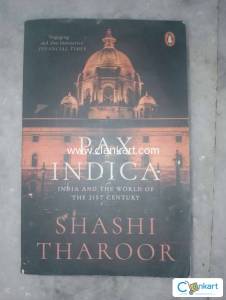
An Era of Darkness: The British Empire in India
In the 18th century, India's share of the world economy was as large as Europe's. By 1947, after two centuries of British rule, it had decreased six-fold. Beyond conquest and deception, the Empire blew rebels from cannons, massacred unarmed protesters, entrenched institutionalized racism, and caused millions to die from starvation. British imperialism justified itself as enlightened despotism for the benefit of the governed, but Shashi Tharoor takes on and demolishes this position, demonstrating how every supposed imperial "gift" - from the railways to the rule of law - was designed in Britain's interests alone. He goes on to show how Britain's Industrial Revolution was founded on India's deindustrialization and the destruction of its textile industry. In this bold and incisive reassessment of colonialism, Tharoor exposes to devastating effect the inglorious reality of Britain's stained Indian legacy.
Why I am not a Hindu
"‘The most gratifying thing for me [is] that [this book] was listed as a millennium book [by The Pioneer] along with Dr. B. R. Ambedkar’s Annihilation of Caste. Moreover, it has been translated into several Indian languages. In a way it has become a weapon in the hands of Dalitbahujan activists’. -from the Afterword to the second edition. Kancha Ilaiah Shepherd writes with passionate anger, laced with sarcasm, on the caste system and Indian society. He looks at the socioeconomic and cultural differences between the Dalitbahujans and Hindus in the contexts of childhood, family life, market relations, power relations, Gods and Goddesses, death and, not the least, Hindutva. Synthesizing many of the ideas of Bahujans, he presents their vision of a more just society.In this second edition, Ilaiah Shepherd presents an Afterword that discusses the history of this book, often seen as the manifesto of the downtrodden Dalitbahujans. He talks of its reviews as well as of the abuse he has received from its detractors. He reminds us of the need for an ongoing dialogue. As he says, he wrote the book ‘for all who have open minds. My request to Brahmin, Baniya and neo-Kshatriyas [upper class Sudras] is this: You learnt only what to teach others—the Dalitbahujans. Now in your own interest and in the interest of this great country, you must learn to listen and to read what we have to say.’ "
The Diary of a young girl
In its latest two-year syllabus for classes IX and X, 2014 (w.e.f. 2012-13 for class IX and 2013-14 for class X) the CBSE has included a new section on Long Reading Text. In this section for Class X, the following works have been recommended by CBSE: 1. The Diary of a Young Girl—Anne Frank 2. The Story of My Life—Helen Keller The school has a choice of using any one. Both these works with unabridged text are now available in strict alignment with the guidelines given by the CBSE
Sapiens: A Brief History of Humankind
Earth is 4.5 billion years old. In just a fraction of that time, one species among countless other have conquered it: us.What makes us brilliant?What makes us deadly?What makes us sapiens?In this bold and provocative book, Yuval Noah Harari explores who we are, how we got here, and where we're going. Sapiens is the thrilling account of our history -- from insignificant apes to rulers of the world.(taken from the inside cover)
Indian History by Krishna Reddy(2nd Edition)
Summary Of The BookIt is a comprehensive book on the history of India, covering the country's history through ancient, medieval, and modern times. It is ideal for students preparing to take the state civil service examinations or any other competitive exams where Indian history is a subject of relevance.The first section begins by looking at the pre-historic cultures in India and goes on to discuss the Indus valley civilization and the Mauryan empire. The second section, on medieval India, looks at significant developments post Gupta dynasty and the rise and fall of the Mughal empire. The third section is on modern India, which majorly focuses on the advent of British rule in the country and the Indian struggle for independence.Each section in the book begins with a brief overview of the period represented through a chronological timeline. A separate section on revision is given at the end, followed by a series of model test papers for self-evaluation.About Krishna ReddyKrishna Reddy has also authored Bharat Ka Itihas and General Knowledge Digest 2010.
The 48 Laws of Power
Amoral, cunning, ruthless, and instructive, this piercing work distills three thousand years of the history of power in to forty-eight well explicated laws. As attention-grabbing in its design as it is in its content, this bold volume outlines the laws of power in their unvarnished essence, synthesizing the philosophies of Machiavelli, Sun-tzu, Carl von Clausewitz, and other great thinkers. Some laws teach the need for prudence ("Law 1: Never Outshine the Master"), the virtue of stealth ("Law 3: Conceal Your Intentions"), and many demand the total absence of mercy ("Law 15: Crush Your Enemy Totally"), but like it or not, all have applications in real life. Illustrated through the tactics of Queen Elizabeth I, Henry Kissinger, P. T. Barnum, and other famous figures who have wielded--or been victimized by--power, these laws will fascinate any reader interested in gaining, observing, or defending against ultimate control.
Book for sale-
Discovered in the attic in which she spent the last years of her life, Anne Frank's remarkable diary has since become a world classic—a powerful reminder of the horrors of war and an eloquent testament to the human spirit.In 1942, with Nazis occupying Holland, a thirteen-year-old Jewish girl and her family fled their home in Amsterdam and went into hiding. For the next two years, until their whereabouts were betrayed to the Gestapo, they and another family lived cloistered in the "Secret Annexe" of an old office building. Cut off from the outside world, they faced hunger, boredom, the constant cruelties of living in confined quarters, and the ever-present threat of discovery and death.In her diary Anne Frank recorded vivid impressions of her experiences during this period. By turns thoughtful, moving, and amusing, her account offers a fascinating commentary on human courage and frailty and a compelling self-portrait of a sensitive and spirited young woman whose promise was tragically cut short.
The Hungry Tide
Off the easternmost coast of India lies the immense archipelago of tiny islands known as the Sundarbans. Life here is precarious, ruled by the unforgiving tides and the constant threat of attack by Bengal tigers. Into this place of vengeful beauty come two seekers from different worlds, whose lives collide with tragic consequences.The settlers of the remote Sundarbans believe that anyone without a pure heart who ventures into the watery island labyrinth will never return. With the arrival of two outsiders from the modern world, the delicate balance of small community life uneasily shifts. Piya Roy is a marine biologist, of Indian descent but stubbornly American, in search of a rare dolphin. Kanai Dutt is an urbane Delhi businessman, here to retrieve the journal of his uncle who died mysteriously in a local political uprising. When Piya hires an illiterate but proud local fisherman to guide her through the crocodile-infested backwaters, Kanai becomes her translator. From this moment, the tide begins to turn.A contemporary story of adventure and romance, identity and history, The Hungry Tide travels deep into one of the most fascinating regions on earth, where the treacherous forces of nature and human folly threaten to destroy a way of life.
THE IMMORTALS OF MELUHA. Episode from The Secret of the Nagas inside
Called “archetypal and stirring” by Deepak Chopra, The Immortals of Meluha heralds an exciting new wave of fantasy writing inspired by the ancient civilizations of the East. Tripathi devoted years to the research of Hindu mythological stories and history, and discussions with his family about the destiny of the human body, mind and soul to create this sweeping and fascinating adaptation of ancient Hindu mythology for modern fantasy readers. 1900 BC in what modern Indians call the Indus Valley Civilization and the inhabitants called the land of Meluha: a near-perfect empire created many centuries earlier by Lord Ram—one of the greatest monarchs that ever lived—faces peril as its primary river, the Saraswati, is slowly drying to exctinction. The Suryavanshi rulers are challenged with devastating terrorist attacks from the east, the land of the Chandravanshis. To make matters worse, the Chandravanshis appear to have allied with the Nagas, an ostracized and sinister race of deformed humans with astonishing martial skills. The only hope for the Suryavanshis is an ancient legend: When evil reaches epic proportions, when all seems lost, a hero will emerge. Is the unexpected, rough-hewn Tibetan immigrant Shiva that hero? Drawn suddenly to his destiny, duty, and by love, Shiva will attempt to move mountains and lead the Suryavanshi to destroy evil.
Pearson - A history of Ancient and Early Medieval India
A History of Ancient and Early Medieval India is the most comprehensive textbook yet for undergraduate and postgraduate students. It introduces students to original sources such as ancient texts, artefacts, inscriptions and coins, illustrating how historians construct history on their basis. Its clear and balanced explanation of concepts and historical debates enables students to independently evaluate evidence, arguments and theories. This remarkable textbook allows the reader to visualize and understand the rich and varied remains of India s ancient past, transforming the process of discovering that past into an exciting experience.
Bipan Chandra - History Of Modern India
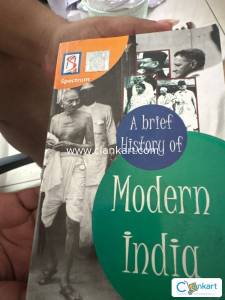
Published in the year 2009, History Of Modern India is a book that revolves around the history of British India, throwing light on the nationalist movement and colonialism. History Of Modern India is a book that is written by renowned historian, Bipan Chandra. The contents of this book are a result of Chandra’s research on the subjects of colonialism and nationalism in the country. Apart from his research, Chandra has also drawn from the works of renowned historians during that time in history.In total, there are 14 chapters in this book that cover different periods in Indian history. Some of the chapters in this book include Indian States And Society In The Eighteenth Century, Religious And Social Reform After 1858, The Struggle For Sawaraj, The Nationalist Movement, European Penetration And The British Conquest, Social And Cultural Awakening In The First Half Of The Nineteenth Century, The Decline Of The Mughal Empire, and The Revolt Of 1857. Some other chapters include The Nationalist Movement: 1858-1905, Administrative Changes After 1858, and Administrative Organisation And Society And Cultural Policy.This book doesn’t focus on the political factors during that period, but deals with the economic, religious, and social history of India. Through the course of this book, Chandra provides insight on several events in modern Indian history such as the establishment of the British East India Company, which led to a tightened grip of the British over India. Chandra also explains that the major reason behind the colonial rule was to exploit India by means of investment and trade. The chapters in this book are arranged in chronological order, starting from the British Rule to the independence of the country. This piece of literature provides its readers with loads of information on the nationalist movement, throwing light on the contributions made by several different individuals. This book is a must-have for history students as well as for those who want to gain insight into the history of modern India.
Bipan Chandra - India's Struggle for Independence
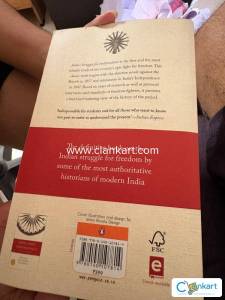
This is the first major study to examine every one of the varied strands of the epic struggle individually and collectively and present it in a new and coherent narrative and analytical framework. Basing themselves on oral and other primary sources and years of research, the authors take the reader through every step of the independence struggle from the abortive Revolt of 1857 to the final victory of 1947. More important while incorporating existing historiographical advances, the book evolves a new and lucid view of the history of the period which will endure.
A complete self study guide BArch
Odisha is an eastern Indian state, which is rich in culture and traditions and is dotted with various ancient Hindu temples. Knowing its general knowledge is essential for aspirants who are preparing for OPSC and other state level examinations. “Know Your State Odisha” has been revised carefully and consciously to promote General Knowledge of this cultural and traditional state. It contains various chapters to foster the knowledge of its History, Geography, Economy, Polity, Art and Culture, Center and State Government Welfare Schemes and Current Affairs for candidates who are appearing in Odisha Public Service Commission and other state level examinations. Housed with more than 1100 Multiple Choice Questions at the end of each chapter for practice, it is a perfect reference book to get a quick, relevant and easy route for achieving success in the examination.