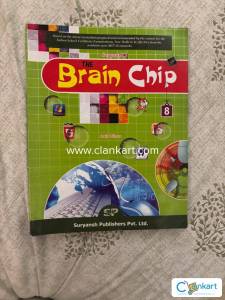
Buy used Class 8 Books online in India
Buy Second Hand Books, Used Books Online In India

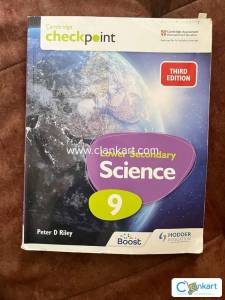
Cambridge Lower Secondary Science Learner's Book 7 - 2nd Edition
Written by well-respected authors, the Cambridge Checkpoint Science suite provides a comprehensive, structured resource which covers the full Cambridge Secondary 1 framework and seamlessly progresses into the next stage. This engaging course supports teaching of the Science framework both theoretically and practically, with full coverage of the Scientific Enquiry framework integrated throughout the series. This Workbook for Stage 9 contains exercises that develop students' ability to apply their knowledge, as well as Scientific Enquiry skills relating to planning experiments and recording results. Integrated review of topics from Stages 7 and 8 as well as full coverage of the Stage 9 content provides preparation for the Cambridge Checkpoint Science test and a solid foundation for progression into the Cambridge IGCSE Sciences.
NCERT at your FINGERTIPS
1. Best-selling study guide and well-structured study resource for NEET, AIIMS, JIPMER. 2. NEET Objective Physics Vol 1. – for class 11 3. The book follows the NCERT pattern for MBBS & BDS entrance preparation along with their school studies. 4. Diagrams, tables, figures etc support theory 5. Practice exercises after every chapter 6. Coverage of last 8 Years Questions of NEET, CBSEE AIPMT and Other Medical Entrances. The “NEET Objective Physics Volume – 01” is a complete comprehensive book designed for the medical students preparing for NEET. As the title suggests the volume -1 covers the complete NEET syllabus along with NCERT Textbook of class 11th into 17 Chapters for the simultaneous preparation of both school & exam. Every chapter is well supported by theories, diagrams, tables, figures. Important points and Notes are given in the topics to enrich students. In order to help, Check Point Exercises are given in between the text of all chapters to make students linked with the topic. Solved Examples are given with the different concepts of chapters to make students learn the problem solving skills. Exercises provided in the chapters are divided into 3 parts. Part – A: Taking it Together deals with objective questions arranged according to level of difficulty for the systematic practice. Part – B: Medical Entrance Special Format Questions – covers all special types of questions, generally asked in NEET & other Medical Entrances, Part – C: Medical Entrances’ Gallery – asked questions in Last 10 years’ (2020-2011) in NEET and other medical entrances. TOC Basic Mathematics, Units, Dimensions and Error Analysis, Vectors, Motion in One Dimension, Motion in a Plane and Projectile Motion, Laws of Motion, Work, Power and Energy, Circulation Motion, Rotation, Gravitation, Simple Harmonic Motion, Elasticity, Fluid Mechanics, Thermometry, Thermal Expansion and Kinetic Theory of Gases, Laws of Thermodynamics, Calorimetry and Heat Transfer, Wave Motion.
The complete reference c++
Best-selling genius Herb Schildt covers everything from keywords, syntax, and libraries, to advanced features such as overloading, inheritance, virtual functions, namespaces, templates, and RTTI?plus, a complete description of the Standard Template Library (STL). About The Author Herbert Schildt is a world leading programming author. He is an authority on the C, C++, Java, and C# programming languages, and a master Windows programmer. His programming books have sold more than three million copies worldwide and have been translated into all major foreign languages. He is the author of numerous best sellers including C: The Complete Reference, Java 2: The Complete Reference, Java 2: A Beginner's Guide, C#: A Beginner's Guide, and many more. Schildt holds a master's degree in computer science from the University of Illinois. Table Of Contents Part I: The Foundation of C++: The C Subset Part I: The Foundation of C++: The C Subset 1: An Overview of C 2: Expressions 3: Statements 4: Arrays and Null-Terminated Strings 5: Pointers 6: Functions 8: C-Style Console I/O 9: File I/O 10: The Preprocessor and Comments Part II: C++ 11: An Overview of C++ 12: Classes and Objects 13: Arrays, Pointers, References, and the Dynamic Allocation Operators 14: Function Overloading, Copy Constructors, and Default Arguments 15: Operator Overloading 16: Inheritance 17: Virtual Functions and Polymorphism 18: Templates 19: Exception Handling 20: The C++ I/O System Basics 21: C+
Mechanics book for jee main and advanced
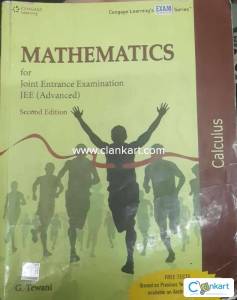
1. Skill in Mathematics’ series is prepared for JEE Main and Advanced papers 2. It is a highly recommended textbook to develop a strong grounding in Differential Calculus 3. The book covers the entire syllabus into 8 chapters 4. Each chapter includes a wide range of questions that are asked in the examinations Good foundational grip is required in the Differential Calculus, while you are preparing for JEE Mains & Advanced or any other engineering. Bringing up the series “Skills in Mathematics for JEE Main & Advanced for Differential Calculus” that is carefully revised with the sessionwise theory and exercise; to help candidates to learn & tackle the mathematical problems. The book has 8 Chapters covering the whole syllabus for the JEE Mains and Advanced as prescribed. Each chapter is divided into sessions giving complete clarity to concepts. Apart from sessionwise theory, JEE Type examples and Chapter Exercise contain huge amount of questions that are provided in every chapter under Practice Part. Prepared under great expertise, it is a highly recommended textbook to develop a strong grounding in Algebra to perform best in JEE and various engineering entrances. TOC: Essential Mathematical Tools, Differentiation, Functions, Graphical Transformations, Limits, Continuity and Differentiability, dy/dx As a Rate Measurer & Tangents, Normals, Monotonicity, Maxima and Minima.
VHDL Primer 3rd Edition by J. Bhasker
VHDL is a hardware description language that can be used to model a digital system at many levels of abstraction. Its powerful features enable modeling designs with high degrees of complexity. This book aims at introducing the VHDL language to the readers in a user-friendly, readable style, concentrating only on the most useful aspects of this language. It is contemporary and uptodate as it incorporates the popular and widely used IEEE, STD_LOGIC_1164 package Table of Contents Preface. Preface to First Edition. Preface to Second Edition. 1. Introduction. 2. A Tutorial. 3. Basic Language Elements. 4. Behavioral Modeling. 5. Dataflow Modeling. 6. Structural Modeling. 7. Generics and Configurations. 8. Subprograms and Overloading. 9. Packages and Libraries. 10. Advanced Features. 11. Model Simulation. 12. Hardware Modeling Examples. Appendices- A. Predefined Environment. B. Syntax Reference. C. A Package Example. D. Summary of Changes. E. The STD_LOGIC_1164 Package. F. An Utility Package. Bibliography. Index.
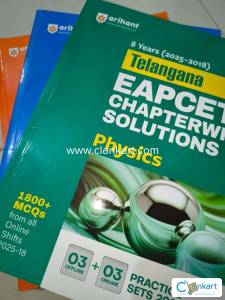
Physics prep book
About the Book: Together with Physics (Class -12) Together with "Physics" XII contains these exellentfeatures: l. Summary of each chapter with comprehensive material havingall the useful information, relevant formulae and labelleddiagram. 2. A good collection of questions/problems at the end of eachunit for testing higher mental abilities. 3. Self-evaluation test paper with difficulty level at the endof each unit. 4. Questions asked in examinations. 5. Higher Order Thinking Skills (HOTS) Questions. 6. Value Based Questions. 7. One solved latest CBSE sample paper and 10practicepapers. 8. Latest Examination Papers (Solved). 9. Incorporates the supplementary Textual material issued byCBSE. Contents Electrostatics Current Electricity Magnetic Effects of Current and Magnetism Electromagnetic Induction and Alternating Currents Electromagnetic Waves Wave Optics, Ray Optics and Optical Instruments Dual Nature of Matter and Radiation Atoms and Nuclei Electronic Devices Communication Systems Latest CBSE Sample Papers (Solved) Practice Papers (1 to 15) Examination Papers Latest Examination Papers (Solved) Appendix of Additional Topic
Virtual Instrumentation
This book provides a practical and accessible understanding of the fundamental principles of virtual instrumentation. It explains how to acquire, analyze and present data using LabVIEW (Laboratory Virtual Instrument Engineering Workbench) as the application development environment. The book introduces the students to the graphical system design model and its different phases of functionality such as design, prototyping and deployment. It explains the basic concepts of graphical programming and highlights the features and techniques used in LabVIEW to create Virtual Instruments (VIs). Using the technique of modular programming, the book teaches how to make a VI as a subVI. Arrays, clusters, structures and strings in LabVIEW are covered in detail.The book also includes coverage of emerging graphical system design technologies for real-world applications. In addition, extensive discussions on data acquisition, image acquisition, motion control and LabVIEW tools are presented. This book is designed for undergraduate and postgraduate students of instrumentation and control engineering, electronics and instrumentation engineering, electrical and electronics engineering, electronics and communication engineering, and computer science and engineering. It will be also useful to engineering students of other disciplines where courses in virtual instrumentation are offered. Table of Contents Foreword Preface 1. GRAPHICAL SYSTEM DESIGN 2. INTRODUCTION TO LabVIEW 3. MODULAR PROGRAMMING 4. REPETITION AND LOOPS 5. ARRAYS 6. CLUSTERS 7. PLOTTING DATA 8. STRUCTURES 9. STRINGS AND FILE I/O 10. INSTRUMENT CONTROL 11. DATA ACQUISITION 12. IMAQ VISION 13. MOTION CONTROL 14. LabVIEW TOOLS AND GSD APPLICATIONS Index
CHEMICAL PROCESS CONTROL
Designed as an undergraduate-level textbook in Chemical Engineering, this student-friendly, thoroughly class-room tested book, now in its second edition, continues to provide an in-depth analysis of chemical engineering thermodynamics. The book has been so organized that it gives comprehensive coverage of basic concepts and applications of the laws of thermodynamics in the initial chapters, while the later chapters focus at length on important areas of study falling under the realm of chemical thermodynamics. The reader is thus introduced to a thorough analysis of the fundamental laws of thermodynamics as well as their applications to practical situations. This is followed by a detailed discussion on relationships among thermodynamic properties and an exhaustive treatment on the thermodynamic properties of solutions. The role of phase equilibrium thermodynamics in design, analysis, and operation of chemical separation methods is also deftly dealt with. Finally, the chemical reaction equilibria are skillfully explained. Besides numerous illustrations, the book contains over 200 worked examples, over 400 exercise problems (all with answers) and several objective-type questions, which enable students to gain an in-depth understanding of the concepts and theory discussed. The book will also be a useful text for students pursuing courses in chemical engineering-related branches such as polymer engineering, petroleum engineering, and safety and environmental engineering. New to This Edition • More Example Problems and Exercise Questions in each chapter • Updated section on Vapour–Liquid Equilibrium in Chapter 8 to highlight the significance of equations of state approach • GATE Questions up to 2012 with answers
Digital logic and & state machine design
Key Features Fills the need for a concise, practical text on digital system design at the undergraduate level. Features completely new chapters on programmable logic devices and computer organization. Written by one of the best-known and most-respected authors in the field About the Book: Digital Logic and State Machine Design: 3rd Edition From one of the best known and successful authors in the field,this new edition provides concise, practical coverage of digitalsystem design aimed at undergraduates. The primary goal of thisbook is to illustrate that sequential circuits can be designedusing state machine techniques. These methods apply to sequentialcircuit design as efficiently as Boolean algebra and Karnaughmapping methods apply to combinatorial design. Comer presents thetechniques involved, then proceeds directly to designing digitalsystems - a task comprising producing the schematic or blockdiagram of a system based on a given set of specifications. Thedesign serves as the basis for the construction of the actualhardware system. This new edition introduces state machines earlierthan in previous editions, amd adds new chapters on programmablelogic devices and computer organization. Contents Chapter 1. Introduction to Digital Systems Chapter 2. Boolean Algebra and Mapping Methods Chapter 3. Logic Function Realization with MSI Circuits Chapter 4. Flip-Flops, Counters, and Registers Chapter 5. Introduction to State Machines Chapter 6. Synchronous State Machine Design Chapter 7. Interfacing and Design of Synchronous Systems Chapter 8. Programmable Logic Devices Chapter 9. Digital Computing Index
KD Tripathi edition 8
Revised and updated chapters including new drugs and latest treatment guidelines.Wide range of topics from basic pharmacological concepts to practical therapeutics.A new chapter on 'Nitric Oxide and Vasoactive Peptide Signal Molecules?; has been added along with novel drugs that act by modifying action/turnover of these molecules.Priority has been accorded to drugs that are marked in India and their leading brand names are mentioned along with dosage forms.List of abbreviations provided in the beginning of the book.All recently released drugs are included.Eye catching drug classification charts which help create pictorial memory.Several new figures, charts, tables and highlight boxes have been added.Focus on 'evidence-based medicine' by extensive reference to credible studies and endpoint trials.India-specific information on diseases, drugs and treatment guidelines, particularly for TB, leprosy, Hiv-Aids, malaria, kala-azar, etc.Therapeutic recommendations from eminent professional bodies and organizations.The ?Problem Directed Study? at the end of most chapters provides an exercise in therapeutic decision making.Includes Appendices on Solution to Problem Directed Study; Prescribing in Pregnancy; Drugs in Breastfeeding; and Drugs and Fixed Dose Combinations Banned in India.A brief list of useful references for further reading is provided at the end of the book.
Vectors and 3D Geometry for JEE Main and Advanced
1. Skill in Mathematics’ series is prepared for JEE Main and Advanced papers 2. It is a highly recommended textbook to develop a strong grounding in Differential Calculus 3. The book covers the entire syllabus into 8 chapters 4. Each chapter includes a wide range of questions that are asked in the examinations Good foundational grip is required in the Differential Calculus, while you are preparing for JEE Mains & Advanced or any other engineering. Bringing up the series “Skills in Mathematics for JEE Main & Advanced for Differential Calculus” that is carefully revised with the sessionwise theory and exercise; to help candidates to learn & tackle the mathematical problems. The book has 8 Chapters covering the whole syllabus for the JEE Mains and Advanced as prescribed. Each chapter is divided into sessions giving complete clarity to concepts. Apart from sessionwise theory, JEE Type examples and Chapter Exercise contain huge amount of questions that are provided in every chapter under Practice Part. Prepared under great expertise, it is a highly recommended textbook to develop a strong grounding in Algebra to perform best in JEE and various engineering entrances. TOC: Essential Mathematical Tools, Differentiation, Functions, Graphical Transformations, Limits, Continuity and Differentiability, dy/dx As a Rate Measurer & Tangents, Normals, Monotonicity, Maxima and Minima.
Integral Calculus for JEE Main and Advanced (Amit M. Aggarwal)
1. Skill in Mathematics’ series is prepared for JEE Main and Advanced papers 2. It is a highly recommended textbook to develop a strong grounding in Differential Calculus 3. The book covers the entire syllabus into 8 chapters 4. Each chapter includes a wide range of questions that are asked in the examinations Good foundational grip is required in the Differential Calculus, while you are preparing for JEE Mains & Advanced or any other engineering. Bringing up the series “Skills in Mathematics for JEE Main & Advanced for Differential Calculus” that is carefully revised with the sessionwise theory and exercise; to help candidates to learn & tackle the mathematical problems. The book has 8 Chapters covering the whole syllabus for the JEE Mains and Advanced as prescribed. Each chapter is divided into sessions giving complete clarity to concepts. Apart from sessionwise theory, JEE Type examples and Chapter Exercise contain huge amount of questions that are provided in every chapter under Practice Part. Prepared under great expertise, it is a highly recommended textbook to develop a strong grounding in Algebra to perform best in JEE and various engineering entrances. TOC: Essential Mathematical Tools, Differentiation, Functions, Graphical Transformations, Limits, Continuity and Differentiability, dy/dx As a Rate Measurer & Tangents, Normals, Monotonicity, Maxima and Minima.
Arihant Trigonometry For Jee Main And Advanced (Amit M. Agarwal)
1. Skill in Mathematics’ series is prepared for JEE Main and Advanced papers 2. It is a highly recommended textbook to develop a strong grounding in Differential Calculus 3. The book covers the entire syllabus into 8 chapters 4. Each chapter includes a wide range of questions that are asked in the examinations Good foundational grip is required in the Differential Calculus, while you are preparing for JEE Mains & Advanced or any other engineering. Bringing up the series “Skills in Mathematics for JEE Main & Advanced for Differential Calculus” that is carefully revised with the sessionwise theory and exercise; to help candidates to learn & tackle the mathematical problems. The book has 8 Chapters covering the whole syllabus for the JEE Mains and Advanced as prescribed. Each chapter is divided into sessions giving complete clarity to concepts. Apart from sessionwise theory, JEE Type examples and Chapter Exercise contain huge amount of questions that are provided in every chapter under Practice Part. Prepared under great expertise, it is a highly recommended textbook to develop a strong grounding in Algebra to perform best in JEE and various engineering entrances. TOC: Essential Mathematical Tools, Differentiation, Functions, Graphical Transformations, Limits, Continuity and Differentiability, dy/dx As a Rate Measurer & Tangents, Normals, Monotonicity, Maxima and Minima.