Clankart Logo

Buy used Class 8 Books online in India

Buy Second Hand Books, Used Books Online In India
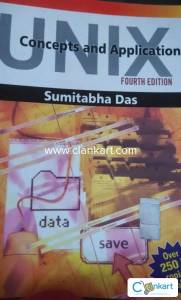
The Essentials of Forensic Medicine and Toxicology

The Essentials of Forensic Medicine and Toxicology

₹500

K. S narayan reddy, has been professor of forensic medicine since 1965. He was awarded the degree of doctor of philosophy in medicine, by the international university of contemporary studies, washington d.c u.s.a. The aim is to provide reasonable coverage of the subject as a whole. The opinions expressed in the book are entirely mine. It is intended primarily to meet the needs of the undergraduate medical students, already overburdened with a heavy curriculum, to have a clear grasp of the subject and for examination purpose. Table of contents section i: forensic medicine 1. Introduction 2. Legal procedure 3. Medical law and ethics 4. Identification 5. Medicolegal autopsy 6. Death and its cause 7. Postmortem changes 8. Mechanical injuries 9. Regional injuries 10. Medicolegal aspects of wounds 11. Thermal deaths 12. Starvation 13. Mechanical asphyxia 14. Anaesthetic and operative deaths 15. Impotence and sterility 16. Virginity, pregnancy and delivery 17. Abortion 18. Sexual offences 19. Infant deaths 20. Blood stains 21. Artefacts 22. Forensic science laboratory 23. Forensic psychiatry section ii: toxicology 24. General considerations 25. Agricultural poisons 26. Corrosive poisons 27. Metallic poisons 28. Inorganic irritant poisons 29. Organic irritant poisons 30. Cns depressants 31. Psychotropic drugs 32. Deliriant poisons 33. Drug dependence and abuse 34. Spinal poisons 35. Cardiac poisons 36. Asphyxiants 37. Miscellaneous poisons 38. Food poisoning appendices index

3 months ago
Advertisement
Want to see your books here? Have Used Books?
Make some extra cash by selling your old books for actual money in your UPI/Bank account. Go on, it's quick and easy.
Advertisement
Arihant physics of class 11

Arihant physics of class 11

₹350

1. Best-selling study guide and well-structured study resource for NEET, AIIMS, JIPMER. 2. NEET Objective Physics Vol 1. – for class 11 3. The book follows the NCERT pattern for MBBS & BDS entrance preparation along with their school studies. 4. Diagrams, tables, figures etc support theory 5. Practice exercises after every chapter 6. Coverage of last 8 Years Questions of NEET, CBSEE AIPMT and Other Medical Entrances. The “NEET Objective Physics Volume – 01” is a complete comprehensive book designed for the medical students preparing for NEET. As the title suggests the volume -1 covers the complete NEET syllabus along with NCERT Textbook of class 11th into 17 Chapters for the simultaneous preparation of both school & exam. Every chapter is well supported by theories, diagrams, tables, figures. Important points and Notes are given in the topics to enrich students. In order to help, Check Point Exercises are given in between the text of all chapters to make students linked with the topic. Solved Examples are given with the different concepts of chapters to make students learn the problem solving skills. Exercises provided in the chapters are divided into 3 parts. Part – A: Taking it Together deals with objective questions arranged according to level of difficulty for the systematic practice. Part – B: Medical Entrance Special Format Questions – covers all special types of questions, generally asked in NEET & other Medical Entrances, Part – C: Medical Entrances’ Gallery – asked questions in Last 10 years’ (2020-2011) in NEET and other medical entrances. TOC Basic Mathematics, Units, Dimensions and Error Analysis, Vectors, Motion in One Dimension, Motion in a Plane and Projectile Motion, Laws of Motion, Work, Power and Energy, Circulation Motion, Rotation, Gravitation, Simple Harmonic Motion, Elasticity, Fluid Mechanics, Thermometry, Thermal Expansion and Kinetic Theory of Gases, Laws of Thermodynamics, Calorimetry and Heat Transfer, Wave Motion.

3 months ago
GRB Inorganic chemistry

GRB Inorganic chemistry

₹1300

An advanced-level textbook of inorganic chemistry for the graduate (B.Sc) and postgraduate (M.Sc) students of Indian and foreign universities. This book is a part of four volume series, entitled "A Textbook of Inorganic Chemistry – Volume I, II, III, IV". CONTENTS: Chapter 1. Stereochemistry and Bonding in Main Group Compounds: VSEPR theory, dπ -pπ bonds, Bent rule and energetic of hybridization. Chapter 2. Metal-Ligand Equilibria in Solution: Stepwise and overall formation constants and their interactions, Trends in stepwise constants, Factors affecting stability of metal complexes with reference to the nature of metal ion and ligand, Chelate effect and its thermodynamic origin, Determination of binary formation constants by pH-metry and spectrophotometry. Chapter 3. Reaction Mechanism of Transition Metal Complexes – I: Inert and labile complexes, Mechanisms for ligand replacement reactions, Formation of complexes from aquo ions, Ligand displacement reactions in octahedral complexes- acid hydrolysis, Base hydrolysis, Racemization of tris chelate complexes, Electrophilic attack on ligands. Chapter 4. Reaction Mechanism of Transition Metal Complexes – II: Mechanism of ligand displacement reactions in square planar complexes, The trans effect, Theories of trans effect, Mechanism of electron transfer reactions – types; Outer sphere electron transfer mechanism and inner sphere electron transfer mechanism, Electron exchange. Chapter 5. Isopoly and Heteropoly Acids and Salts: Isopoly and Heteropoly acids and salts of Mo and W: structures of isopoly and heteropoly anions. Chapter 6. Crystal Structures: Structures of some binary and ternary compounds such as fluorite, antifluorite, rutile, antirutile, crystobalite, layer lattices- CdI2, BiI3; ReO3, Mn2O3, corundum, pervoskite, Ilmenite and Calcite. Chapter 7. Metal-Ligand Bonding: Limitation of crystal field theory, Molecular orbital theory, octahedral, tetrahedral or square planar complexes, π-bonding and molecular orbital theory. Chapter 8. Electronic Spectra of Transi

3 months ago
UPSC Geography book

UPSC Geography book

₹220

This book is a textbook approach that aims at providing an understanding of our planet's physical topography, climatic and vegetative environment, and the relationship that human beings share across regions. The Physical Geography section deals with topics that span the planet's various topographies like the Earth's Crust, Weathering, Mass Movement and Groundwater; Landforms of Glaciation, The Ocean, Lakes, Coastal Landforms, etc. Each chapter has a questions section to help readers evaluate their understanding of the subject explained in that chapter. Various illustrations and photographs enhance the text, to enable all students to easily understand the concepts. Part two of the book, The Weather, Climate and Vegetation section, covers subjects like different climates and climatic zones like Equatorial, Savanna, Tropical or Arctic climates. Table Of Contents PART I PHYSICAL GEOGRAPHY 1. The Earth and the Universe 1 Exploring the Universe 2. The Earth's Crust 3. Vulcanism and Earthquakes 4. Weathering, Mass Movement and Groundwater 5. Landforms made by Running Water 6. Landforms of Glaciation 7. Arid or Desert Landforms 8. Limestone and Chalk Landforms 9. Lakes 66 General, 10. Coastal Landforms 11. Islands and Coral Reefs 12. The Oceans PART 2 WEATHER, CLIMATE AND VEGETATION 13. Weather 14. Climate 15. The Hot, Wet Equatorial Climate 16. The Tropical Monsoon and Tropical Marine Climates 17. The Savanna or Sudan Climate 18. The Hot Desert and Mid-Latitude Desert Cli-mates 19. The Warm Temperate Western Margin (Mediterranean) Climate 20. The Temperate Continental (Steppe) Climate 21. The Warm Temperate Eastern Margin (China Type) Climate 22. The Cool Temperate Western Margin (British Type) Climate 23, The Cool Temperate Continental (Siberian) Climate 24. The Cool Temperate Eastern Margin (Lauren-tian) Climate 25. The Arctic or Polar Climate .

3 months ago
Advertisement
Advertisement
Advertisement