Clankart Logo

Buy used Business & Economics online in India

Buy Second Hand Books, Used Books Online In India

Self help reading

Self help reading

₹130

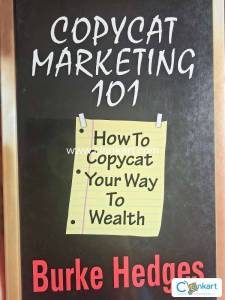
About 95 percent of workers in industrialized countries are employees, make less than $40,000 per year, and save about $2,000 per year. At first glance, these figures may look pretty impressive, especially to people who make less than $40,000. But the truth is, 95 percent of the people in this world aren't getting ahead they're just getting by.Just look at the financial condition of the "average" U.S. citizen at age 65: 36 percent are dead, 54 percent are broke or dependent on others, 5 percent are still working, 4 percent are financially independent, and 1 percent are wealthy. Only 5 percent are financially well off!If you had the opportunity to become a 5%-er, would you take advantage of it? If your answer is "yes," read on, because that's what this book is about.Copycat Marketing 101 will make you aware that most people are 95%-ers because they've been taught to copy people who are in jobs that mean salary caps and financial dependence. In short, most people are copycatting the wrong plan!In this book, you'll learn that the current system most people copycat is designed to create temporary income not true wealth because it's based on linear growth of trading time for dollars. You'll learn that the key to true wealth is leverage, and you will learn about a dynamic form of leverage that wealthy people have been copying for centuries called exponential growth.Best of all, you'll learn how average people can break out of the time-for-money trap by copycatting a simple, duplicatable system of wealth creation that will open the door to financial freedom, once and for all!

7 months ago
Advertisement
Want to see your books here? Have Used Books?
Make some extra cash by selling your old books for actual money in your UPI/Bank account. Go on, it's quick and easy.
Missing in Action

Missing in Action

₹180

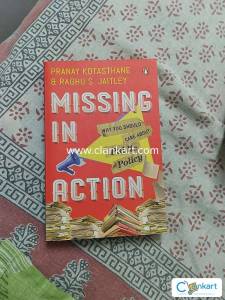
In Search of an Adarsh Indian StateIn India, public policies are all around us. Despite this pervasiveness, yeh public sab nahin jaanti hai (the public doesn't know it all).Questions are rarely asked of the Indian State—the institution that makes rules, bends them and punishes others for breaking the laws it creates. The privileged can afford not to think about the State because we have given up on it. The not-so-privileged have resigned themselves to a State that provides short-term benefits.Either way, we seldom pause to reflect on why the Indian State works the way it does.Missing in Action aims to change such perceptions through sketches from everyday experiences to illustrate India's tryst with public policymaking. It acquaints the reader with some fundamental concepts of the public policy discipline. It explains the logic (or the lack of it!) of the Indian State's actions, shortcomings, constraints, and workings.Jargon-free and accessibly written, the book achieves the difficult task of both entertaining and educating.There have been many books about Indian society, but none so far about the Indian state. Missing in Action fills that gap, and how! Kotasthane and Jaitley are two of our finest thinkers, and their writing combines a surgeon's precision with a poet's art of revealing the unseen. They paint both the big picture and the small details. This book is a masterpiece that will be essential reading 50 years from now. If you want to understand India, you should read Missing in Action .Amit Varma, Creator of The Seen and the Unseen Podcast and The India Uncut BlogMissing in Action is a thoroughly engaging, entertaining, and educational book. The book helps readers understand why the Indian State is the way it is-powerful yet ineffective, well-intentioned yet weak, and ambitious yet underperforming. A must-read for everyone!Rohini Nilekani, Philanthropist, Author of Samaaj Sarkaar a citizen-first approachThe policy outcomes are the result of the three important society, market and the Government. This wond

7 months ago
Advertisement
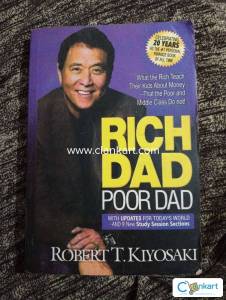
RICH DAD POOR DAD WITH UPDATES

RICH DAD POOR DAD WITH UPDATES

₹100

April 2017 marks 20 years since Robert Kiyosaki’s Rich Dad Poor Dad first made waves in the Personal Finance arena.It has since become the #1 Personal Finance book of all time... translated into dozens of languages and sold around the world.Rich Dad Poor Dad is Robert's story of growing up with two dads — his real father and the father of his best friend, his rich dad — and the ways in which both men shaped his thoughts about money and investing. The book explodes the myth that you need to earn a high income to be rich and explains the difference between working for money and having your money work for you.20 Years... 20/20 HindsightIn the 20th Anniversary Edition of this classic, Robert offers an update on what we’ve seen over the past 20 years related to money, investing, and the global economy. Sidebars throughout the book will take readers “fast forward” — from 1997 to today — as Robert assesses how the principles taught by his rich dad have stood the test of time.In many ways, the messages of Rich Dad Poor Dad, messages that were criticized and challenged two decades ago, are more meaningful, relevant and important today than they were 20 years ago.As always, readers can expect that Robert will be candid, insightful... and continue to rock more than a few boats in his retrospective.Will there be a few surprises? Count on it.Rich Dad Poor Dad...• Explodes the myth that you need to earn a high income to become rich• Challenges the belief that your house is an asset• Shows parents why they can't rely on the school system to teach their kids about money• Defines once and for all an asset and a liability• Teaches you what to teach your kids about money for their future financial success

7 months ago
Advertisement
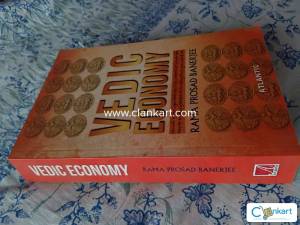
Vedic Economy

Vedic Economy

₹600 ₹1195
50% off

Vedic Economy offers a profound exploration of the economic challenges that have plagued human civilization, including poverty, inequality, scarcity of resources and even impoverished mindsets. A series of impactful events, including the COVID-19 pandemic, the Russia-Ukraine war leading to food and energy crises, rising inflation, tightening debt and the climate emergency, has created severe and interconnected challenges. In response, the book draws upon the timeless values of ancient India. Amidst the growing influence of Westernization, the book turns to the scriptures of Kautilya’s Arthashastra and Mahabharatha for profound insights and guidance on governance, economics, and social issues. It aims to inspire individuals to integrate the spirit of Vedic Economy into their own frameworks, fostering a transformative experience and contributing to the creation of a better world. The book will appeal to a wide audience including general readers, researchers and scholars.Dr. R.P. Banerjee, a distinguished management professor, has taught at prestigious universities in Asia, Europe and America. Dr. Banerjee has played a crucial role in bringing attention to the relevance of Vedic Spiritual thoughts in corporate and organizational functioning, making it popular among management scholars and practitioners. His books Stress Management through Mind Engineering (2021), Art and Science of Management in the Digital Era (2020) and his latest work serve as important guides for the future of management and society. Dr. Banerjee advocates for value-based practices in corporations and organizations worldwide. Alongside his academic pursuits, he is dedicated to spiritual growth and has conducted open discourses on Divinity in Life every Sunday for the past two decades. For his inspiring work in the area of ethics and values, Prof. Banerjee has received the following awards and • “Education Leadership” from BBC World News received in February 2017• “The Asia’s Greatest Leader Award 2021” conferred by “ASIAONE” in August 2021 • “Th

8 months ago
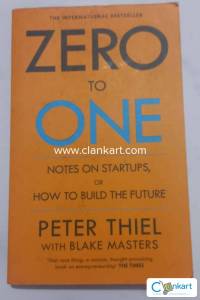
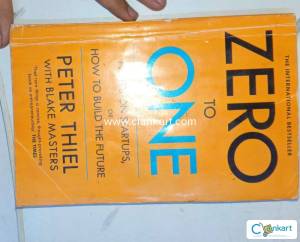
Zero to one : only read once  lying on desk for long time no highlight

Zero to one : only read once lying on desk for long time no highlight

₹150

Peter Thiel is the co-founder of PayPal and the first outside investor in Facebook. In the Spring of 2012, he gave a lecture course at Stanford for software engineers, calling on them to think boldly and broadly about how they might use their skills to shape the future, and imparting the lessons he has gleaned from his own experience. One of the students in that class - Blake Masters - took notes and posted them online. The blog posts became a huge success, with hundreds of thousands of hits, and became the basis for Zero to One.We live in an age of technological stagnation, even if we're too distracted by our new mobile devices to notice. Progress has stalled in every industry except computers, and globalization is hardly the revolution people think it is. It's true that the world can get marginally richer by building new copies of old inventions, making horizontal progress from '1 to n'. But true innovators have nothing to copy. The most valuable companies of the future will make vertical progress from '0 to 1', creating entirely new industries and products that have never existed before. Zero to One is about how to build these companies.A business book that also provides insight into the world of start-ups from a Silicon Valley icon, Thiel shows how to pursue your goals using the most important, most difficult, and most underrated skill in every job or industry: thinking for yourself.

8 months ago
Advertisement
Advertisement