Buy used History & Archaeology books online in India
Buy Second Hand Books, Used Books Online In India
The DIARY of a YOUNG GIRL
Discovered in the attic in which she spent the last years of her life, Anne Frank's remarkable diary has since become a world classic—a powerful reminder of the horrors of war and an eloquent testament to the human spirit.In 1942, with Nazis occupying Holland, a thirteen-year-old Jewish girl and her family fled their home in Amsterdam and went into hiding. For the next two years, until their whereabouts were betrayed to the Gestapo, they and another family lived cloistered in the "Secret Annexe" of an old office building. Cut off from the outside world, they faced hunger, boredom, the constant cruelties of living in confined quarters, and the ever-present threat of discovery and death.In her diary Anne Frank recorded vivid impressions of her experiences during this period. By turns thoughtful, moving, and amusing, her account offers a fascinating commentary on human courage and frailty and a compelling self-portrait of a sensitive and spirited young woman whose promise was tragically cut short.
The People of Indus - Graphic Novel
Who were the people of the Indus?Why didn't they build pyramids like the Egyptians? And ultimately what happened to them?Supported by extensive research from a leading Indus archaeologist, this graphic novel seeks answers to precisely these questions. It is not history in the form of a dull record of dates and events but a beautifully illustrated glimpse into the lives of the people of the Indus civilization, dating all the way back to 3200 BCE. The People of the Indus is a rare account of how one of the most unique and enigmatic civilizations of the ancient world changed the course of human history. It is sure to enthral young adults and older readers alike.
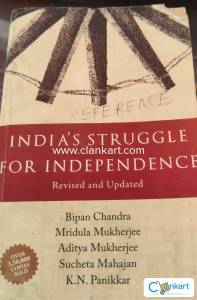
India since independence
ISBNs moved from this editionThe story of the forging of contemporary India, the world's largest democracy, is a rich and inspiring one. This volume analyses the challenges India has faced and the successes it has achieved over the last five decades, in the light of its colonial legacy and century-long struggle for freedom. In doing so, it shows how unique the Indian experience is in the Third World combining development with democracy and civil liberties. seeking the widest possible consensus, as also how the Nehruvian political and economic agenda and basics of foreign policy were evolved and developed. Essential to the quest for consolidation of the nation was the integration of the princely states, the linguistic reorganization of the states, the integration of the tribals into the mainstream and the countering of regional imbalances. Among the other contentious issues considered here, with all their implications for the present situation, are India's foreign policy, party politics in the Centre and the states, the Punjab problem, the growth of communalism, and anticaste politics and untouchability. There are detailed analyses of the Indian economy, including the reforms since 1991, the wide-ranging land reforms and the Green Revolution. These, along with the objective assessments of Jawaharlal Nehru, Indira Gandhi, Jayaprakash Narayan, Lal Bahadur Shastri, Rajiv Gandhi, Vishwanath Pratap Singh and Atal Behari Vajpayee constitute a remarkable overview of a nation on the move.
The Angry Aztecs
According to the opening section of Horrible Histories: Angry Aztecs, this book will teach a little bit of history and a lot about people, but the most important thing is that it will teach children everywhere how to drive their teachers stark, staring mad by repeatedly asking the most dreaded question of all: "WHY?" Why did the Spanish want to steal the Aztecs' treasure? Why did Aztecs eat scum? Why did Aztecs drink live toads in wine? And why is the world going to end on December 22, 2012? Angry Aztecs is recommended reading for grown-ups who want to prepare themselves for the onslaught and an absolute must for children who want to find out a little bit more about the mysterious Aztecs than the serious history books are willing to share. Great, grubby fun and an excellent choice for anyone who is curious about these curious of folk.
Gandhi autobiography
It is not my purpose to attempt a real autobiography. I simply want to tell the story of my numerous experiments with truth, and as my life consists of nothing but those experiments, it is true that the story will take the shape of an autobiography....Identification with everything that lives is impossible without self-purification; without self-purification, the observance of the law of Ahimsa must remain an empty dream; God can never be realised by one who is not pure of heart. Self-purification, therefore, must remain purification in all walks of life. And purification being highly infectious, purification of oneself necessarily leads to the purification of one's surroundings.But the path to self-purification is hard and steep. To attain perfect purity, one has to become absolutely passion-free in thought, speech and action; to rise above the opposing currents of love and hatred, attachment and repulsion. I know that I have not in me as yet the triple purity, in spite of constant ceaseless striving for it. That is why the world's praise fails to move me; indeed it very often stings me. To conquer the subtle passions seems to me far harder than the physical conquest of the world by the force of arms. Ever since my return to India, I have had experiences of the dormant passions lying hidden within me. The knowledge of them has made me feel humiliated though not defeated. The experiences and experiments have sustained me and given me great joy. But I know I still have before me a difficult path to traverse. I must reduce myself to zero. So long as a man does not of his own free will put himself last among his fellow creatures, there is no salvation for him. Ahimsa is the farthest limit of humility.Mohandas Karamchand Gandhi,26 November, 1925.
The Ivory Throne by Manu S. Pillai
In 1498, when Vasco da Gama set foot in Kerala looking for Christians and spices, he unleashed a wave of political fury that would topple local powers like a house of cards. The cosmopolitan fabric of a vibrant trading society—with its Jewish and Arab merchants, Chinese pirate heroes and masterful Hindu Zamorins— was ripped apart, heralding an age of violence and bloodshed. One prince, however, emerged triumphant from this descent into chaos. Shrewdly marrying Western arms to Eastern strategy, Martanda Varma consecrated the dominion of Travancore, destined to become one of the most dutiful pillars of the British Raj. What followed was two centuries of internecine conflict in one of India’s premier princely states, culminating in a dynastic feud between two sisters battling to steer the fortunes of their house on the eve of Independence.Manu S. Pillai’s retelling of this sprawling saga focuses on the remarkable life and work of Sethu Lakshmi Bayi, the last, and forgotten, queen of the House of Travancore. The supporting cast includes the flamboyant painter Raja Ravi Varma and his wrathful wife, scheming matriarchs of ‘violent, profligate and sordid’ character, wife swapping court favourites, vigilant English agents, quarrelling consorts and lustful kings. Extensively researched and vividly rendered, The Ivory Throne conjures up a dramatic world of political intrigues and factions, black magic and conspiracies, crafty ceremonies and splendorous temple treasures, all harnessed in a tragic contest for power and authority in the age of empire.
For Sale hardcover
The definitive biography of Dadabhai Naoroji, the nineteenth-century activist who founded the Indian National Congress, was the first British MP of Indian origin, and inspired Gandhi and Nehru.Mahatma Gandhi called Dadabhai Naoroji the "father of the nation," a title that today is reserved for Gandhi himself. Dinyar Patel examines the extraordinary life of this foundational figure in India's modern political history, a devastating critic of British colonialism who served in Parliament as the first-ever Indian MP, forged ties with anti-imperialists around the world, and established self-rule or swaraj as India's objective.Naoroji's political career evolved in three distinct phases. He began as the activist who formulated the "drain of wealth" theory, which held the British Raj responsible for India's crippling poverty and devastating famines. His ideas upended conventional wisdom holding that colonialism was beneficial for Indian subjects and put a generation of imperial officials on the defensive. Next, he attempted to influence the British Parliament to institute political reforms. He immersed himself in British politics, forging links with socialists, Irish home rulers, suffragists, and critics of empire. With these allies, Naoroji clinched his landmark election to the House of Commons in 1892, an event noticed by colonial subjects around the world. Finally, in his twilight years he grew disillusioned with parliamentary politics and became more radical. He strengthened his ties with British and European socialists, reached out to American anti-imperialists and Progressives, and fully enunciated his demand for swaraj. Only self-rule, he declared, could remedy the economic ills brought about by British control in India.Naoroji is the first comprehensive study of the most significant Indian nationalist leader before Gandhi.
100 Great kings ,Queens Rulers of World
This volume presents a personal selection of great kings and queens, the word 'great' implying no moral judgment but used as a simple descriptive label for those whose significance for good or bad has been considerable. Most of them exercised absolute or near - absolute power, for the emergence of the constitutional monarch is a comparatively recent phenomenon. Also included are rulers who seemed to partake wholly or to a large extent in the royal mystique. Thus there is a certain resemblance between, say, pericles, on the one hand and franklin d. Roosevelt and john f. Kennedy on the other.
BA History
A History of Ancient and Early Medieval India is the most comprehensive textbook yet for undergraduate and postgraduate students. It introduces students to original sources such as ancient texts, artefacts, inscriptions and coins, illustrating how historians construct history on their basis. Its clear and balanced explanation of concepts and historical debates enables students to independently evaluate evidence, arguments and theories. This remarkable textbook allows the reader to visualize and understand the rich and varied remains of India s ancient past, transforming the process of discovering that past into an exciting experience.
Holy War- The Crusades and Their Impact on Today's World
EFT (Emotional Freedom Techniques), also known as Tapping, has become a popular tool for realizing goals. For many of us, one of our main aspirations is to flourish in our careers and, by extension, in our finances. Yet limiting beliefs and fears keep people stuck in their current financial states. EFT uses the fingertips to tap on acupuncture points while emotionally tuning into negative attitudes and past experiences, allowing people to transform their thoughts and feelings. Margaret M. Lynch teaches people how to harness the power of Tapping to identify and clear blocks to prosperity. Book jacket.
Prisoners of Geography
THE MILLION COPY INTERNATIONAL BESTSELLERGeography shapes not only our history, but where we're headed...All leaders are constrained by geography. Their choices are limited by mountains, rivers, seas and concrete. Yes, to follow world events you need to understand people, ideas and movements - but if you don't know geography, you'll never have the full picture.If you've ever wondered why Putin is so obsessed with Crimea, why the USA was destined to become a global superpower, or why China's power base continues to expand ever outwards, the answers are all here.In ten chapters and ten maps, Prisoners of Geography looks at the past, present and future to offer an essential insight into one of the major factors that determines world history.It's time to put the 'geo' back into geopolitics._____'Like having a light shone on your understanding... I can't think of another book that explains the world situation so well. - Nicolas Lezard, Evening Standard'Sharp insights into the way geography shapes the choices of world leaders.' - Gideon Rachman, Financial Times_____Ten maps; ten chapters:Russia * China * United States of America * Latin America * the Middle East * Africa * India and Pakistan * Europe * Japan and Korea * the Arctic'A fresh and original insight into the geopolitics behind today’s foreign policy challenges’ — Andrew Neil‘Crisply written and brilliantly argued’ — Dame Ann Leslie‘An essential and detailed reflection of the geopolitical dynamics that exist globally’ — Dr Sajjan M. Gohel'Quite simply, one of the best books about geopolitics you could imagine: reading it is like having a light shone on your understanding…. Marshall is clear-headed, lucid and possessed of an almost uncanny ability to make the broad picture accessible and coherent … the book is, in a way which astonished me, given the complexities of the subject, unputdownable…. I can’t think of another book that explains the world situation so well.' – Nicholas Lezard, Evening Standard 'Compels a fresh way of looking at maps – not just as objec
Return of a King - An Indian Army in Afgahnistan
In the spring of 1839 British forces invaded Afghanistan for the first time, re-establishing Shah Shuja on the throne, in reality as their puppet, and ushering in a period of conflict over the territory still unresolved today. In 1842, the Afghan people rose in answer to the call for jihad against the foreign occupiers, and the country exploded into violent rebellion. In what is arguably the greatest military humiliation ever suffered by the West in the East, more than eighteen thousand cold and hungry British troops, Indian sepoys and camp followers retreated through the icy mountain passes, and of the last survivors who made their final stand at the village of Gandamak, only one man, Dr Brydon, made it through to the British garrison at Jellalabad. An entire army of what was then the most powerful military nation in the world was utterly routed by poorly equipped tribesmen. The West's first disastrous entanglement in Afghanistan has clear and relevant parallels with the current deepening crisis today, with extraordinary similarities between what NATO faces in cities like Kabul and Kandahar, and that faced by the British in the very same cities, fighting the very same tribes, nearly two centuries ago. History at its most urgent, The Return of a King is the definitive analysis of the first Afghan war. With access to a whole range of previously undiscovered sources, including crucial new material in Russian, Urdu and Persian, and contemporary Afghan accounts including the autobiography of Shah Shuja himself, prize-winning and bestselling historian William Dalrymple's masterful retelling of Britain's greatest imperial disaster is a powerful and important parable of neo-colonial ambition and cultural collision, folly and hubris, for our times.
The End of History & The Last Man
Ever since its first publication in 1992, The End of History and the Last Man has provoked controversy and debate. Francis Fukuyama's prescient analysis of religious fundamentalism, politics, scientific progress, ethical codes, and war is as essential for a world fighting fundamentalist terrorists as it was for the end of the Cold War. Now updated with a new afterword, The End of History and the Last Man is a modern classic.
After The Prophet
In this gripping narrative history, Lesley Hazleton tells the tragic story at the heart of the ongoing rivalry between the Sunni and Shia branches of Islam, a rift that dominates the news now more than ever. Even as Muhammad lay dying, the battle over who would take control of the new Islamic nation had begun, beginning a succession crisis marked by power grabs, assassination, political intrigue, and passionate faith. Soon Islam was embroiled in civil war, pitting its founder's controversial wife Aisha against his son-in-law Ali, and shattering Muhammad’s ideal of unity. Combining meticulous research with compelling storytelling, After the Prophet explores the volatile intersection of religion and politics, psychology and culture, and history and current events. It is an indispensable guide to the depth and power of the Shia–Sunni split.
The Ethinic Cleansing of Palestine
The 1948 Israeli War of Independence involved one of the largest forced migrations in modern history. Around a million people were expelled from their homes at gunpoint, civilians were massacred, and hundreds of Palestinian villages destroyed. Denied for almost six decades, had it happened today it could only have been called "ethnic cleansing".In this groundbreaking book, renowned Israeli historian Ilan Pappe offers impressive archival evidence to demonstrate that, from its very inception, a central plank in Israel's founding ideology was the forcible removal of the indigenous population, a strategy that continues to the present day. Dr. Pappe's vivid and timely account sheds new light on the origins and development of the Palestine-Israel conflict, and is indispensable for anyone interested in the Middle East.
21 LESSONS for the 21st CENTURY
**FROM THE AUTHOR OF THE MILLION-COPY BESTSELLER SAPIENS**Sapiens showed us where we came from. Homo Deus looked to the future. 21 Lessons for the 21st Century explores the present.How can we protect ourselves from nuclear war, ecological cataclysms and technological disruptions? What can we do about the epidemic of fake news or the threat of terrorism? What should we teach our children?Yuval Noah Harari takes us on a thrilling journey through today’s most urgent issues. The golden thread running through his exhilarating new book is the challenge of maintaining our collective and individual focus in the face of constant and disorienting change. Are we still capable of understanding the world we have created?