Buy used Computers & Internet books online in India
Buy Second Hand Books, Used Books Online In India
Open Source Intelligence Methods and Tools
Apply Open Source Intelligence (OSINT) techniques, methods, and tools to acquire information from publicly available online sources to support your intelligence analysis. Use the harvested data in different scenarios such as financial, crime, and terrorism investigations as well as performing business competition analysis and acquiring intelligence about individuals and other entities. This book will also improve your skills to acquire information online from both the regular Internet as well as the hidden web through its two sub-layers: the deep web and the dark web. The author includes many OSINT resources that can be used by intelligence agencies as well as by enterprises to monitor trends on a global level, identify risks, and gather competitor intelligence so more effective decisions can be made. You will discover techniques, methods, and tools that are equally used by hackers and penetration testers to gather intelligence about a specific target online. And you will be aware of how OSINT resources can be used in conducting social engineering attacks. Open Source Intelligence Methods and Tools takes a practical approach and lists hundreds of OSINT resources that can be used to gather intelligence from online public sources. The book also covers how to anonymize your digital identity online so you can conduct your searching activities without revealing your identity. What You’ll Learn Identify intelligence needs and leverage a broad range of tools and sources to improve data collection, analysis, and decision making in your organization Use OSINT resources to protect individuals and enterprises by discovering data that is online, exposed, and sensitive and hide the data before it is revealed by outside attackers Gather corporate intelligence about business competitors and predict future market directions Conduct advanced searches to gather intelligence from social media sites such as Facebook and Twitter Understand the different layers that make up the Internet and how to search within the invisible web which
Hunting Cyber Criminals
The skills and tools for collecting, verifying and correlating information from different types of systems is an essential skill when tracking down hackers. This book explores Open Source Intelligence Gathering (OSINT) inside out from multiple perspectives, including those of hackers and seasoned intelligence experts. OSINT refers to the techniques and tools required to harvest publicly available data concerning a person or an organization. With several years of experience of tracking hackers with OSINT, the author whips up a classical plot-line involving a hunt for a threat actor. While taking the audience through the thrilling investigative drama, the author immerses the audience with in-depth knowledge of state-of-the-art OSINT tools and techniques. Technical users will want a basic understanding of the Linux command line in order to follow the examples. But a person with no Linux or programming experience can still gain a lot from this book through the commentaries. This book’s unique digital investigation proposition is a combination of story-telling, tutorials, and case studies. The book explores digital investigation from multiple angles: Through the eyes of the author who has several years of experience in the subject. Through the mind of the hacker who collects massive amounts of data from multiple online sources to identify targets as well as ways to hit the targets. Through the eyes of industry leaders. This book is ideal for: Investigation professionals, forensic analysts, and CISO/CIO and other executives wanting to understand the mindset of a hacker and how seemingly harmless information can be used to target their organization. Security analysts, forensic investigators, and SOC teams looking for new approaches on digital investigations from the perspective of collecting and parsing publicly available information. CISOs and defense teams will find this book useful because it takes the perspective of infiltrating an organization from the mindset of a hacker. The commentary provided by outside experts
Hack The World with OSINT
Come along on a technology misadventure, learning OSINT tools & techniques while traveling on a hacker journey. Protect your organisation or find out if your home alarm system is exposed insecurely to the internet. Discover weaknesses in IT, IOT and ICS SCADA systems in-depth. Using Censys, Spiderfoot, ZMap, OWASP ZAP, Maltego and other tools to discover a wide range of vulnerable systems and information. Smart appliances, North American Open ADR smart grid, fire alarms, database servers, intelligence agency security fails, printers, email systems, remote management hacking, smart houses, solar panels, hacked web servers, hydroelectric dams, solar panels, crackable encryption, exploitable ICS/SCADA, IOT, IT & more. Get up to speed on IT/IOT & ICS SCADA hacking using the examples, exercises and tools using Kali and a customized book virtual machine.
Full Stack Recruiter Paperback
Are you ready to learn everything you need to know about sourcing and recruitment ? Then you’ve found the right book! Whether you are already working in recruitment, new to the industry, or just hoping to begin your career as a recruiter, there are essential strategies used by successful recruiters that will help you accelerate your career. Of course, no one is born knowing these things; they come from years of experience in the field. That’s exactly what this book is: years of practical, real-world experience distilled into one comprehensive guide to succeeding in your recruiting career in the digital era. This book is designed to help recruiters gain a broad understanding of the industry while expanding and deepening the knowledge of more senior professionals. Whether you belong in the first category or the second, this book will help you take your career to the next level. This comprehensive recruitment and sourcing guide is divided into two parts. The first part focuses entirely on sourcing strategies. You’ll learn new and creative ways to source and find great candidates, as well as how to uncover their contact details and approach them in a respectful and effective manner. And much more! The second part deals with recruitment. You’ll learn how to excel in recruitment marketing, candidate engagement, recruitment analytics, candidate engagement, cold-calling, and efficiently manage many other essential aspects of your role. Both sections work together to create a comprehensive guide to excelling in every aspect of your recruitment career! The author, Jan Tegze, is an experienced recruiter with extensive talent acquisition expertise and demonstrated success in start-ups and fast-growth environments. In this book, he shares the most successful methods, tips, and strategies that he has learned, tested and implemented throughout his career, with the hope of providing the inspiration and guidance you need to develop into a top-performing recruiter and sourcer. Do you want to learn more about sourcing and recrui
Introduction to the Design and Analysis of Algorithms
In the domain of city planning, smart cities made perceivable differences in easing city life, adding to its quality while keeping its people connected, engaged and informed. This book aims to introduce the idea of ‘Smart cities’ comprehensively by covering the conceptual basis and the principles in practice systematically and sector-wise. Written lucidly, covering both possible new attempts and retrofitting options in turning smart, the book is an all in one handy volume for beginners to city enthusiasts to advanced learners. Features: 1. Contains a concise story of cities and major innovations in city development. 2. Chapters on Mobility, Energy, Governance, Water Supply, Waste Management, Economy, Buildings and Environment as core sectors of smart city transformation. 3. Dedicated chapter on ICT. 4. Chapters on International and Indian case studies cover potential interventions. 5. Review Questions and Project Ideas added to test level of comprehension. Table of Contents: Chapter 1) Story of Cities Chapter 2) Urbanization and Sustainable Cities Chapter 3) Smart Cities: State of the Art Chapter 4) Smart Urban Mobility Chapter 5) Smart Energy Chapter 6) Smart Governance Chapter 7) Smart Water Management Chapter 8) Smart Waste Management Chapter 9) Smart Economy Chapter 10) Smart Buildings Chapter 11) Smart Environment Chapter 12) ICT for Smart Cities Chapter 13) Smart Cities: International Cases Chapter 14) Smart Cities: Indian Cases
Statistics
Statistical methods are a key part of data science, yet few data scientists have formal statistical training. Courses and books on basic statistics rarely cover the topic from a data science perspective. The second edition of this practical guide--now including examples in Python as well as R--explains how to apply various statistical methods to data science, tells you how to avoid their misuse, and gives you advice on what's important and what's not.Many data scientists use statistical methods but lack a deeper statistical perspective. If you're familiar with the R or Python programming languages, and have had some exposure to statistics but want to learn more, this quick reference bridges the gap in an accessible, readable format.With this updated edition, you'll dive into:Exploratory data analysisData and sampling distributionsStatistical experiments and significance testingRegression and predictionClassificationStatistical machine learningUnsupervised learning
Database Management Systems
This acclaimed revision of a classic database systems text offers a complete background in the basics of database design, languages, and system implementation. It provides the latest information combined with real-world examples to help readers master concepts. All concepts are presented in a technically complete yet easy-to-understand style with notations kept to a minimum. A running example of a bank enterprise illustrates concepts at work. To further optimize comprehension, figures and examples, rather than proofs, portray concepts and anticipate results.
Python 3 Object-Oriented Programming
The book begins with the very foundations of OOP and then uses practical examples to show how to correctly implement Object Oriented Programming in Python. Many examples are taken from real-world projects. The book focuses on high-level design as well as the gritty details of the Python syntax. The provided exercises inspire the reader to think about his or her own code, rather than providing solved problems. If you're new to Object Oriented Programming techniques, or if you have basic Python skills and wish to learn in depth how and when to correctly apply Object Oriented Programming in Python, this is the book for you. If you are an object-oriented programmer for other languages, you too will find this book a useful introduction to Python, as it uses terminology you are already familiar with. Python 2 programmers seeking a leg up in the new world of Python 3 will also find the book beneficial, and you need not necessarily know Python 2.
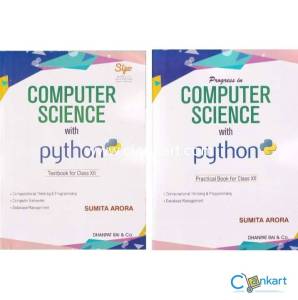
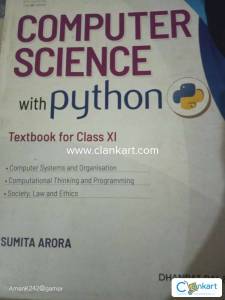
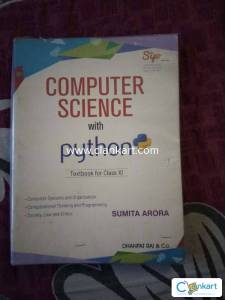
COMPUTER SCIENCE WITH PYTHON FOR CLASS 12
Canada's productivity expert returns with a totally fresh angle on how to do more with less. Throughout his experiments and research, Chris Bailey came across many little-known insights into how we focus (a key element of productivity), including the surprising idea that focus isn't so much a state of heightened awareness (as we'd assume), but a balance between two frames of mind. The most recent neuroscientific research on attention reveals that our brain has two powerful modes that can be unlocked when we use our attention well: a focused mode (hyperfocus), which is the foundation for being highly productive, and a creative mode (scatterfocus), which enables us to connect ideas in novel ways. Hyperfocus helps readers unlock both, so they can concentrate more deeply, think more clearly, and work and live more deliberately. Diving deep into the science and theories about how and why we bring our attention to bear on life's big goals and everyday tasks, Chris Bailey takes his unique approach to productivity to the next level in Hyperfocus, while retaining the approachable voice and perspective that made him a fast favourite.
Mobile Communications
Software Testing Concepts and Tools provide experience-based practices and key concepts that can be used by any organization to implement a successful and efficient testing process. This book provides experience-based practices and key concepts that can be used by an organization to implement a successful and efficient testing process. The prime aim of this book is to provide a distinct collection of technologies and discussions that are directly applicable in software development organizations to improve the quality and avoid major mistakes and human errors.· Software Engineering Evaluation· System Testing Process· WinRunner 8.0· QTP 8.2· LoadRunner 8.0· TestDirector 8.0
Software Quality assurance
This book offers examples of how data science, big data, analytics, and cloud technology can be used in healthcare to significantly improve a hospital’s IT Energy Efficiency along with information on the best ways to improve energy efficiency for healthcare in a cost effective manner. The book builds on the work done in other sectors (mainly data centers) in effectively measuring and improving IT energy efficiency and includes case studies illustrating power and cooling requirements within Green Healthcare. Making Healthcare Green will appeal to professionals and researchers working in the areas of analytics and energy efficiency within the healthcare fields.
The data warehouse toolkit
Market_Desc: · Database/Data Warehouse Developer· Designer or Manager Special Features: · Covers how to design data marts that are well integrated with the overall data warehouse design· Includes CD-ROM with useful checklists· CD-ROM includes useful checklists and an upgraded version of StarTracker software About The Book: In its simplest terms, this book is a step-by-step methodology for designing, developing, and deploying data marts and data warehouses. It shows how dimensional design fits in the overall lifecycle of planning, designing, developing, and deploying data marts and data warehouses. In other words, it covers ALL of the steps a developer needs to go through to guarantee a successful enterprise-wide data warehousing solution. It also covers how to design data marts that are well integrated with the overall data warehouse architecture.