Buy used Business & Economics books online in India
Buy Second Hand Books, Used Books Online In India

Principal & Practice of Management
The book in its tenth edition has been thoroughly restructured and revised. All the chapters of the present edition have been re-written not only to incorporate the latest developments in management but also to make presentation of subject-matter more lucid and crisp. Chapter 3 of the previous edition (Managers and Environment) has been named as Management Challenges and Opportunities in the present edition so that proper focus is put on these issues. Thus, the present edition is ideally suited to management students as well as management practitioners, particularly those who have not gone through formal management education.
Why I failed by Shweta Punj for SALE
Prominent personalities open up about failure and learning from it Failure that dreaded word. The fear of failure curtails growth and inhibits people from taking risks. Getting people to talk about failure, especially their own, is the singularly most difficult thing to do. In Why I Failed, Shweta Punj does just that by getting leaders to share experiences of when they did not succeed and how they turned it around to their advantage to emerge indomitable and stronger than before. This book shows that it is okay to fail as long as you treat failure as a stepping stone for greater things.
Must recommend this book for everyone
Amoral, cunning, ruthless, and instructive, this piercing work distills three thousand years of the history of power in to forty-eight well explicated laws. As attention-grabbing in its design as it is in its content, this bold volume outlines the laws of power in their unvarnished essence, synthesizing the philosophies of Machiavelli, Sun-tzu, Carl von Clausewitz, and other great thinkers. Some laws teach the need for prudence ("Law 1: Never Outshine the Master"), the virtue of stealth ("Law 3: Conceal Your Intentions"), and many demand the total absence of mercy ("Law 15: Crush Your Enemy Totally"), but like it or not, all have applications in real life. Illustrated through the tactics of Queen Elizabeth I, Henry Kissinger, P. T. Barnum, and other famous figures who have wielded--or been victimized by--power, these laws will fascinate any reader interested in gaining, observing, or defending against ultimate control.
TRADING PRICE ACTION TRENDS , AL BOOKS
A practical guide to profiting from institutional trading trends The key to being a successful trader is finding a system that works and sticking with it. Author Al Brooks has done just that. By simplifying his trading system and trading only 5-minute price charts he's found a way to capture profits regardless of market direction or economic climate. His first book, Reading Price Charts Bar by Bar, offered an informative examination of his system, but it didn't allow him to get into the real nuts and bolts of the approach. Now, with this new series of books, Brooks takes you step by step through the entire process. By breaking down his trading system into its simplest pieces: institutional piggybacking or trend trading (the topic of this particular book in the series), trading ranges, and transitions or reversals, this three book series offers access to Brooks' successful methodology. Price Action Trends Bar by Bar describes in detail what individual bars and combinations of bars can tell a trader about what institutions are doing. This is critical because the key to making money in trading is to piggyback institutions and you cannot do that unless you understand what the charts are telling you about their behavior. This book will allow you to see what type of trend is unfolding, so can use techniques that are specific to that type of trend to place the right trades. Discusses how to profit from institutional trading trends using technical analysis Outlines a detailed and original trading approach developed over the author's successful career as an independent trader Other books in the series include Price Action Trading Ranges Bar by Bar and Price Action Reversals Bar by Bar If you're looking to make the most of your time in today's markets the trading insights found in Price Action Trends Bar by Bar will help you achieve this goal.
Organizational Behaviour
Robbins/Judge presents current, relevant research in a clear, reader-friendly writing style. Globally accepted and written by one of the most foremost authors in the field, this is a necessary read for all managers, human resource workers, and anyone needing to understand and improve their people skills.
Experience Unparalleled Security Services in Bangalore
Secure your premises with confidence using KSFsecurity, the name synonymous with excellence in tailored security services in Bangalore. Our seasoned team is committed to delivering superior security services designed to meet your specific needs.
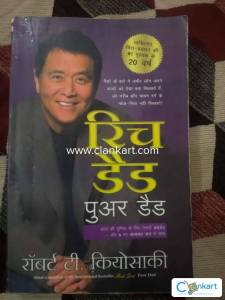
Rich dad poor dad
April 2017 marks 20 years since Robert Kiyosaki’s Rich Dad Poor Dad first made waves in the Personal Finance arena.It has since become the #1 Personal Finance book of all time... translated into dozens of languages and sold around the world.Rich Dad Poor Dad is Robert's story of growing up with two dads — his real father and the father of his best friend, his rich dad — and the ways in which both men shaped his thoughts about money and investing. The book explodes the myth that you need to earn a high income to be rich and explains the difference between working for money and having your money work for you.20 Years... 20/20 HindsightIn the 20th Anniversary Edition of this classic, Robert offers an update on what we’ve seen over the past 20 years related to money, investing, and the global economy. Sidebars throughout the book will take readers “fast forward” — from 1997 to today — as Robert assesses how the principles taught by his rich dad have stood the test of time.In many ways, the messages of Rich Dad Poor Dad, messages that were criticized and challenged two decades ago, are more meaningful, relevant and important today than they were 20 years ago.As always, readers can expect that Robert will be candid, insightful... and continue to rock more than a few boats in his retrospective.Will there be a few surprises? Count on it.Rich Dad Poor Dad...• Explodes the myth that you need to earn a high income to become rich• Challenges the belief that your house is an asset• Shows parents why they can't rely on the school system to teach their kids about money• Defines once and for all an asset and a liability• Teaches you what to teach your kids about money for their future financial success
Understanding Pharma(Original New)
The pharmaceutical industry is extremely complex, and so are the inner workings of the pharmaceutical and biotechnology companies operating within it. Even the most seasoned industry professionals may find it difficult to understand the activities of, and interdependencies among, all key functions within a pharmaceutical company. Yet this knowledge is crucial when the responsibilities for--or repercussions of--key initiatives ripple across an organization.Understanding Pharma is a must-read for anyone in the pharmaceutical industry--those new to the industry, industry veterans, and those working in or serving the industry.
The subtle art of intraday trading
A riveting account of how the deadly Coronavirus was contained in Asia's largest slum. An explosion that could have pushed not just Mumbai but all of India on the back foot was nipped in the bud with no manual to handle such a travesty. Kiran Dighavkar's The Dharavi Model is a thrilling chronicle of the measures that were taken to prevent the spread of Covid-19 in Dharavi. They helped save many lives. It is also the tales of those who lost their lives fighting the battle against COVID-19. The model applauded and implemented at a global level is passionately penned as a book.
introductory to macroeconomics class 12 by tr jain and vk ohri
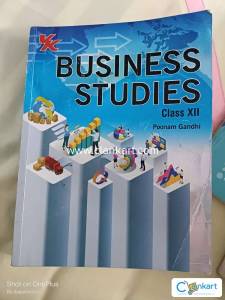
Restructured and revised in sync with the revised syllabus & updated guidelines by the CBSE board. A gist of major modifications: Brain Teaser blocks to test logical clarity and implication based learning. Test Your Understanding blocks to promote application, analysis & evaluation of concepts. Basic Numericals following hand-holding approach for budding economists. Categorisation & sub-classification of numericals for easy identification of nature of problem. HOTS: Each chapter is splashed with HOTS to promote clarity of the basics and provide some food for thought to the avid readers. ‘Did You Know’ blocks are provided in each chapter to highlight the significance of core concepts. Wide variety of questions: A wide variety of questions patterned along the CBSE released Sample Question Paper (2023) have been incorporated in each Chapter. The category of questions incorporated are: Competency-Based Learning: Objective Questions: Multiple Choice Questions Fill in the Blanks True-False alternatives Choose the Correct Pair of Statements/Identify the Correct Sequence of Alternatives One Liners: Answer with Reason Competency Based Learning: Data/Picture Based & Case-Study Based Questions Data/Picture Based Questions, Case-Study Based Questions Competency Based Learning: Descriptive Questions: Very Short Answer Type Questions HOTS & applications Analysis & Evaluation NCERT questions (with hints to answers) Miscellaneous Questions and Reference to the Text for Answers Solved Numericals Unsolved Numericals We have also added sample projects patterned along the latest CBSE format for the reference of the students. Sample Paper by “VK Global Study Group” based on the specimen paper woven along the same structure and blueprint as suggested in the CBSE released Sample Question Paper-2023 has been included. Harmony and Synchronisation: To maintain clarity of thought; the information in our book has been compiled and presented in a step by step manner so that students are able to comprehend things better. Comprehensive and elu
Introduction to Management Science
Introduction to Management Science, 4/e, offers a unique model approach and integrates the use of Excel. Through this approach students are better able to grasp the essential concepts covered in the course and see their utility. Each chapter includes a case study that is meant to show the students a real and interesting application of the topics addressed in that chapter. These cases and related applications cuts across all functional areas of business and show how management science techniques apply in the business environment.
Good to Great
To find the keys to greatness, Collins's 21-person research team read and coded 6,000 articles, generated more than 2,000 pages of interview transcripts and created 384 megabytes of computer data in a five-year project. The findings will surprise many readers and, quite frankly, upset others.The ChallengeBuilt to Last, the defining management study of the nineties, showed how great companies triumph over time and how long-term sustained performance can be engineered into the DNA of an enterprise from the very beginning. But what about the company that is not born with great DNA? How can good companies, mediocre companies, even bad companies achieve enduring greatness? The StudyFor years, this question preyed on the mind of Jim Collins. Are there companies that defy gravity and convert long-term mediocrity or worse into long-term superiority? And if so, what are the universal distinguishing characteristics that cause a company to go from good to great?The StandardsUsing tough benchmarks, Collins and his research team identified a set of elite companies that made the leap to great results and sustained those results for at least fifteen years. How great? After the leap, the good-to-great companies generated cumulative stock returns that beat the general stock market by an average of seven times in fifteen years, better than twice the results delivered by a composite index of the world's greatest companies, including Coca-Cola, Intel, General Electric, and Merck. The ComparisonsThe research team contrasted the good-to-great companies with a carefully selected set of comparison companies that failed to make the leap from good to great. What was different? Why did one set of companies become truly great performers while the other set remained only good? The FindingsThe findings of the Good to Great study will surprise many readers and shed light on virtually every area of management strategy and practice. The findings include:Level 5 Leaders: The research team was shocked to discover the type of leadership required to
Rich Dad Poor Dad
Rich Dad Poor Dad is Robert's story of growing up with two dads — his real father and the father of his best friend, his rich dad — and the ways in which both men shaped his thoughts about money and investing. The book explodes the myth that you need to earn a high income to be rich and explains the difference between working for money and having your money work for you.
Statistics for management
A new edition of the popular student-friendly textbook, this book explains the statistical concepts from life experiences. Common sense, real world ideas, references, patient explanations and intuitive approaches are the hallmarks of this text, and also which make learning very simple.
India Uninc
Just how much black money is there in India? Estimates vary from 10 per cent to 20 per cent of our GDP. Conservatively, Rs 15 lakh crore (10 per cent of Rs 150 lakh crore, our GDP in 2016-17). As for Indian money in tax havens around the world? Around Rs 65 lakh crore. Truly astounding figures. Black money or kala dhan is a topic that has elicited much debate in recent times. This has been mostly marked by mudslinging and name-calling, and the discussions that have ensued often have no basis in fact. While most people have a hazy notion of black money, only a few understand it in its entirety. The issue of tax havens is perhaps even more misunderstood. Most people fail to see the connection between tax havens and black money. Black Money and Tax Havens is the first work that discusses both of these issues in depth and offers a 360-degree view to the reader. In this work, R. Vaidyanathan provides the reader with a brief overview of black money-its generation, its estimates and how and why it is spirited away to tax havens. He also lays bare the danger that is posed to world financial well-being on account of the lack of political will to tackle these issues. A unique and timely work, this book packs in much information in an accessible manner.
The Psychology of Money by Morgan Housel
Timeless lessons on wealth, greed, and happiness doing well with money isn’t necessarily about what you know. It’s about how you behave. And behavior is hard to teach, even to really smart people. How to manage money, invest it, and make business decisions are typically considered to involve a lot of mathematical calculations, where data and formulae tell us exactly what to do. But in the real world, people don’t make financial decisions on a spreadsheet. They make them at the dinner table, or in a meeting room, where personal history, your unique view of the world, ego, pride, marketing, and odd incentives are scrambled together. In the psychology of money, the author shares 19 short stories exploring the strange ways people think about money and teaches you how to make better sense of one of life’s most important matters.
Self Help Book
More than 6 million readers around the world have improved their lives by reading The Magic of Thinking Big. First published in 1959, David J Schwartz's classic teachings are as powerful today as they were then. Practical, empowering and hugely engaging, this book will not only inspire you, it will give you the tools to change your life for the better - starting from now. His step-by-step approach will show you how to:- Defeat disbelief and the negative power it creates- Make your mind produce positive thoughts- Plan a concrete success-building programme- Do more and do it better by turning on your creative power- Capitalise on the power of NOWUpdated for the 21st century, this is your go-to guide to a better life, starting with the way you think.