Clankart Logo

Buy used Philosophy online in India

Buy Second Hand Books, Used Books Online In India
Advertisement
Want to see your books here? Have Used Books?
Make some extra cash by selling your old books for actual money in your UPI/Bank account. Go on, it's quick and easy.

Kautilya Arthashastra

Kautilya Arthashastra

₹300

The Arthashastra is an ancient Indian treatise on statecraft, economic policy and military strategy, written in Sanskrit. It identifies its author by the names 'Kauṭilya' and 'Vishnugupta', both names that are traditionally identified with Chanakya (c. 350–283 BC), who was a scholar at Takshashila and the teacher and guardian of Emperor Chandragupta Maurya, founder of the Mauryan Empire. The text was influential until the 12th century, when it disappeared. It was rediscovered in 1904 by R. Shamasastry, who published it in 1909. The first English translation was published in 1915.Roger Boesche describes the Arthaśāstra as "a book of political realism, a book analysing how the political world does work and not very often stating how it ought to work, a book that frequently discloses to a king what calculating and sometimes brutal measures he must carry out to preserve the state and the common good."Centrally, Arthaśāstra argues how in an autocracy an efficient and solid economy can be managed. It discusses the ethics of economics and the duties and obligations of a king. The scope of Arthaśāstra is, however, far wider than statecraft, and it offers an outline of the entire legal and bureaucratic framework for administering a kingdom, with a wealth of descriptive cultural detail on topics such as mineralogy, mining and metals, agriculture, animal husbandry, medicine and the use of wildlife. The Arthaśāstra also focuses on issues of welfare (for instance, redistribution of wealth during a famine) and the collective ethics that hold a society together.

1 year ago
Advertisement
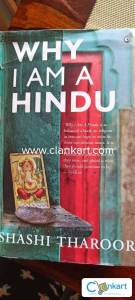
Enlightenment by Shashi Tharoor

Enlightenment by Shashi Tharoor

₹450

In Why I Am a Hindu, one of India’s finest public intellectuals gives us a profound book about one of the world’s oldest and greatest religions. Starting with a close examination of his own belief in Hinduism, he ranges far and wide in his study of the faith. He talks about the Great Souls of Hinduism, Adi Shankara, Patanjali, Ramanuja, Swami Vivekananda, Ramakrishna Paramahamsa, and many others who made major contributions to the essence of Hinduism. He delves deep into Hinduism’s most important schools of thought (such as the Advaita Vedanta). He explains, in easily accessible language, important aspects and concepts of Hindu philosophy like the Purusharthas and Bhakti, masterfully summarizes the lessons of the Gita and Vivekananda’s ecumenism, and explores with sympathy the ‘Hinduism of habit’ practised by ordinary believers. He looks at the myriad manifestations of political Hinduism in the modern era, including violence committed in the name of the faith by right-wing organizations and their adherents. He analyzes Hindutva, explains its rise and dwells at length on the philosophy of Deen Dayal Upadhyaya, its most significant ideologue. He is unsparing in his criticism of extremist ‘bhakts’, and unequivocal in his belief that everything that makes India a great and distinctive culture and country will be imperiled if religious ‘fundamentalists’ are allowed to take the upper hand. However, he also makes the point that it is precisely because Hindus form the majority that India has survived as a plural, secular democracy.A book that will be read and debated now and in the future, Why I Am a Hindu is a revelatory and original masterwork.

1 year ago
Advertisement
Advertisement

Advertisement