Buy used History & Archaeology Books online in India
Buy Second Hand Books, Used Books Online In India
The Spy and the Traitor
A thrilling Cold War story about a KGB double agent, by one of Britain's greatest historians - now with a new afterwordOn a warm July evening in 1985, a middle-aged man stood on the pavement of a busy avenue in the heart of Moscow, holding a plastic carrier bag. In his grey suit and tie, he looked like any other Soviet citizen. The bag alone was mildly conspicuous, printed with the red logo of Safeway, the British supermarket.The man was a spy. A senior KGB officer, for more than a decade he had supplied his British spymasters with a stream of priceless secrets from deep within the Soviet intelligence machine. No spy had done more to damage the KGB. The Safeway bag was a signal: to activate his escape plan to be smuggled out of Soviet Russia. So began one of the boldest and most extraordinary episodes in the history of spying. Ben Macintyre reveals a tale of espionage, betrayal and raw courage that changed the course of the Cold War forever...
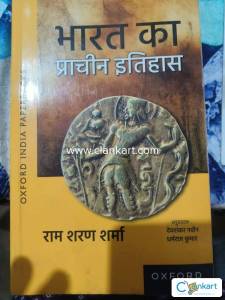
Bharat ka prchin itihas
Beginning with a discussion on frameworks of writing history, the volume sheds light on the origins and growth of civilizations, empires, and religions. It covers the geographical, ecological, and linguistic backgrounds, and looks at specific cultures of the Neolithic, Chalcolithic, and Vedic periods, as well as the Harappan civilization. The author discussed the rise of Jainism and Buddhism, Magadha, and the beginning of territorial states. The period of Mauryas, Central Asian countries, Satavahanas, Guptas, and Harshvardhana are also analysed. He highlights important phenomena such as the varna system, urbanization, commerce and trade, developments in science and philosophy, and cultural legacy. He also examines the process of transition from ancient to medieval India and addresses topical issues such as the origin of the Aryan culture. This engaging and lucid text, by one of the best-known scholars of ancient India, will be indispensable for students and teachers of ancient Indian history. This book is the Hindi translation of the English edition.
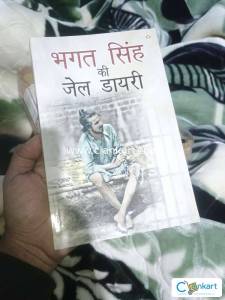
Bhagat Singh ki jail diary
भगत सिंह की जेल डायरी क्रांतिकारी भगत सिंह द्वारा लाहौर सेंट्रल जेल (१९२९ - १९३१ ) में कारावास के दौरान लिखी गई टिप्पणियों और लेखन का संकलन है। यह पारंपरिक अर्थों में एक डायरी नहीं है, बल्कि विभिन्न विषयों पर उनके विचारों का संग्रह है।- जेल डायरी में स्वतंत्रता, क्रांति, समाजवाद, साम्यवाद, धर्म और विश्व इतिहास जैसे विषयों पर भगत सिंह के विचार शामिल हैं।- इसमें जेल में पढ़ी गई पुस्तकों के अंश और सारांश भी शामिल हैं।- जेल डायरी भगत सिंह के बौद्धिक और वैचारिक विकास पर प्रकाश डालती है।यह राजनीतिक दर्शनों के साथ उनके गहन जुड़ाव और भारत की स्वतंत्रता के प्रति उनकी अटूट प्रतिबद्धता को दर्शाता है।
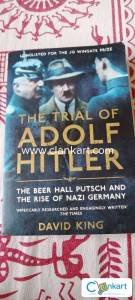
The trial of adolf hitler
The story of the courtroom drama that precipitated the rise of the Nazi party.February 26, 1924, was the first day of the greatly anticipated high treason trial that would galvanize Germany―but few in the courtroom that morning anticipated that leading defendant General Erich Ludendorff, whose risky offensives during World War I doomed Germany to defeat, would soon be eclipsed by the private first class at his side, Adolf Hitler. Hitler was charged with treason after unsuccessfully trying to seize power in the notorious Beer Hall Putsch in Munich in 1923. Before the trial, Hitler was only a minor, if ambitious, local party leader. Yet once the proceedings began, his days of relative obscurity were over. Including never-before-published sources, this richly informed, day-by-day account shows how Hitler metamorphosed into a mesmerizing demagogue and used his trial as a stage for Nazi propaganda. Chilling in the hypothetical questions it raises, The Trial of Adolf Hitler illuminates our understanding of Hitler’s path to power.
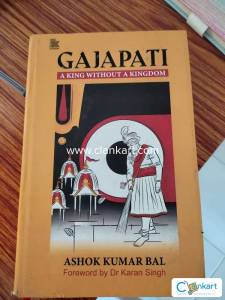
Gajapti A king without kingdom
The Gajapati is an institution of seminal significance in Odisha. The dual status of the Gajapati, both as a king and a servant (Adyasebak), makes him distinctly unique. Gajapati kings have acted as the vassals or deputies, or the agents of Lord Jagannath, who is held as the Supreme Sovereign. This foundational doctrine was an innovative experiment in statecraft used by the Gajapatis to secure and sustain the support of the people for expansion and consolidation of the kingdom. The Odishan kingdom, at its pinnacle of glory during the reign of Kapilendra Deb (AD 1435-1467), stretched from the river Ganges to the Cauvery River but witnessed decline since the advent of the Afghans (1568), followed by the Marathas (1751) and the British (1803), finally leading to complete dispossession of territory and making the Gajapati or the Raja of Puri, a king without a kingdom. Apart from interesting historical facts, the book contains fascinating stories. There was one Gajapati king, a loyal devotee of Lord Jagannath, who converted to Islam; another Gajapati who adopted a son as heir but disowned him in favour of another adopted child, leading to a prolonged court case; one king was accused of murder and banished to the Andamans. The stories on attempts to protect the shrine from repeated invasions by Muslim rulers and shifting the revered deities to different secret locations, and the narrative of the remarkable Queen Suryamani Patamahadei (the widow of Gajapati Birakeshari Deb II and mother of Dibyasingha Deb III [1859–1888]) are riveting. The book elaborates on the Gajapati's gradual withdrawal from the role of royalty, even as his association with Lord Jagannath continues to thrive. This time-honoured ritual association with the Lord has placed the Gajapati in a position of high esteem and veneration among the people, for which he is reverentially known as Chalanti Vishnu (living embodiment of Lord Vishnu).
History Of Medieval India Author(s) Satish Chandra
Satish Chandra's History of Medieval India is a comprehensive overview of the history of the Indian subcontinent during the thousand-year period between the eighth and the eighteenth century. History of Medieval India studies this interesting period in Indian history when the land underwent drastic changes and was deeply influenced by the invading armies, religious movements, and the vicissitudes of the changing political, economic and cultural scene. To tell the history of a land spanning the geographical dimensions and the political divisions of the Indian subcontinent is in itself a formidable task. Satish Chandra executes this difficult mission withthe eye of an enquirer and the pen of a scholar.
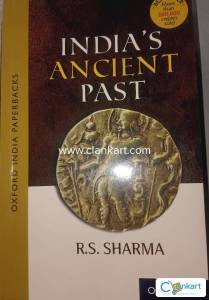
India's Ancient Past Author(s) R.S. Sharma
R.S. Sharma, one of the best-known historians of early India, provides a comprehensive yet accessible text on the ancient period of Indian history. Beginning with topics such as historiography and the importance of Ancient Indian history, he goes on to cover the geographical, econological and linguistic settings, before looking at specific cultures of neolithic, chalcolithic types, the Harappan civilization, the Vedic period, the rise of Jainism and Buddhism, Magadha and the beginning of territorial states, the age of the Mauryas, Satavahanas, Guptas, and Harshavardhana. While taking the reader on this journey through time, he highlights important phenomena such as the beginning of urbanization and monarchy in India, invasions, the Varna system, commerce and trade, developments in philosophy and cultural efflorescence. He ends this insightful volume with a comments on the transition from the Ancient to the Medieval.This book also addresses a number of issues which have become current in discussion on Ancient Inida today, such as the Identity of the Aryan Culture, and Historical Construction. This is a volume meant for all those who want a masterly, lucid, yet eminently readable introduction to and overview on India's early history by one of the master-scholars of Indian history - be it students, tourists, or the interested lay reader
Last Crusade : Epic Voyages of Vasco Da Gama
Historian Nigel Cliff delivers a sweeping, radical reinterpretation of Vasco da Gama's pioneering voyages, revealing their significance as a decisive turning point in the struggle between Christianity and Islam--a series of events which forever altered the relationship between East and West. Perfect for readers of "Endurance" "Shackleton's"" Incredible Voyage," "Galileo's Daughter," " "and "Atlantic," " "this first-ever complete account of da Gama's voyages includes new information from the recently discovered diaries of his sailors and an extraordinary series of letters between da Gama and the Zamorin, a king of modern-day Kerala, India. Cliff, the author of "The Shakespeare Riots," draws upon his own travels in da Gama's footsteps to add detail, authenticity, and a contemporary perspective to this riveting, one-of-a-kind historical epic.
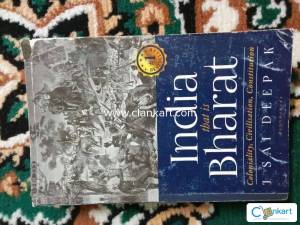
"India That Is Bharat" By J. Sai Deepak
India, That Is Bharat, the first book of a comprehensive trilogy, explores the influence of European 'colonial consciousness' (or 'coloniality'), in particular its religious and racial roots, on Bharat as the successor state to the Indic civilisation and the origins of the Indian Constitution. It lays the foundation for its sequels by covering the period between the Age of Discovery, marked by Christopher Columbus' expedition in 1492, and the reshaping of Bharat through a British-made constitution-the Government of India Act of 1919. This includes international developments leading to the founding of the League of Nations by Western powers that tangibly impacted this journey.Further, this work also traces the origins of seemingly universal constructs such as 'toleration', 'secularism' and 'humanism' to Christian political theology. Their subsequent role in subverting the indigenous Indic consciousness through a secularised and universalised Reformation, that is, constitutionalism, is examined. It also puts forth the concept of Middle Eastern coloniality, which preceded its European variant and allies with it in the context of Bharat to advance their shared antipathy towards the Indic worldview. In order to liberate Bharat's distinctive indigeneity, 'decoloniality' is presented as a civilisational imperative in the spheres of nature, religion, culture, history, education, language and, crucially, in the realm of constitutionalism.
The Story Of My Experiments With Truth
The Story of My Experiments with Truth is the autobiography of Mohandas K. Gandhi, covering his life from early childhood through to 1921. It was written in weekly instalments and published in his journal Navjivan from 1925 to 1929. Its English translation also appeared in installments in his other journal Young India.[1] It was initiated at the insistence of Swami Anand and other close co-workers of Gandhi, who encouraged him to explain the background of his public campaigns. In 1999, the book was designated as one of the "100 Best Spiritual Books of the 20th Century" by a committee of global spiritual and religious authorities. This section is written by Mahadev Desai who translated the book from Gujarati to English in 1940. In this preface Desai notes that the book was originally published in two volumes, the first in 1927 and second in 1929. He also mentions that the original was priced at ₹1 (1.4¢ US) and had a run of five editions by the time of the writing of his preface. 50,000 copies had been sold in Gujarati but since the English edition was expensive it prevented Indians from purchasing it. Desai notes the need to bring out a cheaper English version. He also mentions that the translation has been revised by an English scholar who did not want his name to be published. Chapters XXIX-XLIII of Part V were translated by Desai's friend and colleague Pyarelal. Introduction Edit The introduction is written by Gandhi himself mentioning how he has resumed writing his autobiography at the insistence of Jeramdas, a fellow prisoner in Yerwada Central Jail with him. He mulls over the question a friend asked him about writing an autobiography, deeming it a Western practice, something "nobody does in the east".[1] Gandhi himself agrees that his thoughts might change later in life but the purpose of his story is just to narrate his experiments with truth in life.[3] He also says that through this book he wishes to narrate his spiritual and moral experiments rather than political.
India's most fearless 1
The Army major who led the legendary September 2016 surgical strikes on terror launch pads across the LoC; a soldier who killed 11 terrorists in 10 days; a Navy officer who sailed into a treacherous port to rescue hundreds from an exploding war; a bleeding Air Force pilot who found himself flying a jet that had become a screaming fireball . . .Their own accounts or of those who were with them in their final moments.India’s Most Fearless covers fourteen true stories of extraordinary courage and fearlessness, providing a glimpse into the kind of heroism our soldiers display in unthinkably hostile conditions and under grave provocation.
World is Flat
Toàn cầu hóa là chủ đề vốn phức tạp và thu hút sự quan tâm của dư luận với không ít những ý kiến trái ngược nhau, được Thomas L.Friedman phân tích một cách độc đáo, với lập luận trung tâm về quá trình “trở nên phẳng” của thế giới. Khái niệm “phẳng” ở đây đồng nghĩa với “sự kết nối”. Những dở bỏ rào cản về chính trị cùng với những tiến bộ vượt bậc của cách mạng số đang làm cho thế giới “phẳng ra” và không còn nhiều trở ngại về địa lý như trước. Điều này mở ra cho các nước những phương thức sản xuất kinh doanh, những tình thế địa chính trị và địa kinh tế hoàn toàn mới.Thông điệp Friedman chuyển tải không xa lạ đối với nhiều bạn độc giả. Toàn cầu hoá là hiện tượng khách quan, từng được biểu hiện lẻ tẻ có khi như một trạng huống, một tiến trình, nhưng giờ đây được nhìn nhận rõ nét và khái quát hơn, khi nó trỗi dậy trở thành một hệ thống quốc tế. Điểm mấu chốt ở đây là, đôi lúc dư luận có dấu hiệu sao nhãng đối với các đòi hỏi mang tính tất yếu để thúc đẩy toàn cầu hoá (do sự kiện 11/9, cuộc chiến tranh Irag hoặc các lý do tương tự), Friedman đã giống lên hồi chuông cảnh báo rằ Toàn cầu hoá 3.0 thực chất đang ở vào giai đoạn tăng tốc, nó làm cho thế giới chuyển từ cỡ nhỏ xuống cỡ siêu nhỏ và đồng thời san phẳng thế giới. Chúng ta đang sống trong một thế giới phẳng! Trong thế giới này, không chỉ các quốc gia, những tập đoàn kinh tế lớn như Dell, IBM, Wal-Mart, mà là các cá nhân ở khắp mọi nơi trên hành tinh này (chỉ cần kết nối internet và tiếp cận các công cụ của thế giới mới) có thể cộng với nhau trong những chuỗi cung toàn cầu để tạo ra những giá trị gia tăng lớn hơn. Chiếc “bánh” toàn cầu ngày càng trở nên to hơn nhưng đồng thời cũng khó chia hơn….Xu thế toàn cầu hóa đang là đặc điểm chi phối thời đại, như chính Nghị quyết Đại hội Đảng Cộng Sản Việt Nam lần thứ X đã khẳng định. Quá trình chúng ta chủ động hội nhập quốc tế, mà việc gia nhập WTO là một biểu hiện, có cả cơ hội lẫn thách thức. Chính vì thế, việc tiếp cận và tham khảo những tri thức đương đại từ những nước đã phát triển về sự chuyển động của thế giới (đ
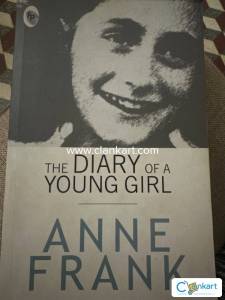
The Diary of a Young Girl
Discovered in the attic in which she spent the last years of her life, Anne Frank's remarkable diary has since become a world classic—a powerful reminder of the horrors of war and an eloquent testament to the human spirit.In 1942, with Nazis occupying Holland, a thirteen-year-old Jewish girl and her family fled their home in Amsterdam and went into hiding. For the next two years, until their whereabouts were betrayed to the Gestapo, they and another family lived cloistered in the "Secret Annexe" of an old office building. Cut off from the outside world, they faced hunger, boredom, the constant cruelties of living in confined quarters, and the ever-present threat of discovery and death.In her diary Anne Frank recorded vivid impressions of her experiences during this period. By turns thoughtful, moving, and amusing, her account offers a fascinating commentary on human courage and frailty and a compelling self-portrait of a sensitive and spirited young woman whose promise was tragically cut short.
Ambedkar Islam and the Left
Sometimes in the name of ‘Meem-Bheem’, at other times as anti-Hindu—both the camps have been trying to claim Baba Saheb Ambedkar as theirs. In the light of Ambedkar’s thoughts in today’s perspective, the book explodes points out the ill-intentioned arguments and tells us how Ambedkar’s thoughts on Islam and the Left were clear, establishing that he was never agreeable to either of the two camps. Thus, the effort by the two camps to claim as theirs is only a fraud being used to serve vested political interests. What did Ambedkar think about Islam and the Left? Is there even an iota of truth in the competitive claims being made by the Islamists and the Left? This book by Mithilesh Kumar Singh brings out all these aspects clearly.
Prisoners of Geography
THE MILLION COPY INTERNATIONAL BESTSELLERGeography shapes not only our history, but where we're headed...All leaders are constrained by geography. Their choices are limited by mountains, rivers, seas and concrete. Yes, to follow world events you need to understand people, ideas and movements - but if you don't know geography, you'll never have the full picture.If you've ever wondered why Putin is so obsessed with Crimea, why the USA was destined to become a global superpower, or why China's power base continues to expand ever outwards, the answers are all here.In ten chapters and ten maps, Prisoners of Geography looks at the past, present and future to offer an essential insight into one of the major factors that determines world history.It's time to put the 'geo' back into geopolitics._____'Like having a light shone on your understanding... I can't think of another book that explains the world situation so well. - Nicolas Lezard, Evening Standard'Sharp insights into the way geography shapes the choices of world leaders.' - Gideon Rachman, Financial Times_____Ten maps; ten chapters:Russia * China * United States of America * Latin America * the Middle East * Africa * India and Pakistan * Europe * Japan and Korea * the Arctic'A fresh and original insight into the geopolitics behind today’s foreign policy challenges’ — Andrew Neil‘Crisply written and brilliantly argued’ — Dame Ann Leslie‘An essential and detailed reflection of the geopolitical dynamics that exist globally’ — Dr Sajjan M. Gohel'Quite simply, one of the best books about geopolitics you could imagine: reading it is like having a light shone on your understanding…. Marshall is clear-headed, lucid and possessed of an almost uncanny ability to make the broad picture accessible and coherent … the book is, in a way which astonished me, given the complexities of the subject, unputdownable…. I can’t think of another book that explains the world situation so well.' – Nicholas Lezard, Evening Standard 'Compels a fresh way of looking at maps – not just as objec
Aavarana (The Veil) by S. L. Bhyrappa
Because my questions made Amir uncomfortable he pronounced talaq just like that on the wife who had abandoned everything for him because his religion gives him that privilege. Where do I now stand sir? Do you have any solutions for me? Lakshmi a rebellious free spirited and intelligent film maker breaks ties with her staunchly Gandhi an father to marry Amir the man she loves. She even agrees reluctantly to Amirs request that she convert to Islam as a formality and change her name to Razia. However she is shocked to discover that her husband is not the open minded progressive individual he claimed to be. For after marriage Amir takes his familys side in trying to force her to follow the more rigorous tenets of their faith. This sets her off on a personal journey into Indias history to uncover the many layers of religion caste and creed. Her quest leads her to the many parallels in the narratives between the past and the present and she gradually finds that though much has changed in Indian society over the centuries much remains the same. The second historical novel by celebrated Kannada author S.L. Bhyrappa translated for the first time into English by Sandeep Balakrishna, Aavarana The Veil raises pertinent and searching questions about religion liberalism and identity and highlights the importance of unshackling oneself from the bonds of false knowledge. Book Features Raises questions and uncovers truths about religion and history goes deep into history to reveal the extent of tyranny by foreign invaders in India was a bestseller in Kannada Gujarati Tamil and other vernacular languages. The Kannada version was sold out even before its release in February 2007.One of the best books I have read. This is a masterpiece by S.L. Bhyrappa.
A History of ancient and mediaeval india
Established as a classic in its first edition, the second edition of Upinder Singh’s A History of Ancient and Early Medieval India, incorporates the latest discoveries, research, and insights in the field. Drawing on a vast array of textual, archaeological, and visual sources, it weaves together discussions of politics, economy, society, religion, philosophy, art, and ideas into a seamless narrative. The book reveals the complex and dynamic history of the regions of the subcontinent across millennia by focusing on macro-level changes as well the everyday lives of ordinary people. Widely acclaimed as an excellent introduction to the subject for general readers as well as the most comprehensive and authoritative textbook for undergraduate and postgraduate students, this classic maintains its reputation of offering a lucid, detailed, and balanced exposition, equipping readers with skills to critically assess historical evidence, arguments, and debates. The book is a reader’s delight, with excerpts from original sources and a wealth of images and illustrations of India's diverse and rich historical heritage, making an exploration of the past a truly exciting journey.