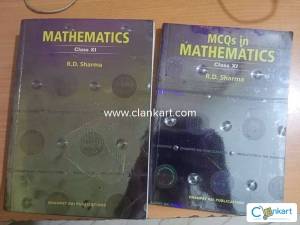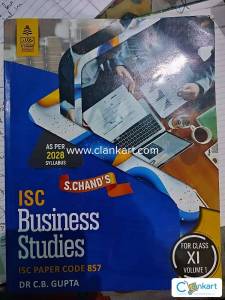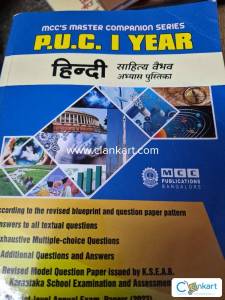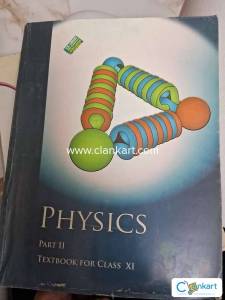
Buy used Class 11 Books online in India
Buy Second Hand Books, Used Books Online In India
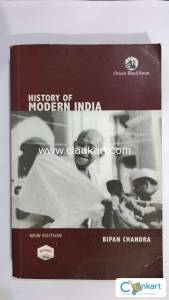
History of Modern India
The SAGE Series in Modern Indian History consists of well-researched volumes with a wider scope and is intended to bring together the growing volume of historical studies that share a broad common historiographic focus. The approach that the authors have tried to evolve looks sympathetically, though critically, at the Indian national liberation struggle and other popular movements such as those of labour, peasants, lower castes, tribal peoples and women. The series also looks at colonialism as a structure and a system, and analyzes changes in economy, society and culture in the colonial context as also in the context of independent India. It focuses on communalism and casteism as major features of modern Indian development. The volumes in the series will tend to reflect this approach as also its changing and developing features. At the broadest plane this approach is committed to the Enlightenment values of rationalism, humanism, democracy and secularism. This set includes: Volume 1: Independence and Partition: The Erosion of Colonial Power in India by Sucheta Mahajan Volume 2: A Narrative of Communal Politics: Uttar Pradesh, 1937–39 by Salil Misra Volume 3: Imperialism, Nationalism and the Making of the Indian Capitalist Class, 1920–1947 by Aditya Mukherjee Volume 4: From Movement to Government: The Congress in the United Provinces, 1937–42 by Visalakshi Menon Volume 5: Peasants in India’s Non-Violent Revolution: Practice and Theory by Mridula Mukherjee Volume 6: Communalism in Bengal: From Famine to Noakhali, 1943–47 by Rakesh Batabyal Volume 7: Political Mobilization and Identity in Western India, 1934–47 by Shri Krishan Volume 8: The Garrison State: Military, Government and Society in Colonial Punjab, 1849–1947 by Tan Tai Yong Volume 9: Colonializing Agriculture: The Myth of Punjab Exceptionalism by Mridula Mukherjee Volume 10: Region, Nation, “Heartland”: Uttar Pradesh in India’s Body-Politic by Gyanesh Kudaisya Volume 11: National Movement and Politics in Orissa, 1920–29 by Pritish Acharya Volume 12: Commun
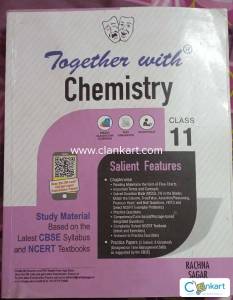
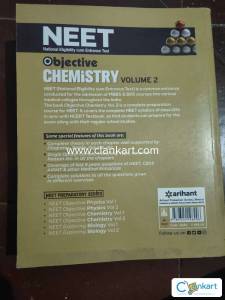
Arihant objective chemistry volume 2
From being elected as Congress president in 1929 till his death in 1964, Jawaharlal Nehru remained a towering figure in Indian politics, a man who left an indelible stamp on the history of South Asia. As a leading light of the nationalist struggle and as India's first and longest-serving prime minister, his ideas shaped the political contours of the country and left an imprint so deep that his legacy continues to be debated furiously today. In life, as in afterlife, Nehru was many things to many people. Going beyond the imposed labels of contemporary discourse, this book illuminates four encounters that Nehru had with contemporaries from across the political spectrum - Muhammad Iqbal, Muhammad Ali Jinnah, Sardar Patel and Syama Prasad Mookerjee - that are critical to understanding his ideas, and his long afterlife and impress on the present. Nehru may no longer be alive to answer his critics today, but there was a time when he pitted himself vigorously against his opponents in the marketplace of ideas, debating the most profound questions in South Asian history and decisively influencing political events. It is this intellectually combative Nehru whom we meet in this book - voicing ideological disagreements, forging political alliances, moulding political opinion, offering visions of the future and staking out the political field - a key figure in the debates that defined India
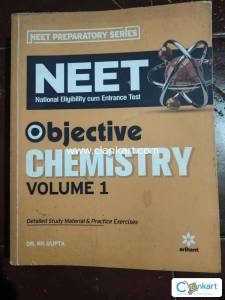
Objective chemistry volume 1 for NEET
From being elected as Congress president in 1929 till his death in 1964, Jawaharlal Nehru remained a towering figure in Indian politics, a man who left an indelible stamp on the history of South Asia. As a leading light of the nationalist struggle and as India's first and longest-serving prime minister, his ideas shaped the political contours of the country and left an imprint so deep that his legacy continues to be debated furiously today. In life, as in afterlife, Nehru was many things to many people. Going beyond the imposed labels of contemporary discourse, this book illuminates four encounters that Nehru had with contemporaries from across the political spectrum - Muhammad Iqbal, Muhammad Ali Jinnah, Sardar Patel and Syama Prasad Mookerjee - that are critical to understanding his ideas, and his long afterlife and impress on the present. Nehru may no longer be alive to answer his critics today, but there was a time when he pitted himself vigorously against his opponents in the marketplace of ideas, debating the most profound questions in South Asian history and decisively influencing political events. It is this intellectually combative Nehru whom we meet in this book - voicing ideological disagreements, forging political alliances, moulding political opinion, offering visions of the future and staking out the political field - a key figure in the debates that defined India