Buy used Business & Economics online in India
Buy Second Hand Books, Used Books Online In India

SHOE DOG (PHIL KNIGHT )
In this candid and riveting memoir, for the first time ever, Nike founder and CEO Phil Knight shares the inside story of the company’s early days as an intrepid start-up and its evolution into one of the world’s most iconic, game-changing, and profitable brands.In 1962, fresh out of business school, Phil Knight borrowed $50 from his father and created a company with a simple mission: import high-quality, low-cost athletic shoes from Japan. Selling the shoes from the trunk of his lime green Plymouth Valiant, Knight grossed $8,000 his first year. Today, Nike’s annual sales top $30 billion. In an age of startups, Nike is the ne plus ultra of all startups, and the swoosh has become a revolutionary, globe-spanning icon, one of the most ubiquitous and recognizable symbols in the world today.But Knight, the man behind the swoosh, has always remained a mystery. Now, for the first time, in a memoir that is candid, humble, gutsy, and wry, he tells his story, beginning with his crossroads moment. At 24, after backpacking around the world, he decided to take the unconventional path, to start his own business—a business that would be dynamic, different.Knight details the many risks and daunting setbacks that stood between him and his dream—along with his early triumphs. Above all, he recalls the formative relationships with his first partners and employees, a ragtag group of misfits and seekers who became a tight-knit band of brothers. Together, harnessing the transcendent power of a shared mission, and a deep belief in the spirit of sport, they built a brand that changed everything.
Reading Book
South African born Elon Musk is the renowned entrepreneur and innovator behind PayPal, SpaceX, Tesla, and SolarCity. Musk wants to save our planet; he wants to send citizens into space, to form a colony on Mars; he wants to make money while doing these things; and he wants us all to know about it. He is the real-life inspiration for the Iron Man series of films starring Robert Downey Junior.The personal tale of Musk’s life comes with all the trappings one associates with a great, drama-filled story. He was a freakishly bright kid who was bullied brutally at school, and abused by his father. In the midst of these rough conditions, and the violence of apartheid South Africa, Musk still thrived academically and attended the University of Pennsylvania, where he paid his own way through school by turning his house into a club and throwing massive parties.He started a pair of huge dot-com successes, including PayPal, which eBay acquired for $1.5 billion in 2002. Musk was forced out as CEO and so began his lost years in which he decided to go it alone and baffled friends by investing his fortune in rockets and electric cars. Meanwhile Musk’s marriage disintegrated as his technological obsessions took over his life ...Elon Musk is the Steve Jobs of the present and the future, and for the past twelve months, he has been shadowed by tech reporter, Ashlee Vance. Elon Musk: How the Billionaire CEO of Spacex and Tesla is Shaping our Future is an important, exciting and intelligent account of the real-life Iron Man.
Beating the Street
THE NATIONAL BESTSELLING BOOK THAT EVERY INVESTOR SHOULD OWN Peter Lynch is America's number-one money manager. His mantra: Average investors can become experts in their own field and can pick winning stocks as effectively as Wall Street professionals by doing just a little research. Now, in a new introduction written specifically for this edition of One Up on Wall Street, Lynch gives his take on the incredible rise of Internet stocks, as well as a list of twenty winning companies of high-tech '90s. That many of these winners are low-tech supports his thesis that amateur investors can continue to reap exceptional rewards from mundane, easy-to-understand companies they encounter in their daily lives. Investment opportunities abound for the layperson, Lynch says. By simply observing business developments and taking notice of your immediate world -- from the mall to the workplace -- you can discover potentially successful companies before professional analysts do. This jump on the experts is what produces "tenbaggers," the stocks that appreciate tenfold or more and turn an average stock portfolio into a star performer. The former star manager of Fidelity's multibillion-dollar Magellan Fund, Lynch reveals how he achieved his spectacular record. Writing with John Rothchild, Lynch offers easy-to-follow directions for sorting out the long shots from the no shots by reviewing a company's financial statements and by identifying which numbers really count. He explains how to stalk tenbaggers and lays out the guidelines for investing in cyclical, turnaround, and fast-growing companies. Lynch promises that if you ignore the ups and downs of the market and the endless speculation about interest rates, in the long term (anywhere from five to fifteen years) your portfolio will reward you. This advice has proved to be timeless and has made One Up on Wall Street a number-one bestseller. And now this classic is as valuable in the new millennium as ever.
The 48 laws of Power by Robert Greene
Amoral, cunning, ruthless, and instructive, this piercing work distills three thousand years of the history of power in to forty-eight well explicated laws. As attention-grabbing in its design as it is in its content, this bold volume outlines the laws of power in their unvarnished essence, synthesizing the philosophies of Machiavelli, Sun-tzu, Carl von Clausewitz, and other great thinkers. Some laws teach the need for prudence ("Law 1: Never Outshine the Master"), the virtue of stealth ("Law 3: Conceal Your Intentions"), and many demand the total absence of mercy ("Law 15: Crush Your Enemy Totally"), but like it or not, all have applications in real life. Illustrated through the tactics of Queen Elizabeth I, Henry Kissinger, P. T. Barnum, and other famous figures who have wielded--or been victimized by--power, these laws will fascinate any reader interested in gaining, observing, or defending against ultimate control.
Zero to One
Peter Thiel is the co-founder of PayPal and the first outside investor in Facebook. In the Spring of 2012, he gave a lecture course at Stanford for software engineers, calling on them to think boldly and broadly about how they might use their skills to shape the future, and imparting the lessons he has gleaned from his own experience. One of the students in that class - Blake Masters - took notes and posted them online. The blog posts became a huge success, with hundreds of thousands of hits, and became the basis for Zero to One.We live in an age of technological stagnation, even if we're too distracted by our new mobile devices to notice. Progress has stalled in every industry except computers, and globalization is hardly the revolution people think it is. It's true that the world can get marginally richer by building new copies of old inventions, making horizontal progress from '1 to n'. But true innovators have nothing to copy. The most valuable companies of the future will make vertical progress from '0 to 1', creating entirely new industries and products that have never existed before. Zero to One is about how to build these companies.A business book that also provides insight into the world of start-ups from a Silicon Valley icon, Thiel shows how to pursue your goals using the most important, most difficult, and most underrated skill in every job or industry: thinking for yourself.
Rich dad poor dad
Book Summary of Rich Dad Poor Dad Table of Contents Iskit Bahut Jarurat Hain Rich Dad, Poor Dad Ameer Log Paise ke Liye Kaam Nahi Karte Paise ki Samajh Kyo Sikhai Jana Chahiye? Apne Kaam se Kaam Rakho Tax ke Itihas aur Corporations ki Takat Ameer Log Paise ke Avishkar Karte Hain Seekhane ke Liye Kaam Kare-Paise ke Liye Kaam Na Kare Badhao ko Paar Karna Shuru Karna Aur Jyada Chahiye? Kewal 7,000 Dollar mein hi Collge ki Shiksha
Corporate learnings
'With my job on Today, I have become obsessed with sleep. The Secret World of Sleep interweaves bizarre real life stories with cutting edge neurological science in the true tradition of Oliver Sacks. A fascinating read.' Martha Kearney, BBC Radio 4 'Casebooks of neurological disorders are often strange and wonderful, but this one is special.' Sunday Times 'The Secret World of Sleep will not promise to cure your insomnia, but it does make for an entertaining and thought-provoking bedtime read.' The Guardian For Guy Leschziner's patients, there is no rest for the weary in mind and body. Insomnia, narcolepsy, night terrors, apnoea and sleepwalking are just a sample of the conditions afflicting sufferers who cannot sleep - and their experiences in trying to are the stuff of nightmares. Demonic hallucinations frighten people into paralysis. Restless legs rock both the sleepless and their sleeping partners with unpredictable and uncontrollable kicking. Out-of-sync circadian rhythms confuse the natural body clock's days and nights. Then there are the extreme cases. A woman in a state of deep sleep who gets dressed, unlocks her car and drives for several miles before returning to bed. The man who has spent decades cleaning out kitchens while 'sleep-eating'. The teenager prone to the serious, yet unfortunately nicknamed, Sleeping Beauty Syndrome, stuck in a cycle of excessive unconsciousness, binge-eating and uncharacteristic displays of aggression and hypersexuality while awake. With compassionate stories of his patients and their conditions, Leschziner illustrates the neuroscience behind our sleeping minds, revealing the many biological and psychological factors necessary in getting the rest that will not only maintain our physical and mental health, but also improve our cognitive abilities and overall happiness.
Literature
Malcolm Gladwell is the master of playful yet profound insight. And in What the Dog Saw his adventurous curiosity is at full stretch, as he takes everyday subjects and shows us surprising new ways of looking at them. Whether it's criminal profiling or dog training, Gladwell always gives us a new perspective, and a glimpse into someone else's head.
Related to corporate
This book helps organizations to maximize wealth creation, build enduring relationships with stakeholders and be a net contributor to the economies of operated geographies. Based on extensive research, CXO interviews and case studies, the book assists companies to develop their own governance best practices.
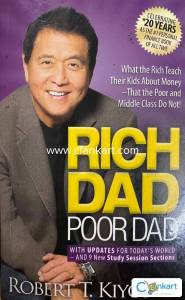
Rich Dad Poor Dad
April 2017 marks 20 years since Robert Kiyosaki’s Rich Dad Poor Dad first made waves in the Personal Finance arena.It has since become the #1 Personal Finance book of all time... translated into dozens of languages and sold around the world.Rich Dad Poor Dad is Robert's story of growing up with two dads — his real father and the father of his best friend, his rich dad — and the ways in which both men shaped his thoughts about money and investing. The book explodes the myth that you need to earn a high income to be rich and explains the difference between working for money and having your money work for you.20 Years... 20/20 HindsightIn the 20th Anniversary Edition of this classic, Robert offers an update on what we’ve seen over the past 20 years related to money, investing, and the global economy. Sidebars throughout the book will take readers “fast forward” — from 1997 to today — as Robert assesses how the principles taught by his rich dad have stood the test of time.In many ways, the messages of Rich Dad Poor Dad, messages that were criticized and challenged two decades ago, are more meaningful, relevant and important today than they were 20 years ago.As always, readers can expect that Robert will be candid, insightful... and continue to rock more than a few boats in his retrospective.Will there be a few surprises? Count on it.Rich Dad Poor Dad...• Explodes the myth that you need to earn a high income to become rich• Challenges the belief that your house is an asset• Shows parents why they can't rely on the school system to teach their kids about money• Defines once and for all an asset and a liability• Teaches you what to teach your kids about money for their future financial success
Ogilvy n advertising in the digital age
From Miles Young, worldwide non-executive chairman of Ogilvy & Mather, comes a sequel to David Ogilvy's bestselling advertising handbook featuring essential strategies for the digital age. In this must-have sequel to the bestselling Ogilvy On Advertising , Ogilvy chairman Miles Young provides top insider secrets and strategies for successful advertising in the Digital Revolution. As comprehensive as its predecessor was for print and TV, this indispensable handbook dives deep into the digital ecosystem, discusses how to best collect and utilize data-the currency of the digital age-to convert sales specifically on screen (phone, tablet, smart watch, computer, etc.), breaks down when and how to market to millennials, highlights the top five current industry giants, suggests best practices from brand response to social media, and offers 13 trend predictions for the future. This essential guide is for any professional in advertising, public relations, or marketing seeking to remain innovative and competitive in today's ever-expanding technological marketplace.