Buy used Business & Economics online in India
Buy Second Hand Books, Used Books Online In India
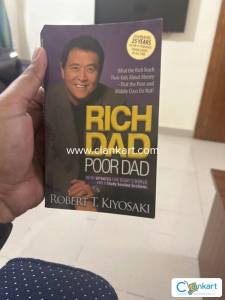
Rich Dad Poor dad - Robert T.Kiyosaki
April 2017 marks 20 years since Robert Kiyosaki’s Rich Dad Poor Dad first made waves in the Personal Finance arena.It has since become the #1 Personal Finance book of all time... translated into dozens of languages and sold around the world.Rich Dad Poor Dad is Robert's story of growing up with two dads — his real father and the father of his best friend, his rich dad — and the ways in which both men shaped his thoughts about money and investing. The book explodes the myth that you need to earn a high income to be rich and explains the difference between working for money and having your money work for you.20 Years... 20/20 HindsightIn the 20th Anniversary Edition of this classic, Robert offers an update on what we’ve seen over the past 20 years related to money, investing, and the global economy. Sidebars throughout the book will take readers “fast forward” — from 1997 to today — as Robert assesses how the principles taught by his rich dad have stood the test of time.In many ways, the messages of Rich Dad Poor Dad, messages that were criticized and challenged two decades ago, are more meaningful, relevant and important today than they were 20 years ago.As always, readers can expect that Robert will be candid, insightful... and continue to rock more than a few boats in his retrospective.Will there be a few surprises? Count on it.Rich Dad Poor Dad...• Explodes the myth that you need to earn a high income to become rich• Challenges the belief that your house is an asset• Shows parents why they can't rely on the school system to teach their kids about money• Defines once and for all an asset and a liability• Teaches you what to teach your kids about money for their future financial success
INDIAN ECONOMY FOR CIVIL SERVICES EXAM BY RAMESH SINGH
Many of the earliest books, particularly those dating back to the 1900s and before, are now extremely scarce and increasingly expensive. We are republishing many of these classic works in affordable, high quality, modern editions, using the original text and artwork.
Cash flow Quadrat
This book is excellent reading and is inspirational for a person who doesn't realize the difference between a employee and a rich man or woman. How it relates to a career as an employee or a self employed person versus a business and investment person. How this CashFlow Quadrant affects our lives, past and future.
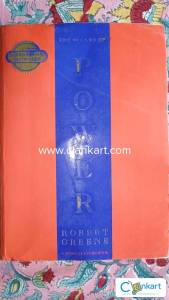
48 laws of power
Amoral, cunning, ruthless, and instructive, this piercing work distills three thousand years of the history of power in to forty-eight well explicated laws. As attention-grabbing in its design as it is in its content, this bold volume outlines the laws of power in their unvarnished essence, synthesizing the philosophies of Machiavelli, Sun-tzu, Carl von Clausewitz, and other great thinkers. Some laws teach the need for prudence ("Law 1: Never Outshine the Master"), the virtue of stealth ("Law 3: Conceal Your Intentions"), and many demand the total absence of mercy ("Law 15: Crush Your Enemy Totally"), but like it or not, all have applications in real life. Illustrated through the tactics of Queen Elizabeth I, Henry Kissinger, P. T. Barnum, and other famous figures who have wielded--or been victimized by--power, these laws will fascinate any reader interested in gaining, observing, or defending against ultimate control.
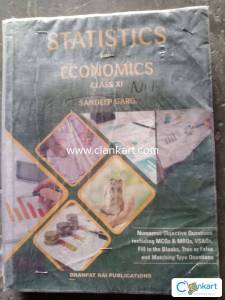
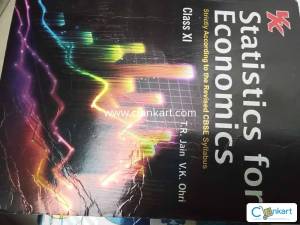
Statistics for economics class 11
The CBSE board has recently shown a bent towards analysis and interpretation based questions under the label of ‘competency- based questions’. This book is prepared according to revised syllabus and new paper pattern. ‘The Same but Different’: Revised and restructured on positive feedback, the Statistics for Economics Textbook is all geared up to provide its readers step by step comprehension of the subject matter. Novelties of the text include: 1. NEW TYPOLOGY OF QUESTIONS: (Image/Data interpretation, defend and refute type questions etc.) have been incorporated in each chapter. 2. ‘BRAIN TEASER’ BLOCKS: Implication based questions related to current happenings around have been incorporated in each chapter. These help gauge the inferences the students are able to draw from the text and how easily they are able to relate economic theory to the ground level realities. 3. OTHERS: HOTS & Focus Zones DAV Board Question Paper (Solved) Sample Paper By “VK Global Study Group”[A specimen paper woven along the same structure and blueprint as suggested in the CBSE released Sample Question Paper-2023.]
Rich Dad Poor Dad
Rich Dad Poor Dad is Robert's story of growing up with two dads — his real father and the father of his best friend, his rich dad — and the ways in which both men shaped his thoughts about money and investing. The book explodes the myth that you need to earn a high income to be rich and explains the difference between working for money and having your money work for you.
Leaders Eat Last: Why Some Teams Pull Together and Others Don't
The New York Times bestselling follow-up to Simon Sinek's global hit Start With WhyWhy do only a few people get to say “I love my job”? It seems unfair that finding fulfillment at work is like winning a lottery; that only a few lucky ones get to feel valued by their organizations, to feel like they belong.Imagine a world where almost everyone wakes up inspired to go to work, feels trusted and valued during the day, then returns home feeling fulfilled.This is not a crazy, idealized notion. Today, in many successful organizations, great leaders are creating environments in which people naturally work together to do remarkable things. In his travels around the world since the publication of his bestseller Start with Why, Simon Sinek noticed that some teams were able to trust each other so deeply that they would literally put their lives on the line for each other. Other teams, no matter what incentives were offered, were doomed to infighting, fragmentation and failure. Why?The answer became clear during a conversation with a Marine Corps general. “Officers eat last,” he said.Sinek watched as the most junior Marines ate first while the most senior Marines took their place at the back of the line. What’s symbolic in the chow hall is deadly serious on the battlefield: great leaders sacrifice their own comfort—even their own survival—for the good of those in their care.This principle has been true since the earliest tribes of hunters and gatherers. It’s not a management theory; it’s biology. Our brains and bodies evolved to help us find food, shelter, mates and especially safety. We’ve always lived in a dangerous world, facing predators and enemies at every turn. We thrived only when we felt safe among our group.Our biology hasn’t changed in fifty thousand years, but our environment certainly has. Today’s workplaces tend to be full of cynicism, paranoia and self-interest. But the best organizations foster trust and cooperation because their leaders build what Sinek calls a Circle of Safety that separates the security in
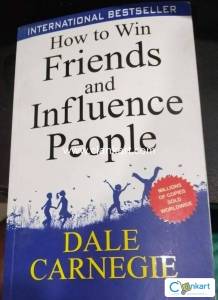
How to Win Friends and Influence People
ABOUT THE BOOK How to Win Friends and Influence People is one of the first best-selling self-help books ever published. Written by Dale Carnegie and first published in 1936, it has sold More than 15 million copies world-wide The possible situations are endless: you've moved to a new town and forgotten how to do this "people" thing; your long-term relationship has left your social network lacking; or maybe you merely lack social skills - whatever it is, we all need friends. What should be as simple as eating and breathing seems such an intimidating process, doesn't it? As with anything, take it one step at a time. Throughout human history, the predominant way we've built relationships is through real-time conversation. This throne is about to be taken over if it hasn't already been.
No Ego: How Leaders Can Cut the Cost
The New York Times bestselling author of Reality-Based Leadership rejects the current fad of "engaging" employees and the emotional drama of "meeting their needs"--returning leadership to leaders and productivity to businesses.For years now, leaders in almost every industry have accepted two completely false assumptions--that change is hard, and that engagement drives results. Those beliefs have inspired expensive attempts to shield employees from change, involve them in high-level decision-making, and keep them happy with endless “satisfaction surveys” and workplace perks. But what these engagement programs actually do, Cy Wakeman says, is inflate expectations and sow unhappiness, leaving employees unprepared to adapt to even minor changes necessary to the organization’s survival. Rather than driving performance and creating efficiencies, these programs fuel entitlement and drama, costing millions in time and profit.It is high time to reinvent leadership thinking. Stop worrying about your employees’ happiness, and start worrying about their accountability. Cy Wakeman teaches you how to hire “emotionally inexpensive” people, solicit only the opinions you need, and promote self-awareness in your whole team. No Ego disposes with unproven HR maxims, and instead offers a complete plan to turn your office from a den of discontent to a happy, productive place.
Mastery Robert Green
In this book, Robert Greene demonstrates that the ultimate form of power is mastery itself. By analyzing the lives of such past masters as Charles Darwin, Benjamin Franklin, Albert Einstein, and Leonard da Vinci, as well as by interviewing nine contemporary masters, including tech guru Paul Graham and animal rights advocate Temple Grandin, Greene debunks our culture’s many myths about genius and distills the wisdom of the ages to reveal the secret to greatness. With this seminal text as a guide, readers will learn how to unlock the passion within and become masters.