Buy used Business & Economics online in India
Buy Second Hand Books, Used Books Online In India
TRADING BOOK FOR BEGINNERS
Japanese rice traders have successfully used candle signals to amass huge fortunes for nearly four centuries. Constantly refined and tested over time, candlestick signals are now being used the world over for trading all financial markets, including stocks, derivatives and currencies, etc. This book explains step-by-step how you can make money by trading the powerful and proven candlestick techniques. Here is how: ● Explanation of major candle signals; how to recognize them and use them effectively ● The underlying market psychology revealed by each candle formation ● How to combine candlestick signals with Western technical analysis to take advantage of high probability trades which generate explosive profits ● Stop loss settings for various candlestick signals for cutting losses. Master this and you will be way ahead of fellow traders ● How the use of candlesticks with technical analysis provides a simple mechanical trading system which eliminates emotional interference, panic and greed ● How to use candlestick charts for making money from longer term trading and investing ● PLUS: Proven, market-tested trading ideas tips and common mistakes to avoid based on the author's rich experience of trading stocks and options. This book will enable both new traders and experienced traders derive systematic and consistent profits from the market by adding candlestick charting to their trading arsenal. REVIEWS FOR THE BOOK "Educative addition to the technical trader's shelf." — The Hindu Business Line "Clearly explains and reinforces the message of each candlestick pattern, pointing out other details that can help determine success or failure at each occurrence. The real life examples are manifold, well chosen and amplify the lessons being taught. Highly recommended reading for traders in all markets to discover ways of profiting from candlestick trading." — Alan Northcott "Sadekar's book not only manages to live upto the expectations but probably excels them. Sadekar attempts to keep things simple, and targets the beginne
Business & Economic Development Book
Amoral, cunning, ruthless, and instructive, this piercing work distills three thousand years of the history of power in to forty-eight well explicated laws. As attention-grabbing in its design as it is in its content, this bold volume outlines the laws of power in their unvarnished essence, synthesizing the philosophies of Machiavelli, Sun-tzu, Carl von Clausewitz, and other great thinkers. Some laws teach the need for prudence ("Law 1: Never Outshine the Master"), the virtue of stealth ("Law 3: Conceal Your Intentions"), and many demand the total absence of mercy ("Law 15: Crush Your Enemy Totally"), but like it or not, all have applications in real life. Illustrated through the tactics of Queen Elizabeth I, Henry Kissinger, P. T. Barnum, and other famous figures who have wielded--or been victimized by--power, these laws will fascinate any reader interested in gaining, observing, or defending against ultimate control.
Elements of mercantile law - N.D Kapoor for BCom & BBM,MBA, IAS
Sultan Chand & Sons present the 38th Revised and Enlarged Edition of the book entitled “Elements of Mercantile Law”. This book is specially written for B. Com, M. Com, CA, CS, CMA, MBA, LLB and Other Commerce Courses of all Indian Universities. The book is divided into three Volumes. Volume I is Law of Contract, Volume II is Company Law and Volume III is Industrial Law The salient features of the present edition are as follows: A new chapter on ‘Goods and Services Tax (GST)’ has been included in this edition. In order to bring uniformity in Tax rates and to simplify the tax mechanism, Central Government rolled out Goods and Services Tax (GST) from 1st July, 2017. The Insolvency and Bankruptcy Code, 2016’ is the Bankruptcy Law of India has been added. A chapter on ‘Limited Liability Partnership’ popularly known as LLP has been added in the present edition. LLP combines the advantage of both the Company and Partnership into a single form of organization. Volume II of the book on Company Law with Schedules has been thoroughly updated and amended upto 2019.
Deep Work: Rules for Focused Success in a Distracted World [Paperback]
Deep work is the ability to focus without distraction on a cognitively demanding task. It's a skill that allows you to quickly master complicated information and produce better results in less time. Deep Work will make you better at what you do and provide the sense of true fulfillment that comes from craftsmanship. In short, deep work is like a super power in our increasingly competitive twenty-first century economy. And yet, most people have lost the ability to go deep-spending their days instead in a frantic blur of e-mail and social media, not even realizing there's a better way.In Deep Work, author and professor Cal Newport flips the narrative on impact in a connected age. Instead of arguing distraction is bad, he instead celebrates the power of its opposite. Dividing this book into two parts, he first makes the case that in almost any profession, cultivating a deep work ethic will produce massive benefits. He then presents a rigorous training regimen, presented as a series of four "rules," for transforming your mind and habits to support this skill.1. Work Deeply2. Embrace Boredom3. Quit Social Media4. Drain the ShallowsA mix of cultural criticism and actionable advice, Deep Work takes the reader on a journey through memorable stories-from Carl Jung building a stone tower in the woods to focus his mind, to a social media pioneer buying a round-trip business class ticket to Tokyo to write a book free from distraction in the air-and no-nonsense advice, such as the claim that most serious professionals should quit social media and that you should practice being bored. Deep Work is an indispensable guide to anyone seeking focused success in a distracted world.
rich dad poor dad hindi
Book Summary of Rich Dad Poor Dad Table of Contents Iskit Bahut Jarurat Hain Rich Dad, Poor Dad Ameer Log Paise ke Liye Kaam Nahi Karte Paise ki Samajh Kyo Sikhai Jana Chahiye? Apne Kaam se Kaam Rakho Tax ke Itihas aur Corporations ki Takat Ameer Log Paise ke Avishkar Karte Hain Seekhane ke Liye Kaam Kare-Paise ke Liye Kaam Na Kare Badhao ko Paar Karna Shuru Karna Aur Jyada Chahiye? Kewal 7,000 Dollar mein hi Collge ki Shiksha
Dealing with Darwin: How Great Companies Innovate
The Darwinian struggle of business keeps getting more brutal as competitive advantage gaps get narrower and narrower. Anything you invent today will soon be copied by someone else—probably better and cheaper.Many companies thrive during the early stages of their life cycle, only to fall slack during periods of inertia and die out while others surge ahead. But as Geoffrey Moore shows, some notable companies have figured out how to deal with Darwin in their mature years—making changes on the fly while fending off challenges from every quarter.
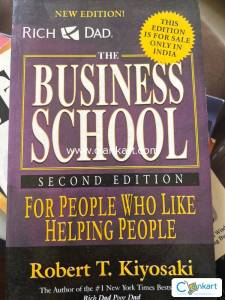
The Business School
The book describes what the real values of network marketing business are. It is more than just making money. He says that it is a business having a heart. Rich Dad’s The Business School does not promote any specific network marketing organization, but aims to educate the reader on how to select one.
COPYCAT MARKETING 101
About 95 percent of workers in industrialized countries are employees, make less than $40,000 per year, and save about $2,000 per year. At first glance, these figures may look pretty impressive, especially to people who make less than $40,000. But the truth is, 95 percent of the people in this world aren't getting ahead they're just getting by.Just look at the financial condition of the "average" U.S. citizen at age 65: 36 percent are dead, 54 percent are broke or dependent on others, 5 percent are still working, 4 percent are financially independent, and 1 percent are wealthy. Only 5 percent are financially well off!If you had the opportunity to become a 5%-er, would you take advantage of it? If your answer is "yes," read on, because that's what this book is about.Copycat Marketing 101 will make you aware that most people are 95%-ers because they've been taught to copy people who are in jobs that mean salary caps and financial dependence. In short, most people are copycatting the wrong plan!In this book, you'll learn that the current system most people copycat is designed to create temporary income not true wealth because it's based on linear growth of trading time for dollars. You'll learn that the key to true wealth is leverage, and you will learn about a dynamic form of leverage that wealthy people have been copying for centuries called exponential growth.Best of all, you'll learn how average people can break out of the time-for-money trap by copycatting a simple, duplicatable system of wealth creation that will open the door to financial freedom, once and for all!
Economics- Paul A Samuelson and William D Nordhaus
Economics,17e,by Samuelson and Nordhaus,is the classic text which set the standard for principles of economics texts when it was introduced in 1948. This text has been the standard-bearer in principles books for over 50 years,presenting a clear,accurate,and interesting indroduction to economics. Bill Nordhaus is now the primary author of this modern treatment of economics which has been thoroughly updated.
Guiding book for aspiring business starters!
Are you finding it tough to fund y our start-up? Especially in the post-COVID-19 world, where money is scarce? Well, then, this book is for you. It takes you through stories of early-stage start-ups and how they successfully managed to raise funding. Even better, it takes you through stories of failures-start-ups that couldn't raise funding, and why. After all, you can learn as much from failures as you can from successes. The authors also inter view some of the most accomplished founders in the world of business, such as Deep Kalra of MakeMyTrip, Yashish Dahiya of PolicyBazaar, Dinesh Agarwal of IndiaMART and Sairee Chahal of SHEROES. Their stories all come together in a useful 'PERSISTENT' framework, which helps make a start-up investment-ready.
Factfulness
Factfulness: The stress-reducing habit of only carrying opinions for which you have strong supporting facts.When asked simple questions about global trends—what percentage of the world’s population live in poverty; why the world’s population is increasing; how many girls finish school—we systematically get the answers wrong. So wrong that a chimpanzee choosing answers at random will consistently outguess teachers, journalists, Nobel laureates, and investment bankers.In Factfulness, Professor of International Health and global TED phenomenon Hans Rosling, together with his two long-time collaborators, Anna and Ola, offers a radical new explanation of why this happens. They reveal the ten instincts that distort our perspective—from our tendency to divide the world into two camps (usually some version of us and them) to the way we consume media (where fear rules) to how we perceive progress (believing that most things are getting worse).Our problem is that we don’t know what we don’t know, and even our guesses are informed by unconscious and predictable biases.It turns out that the world, for all its imperfections, is in a much better state than we might think. That doesn’t mean there aren’t real concerns. But when we worry about everything all the time instead of embracing a worldview based on facts, we can lose our ability to focus on the things that threaten us most.Inspiring and revelatory, filled with lively anecdotes and moving stories, Factfulness is an urgent and essential book that will change the way you see the world and empower you to respond to the crises and opportunities of the future.
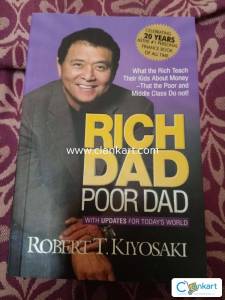
Rich Dad Poor Dad
April 2017 marks 20 years since Robert Kiyosaki’s Rich Dad Poor Dad first made waves in the Personal Finance arena.It has since become the #1 Personal Finance book of all time... translated into dozens of languages and sold around the world.Rich Dad Poor Dad is Robert's story of growing up with two dads — his real father and the father of his best friend, his rich dad — and the ways in which both men shaped his thoughts about money and investing. The book explodes the myth that you need to earn a high income to be rich and explains the difference between working for money and having your money work for you.20 Years... 20/20 HindsightIn the 20th Anniversary Edition of this classic, Robert offers an update on what we’ve seen over the past 20 years related to money, investing, and the global economy. Sidebars throughout the book will take readers “fast forward” — from 1997 to today — as Robert assesses how the principles taught by his rich dad have stood the test of time.In many ways, the messages of Rich Dad Poor Dad, messages that were criticized and challenged two decades ago, are more meaningful, relevant and important today than they were 20 years ago.As always, readers can expect that Robert will be candid, insightful... and continue to rock more than a few boats in his retrospective.Will there be a few surprises? Count on it.Rich Dad Poor Dad...• Explodes the myth that you need to earn a high income to become rich• Challenges the belief that your house is an asset• Shows parents why they can't rely on the school system to teach their kids about money• Defines once and for all an asset and a liability• Teaches you what to teach your kids about money for their future financial success
THE WEALTH OF NATIONS
Adam Smith's masterpiece, first published in 1776, is the foundation of modern economic thought and remains the single most important account of the rise of, and the principles behind, modern capitalism. Written in clear and incisive prose, The Wealth of Nations articulates the concepts indispensable to an understanding of contemporary society; and Robert Reich's Introduction both clarifies Smith's analyses and illuminates his overall relevance to the world in which we live. As Reich writes, "Smith's mind ranged over issues as fresh and topical today as they were in the late eighteenth century--jobs, wages, politics, government, trade, education, business, and ethics."Introduction by Robert Reich - Commentary by R. H. Campbell and A. S. Skinner - Includes a Modern Library Reading Group Guide
Macroeconomic class 12
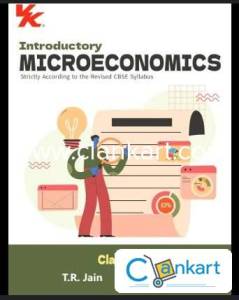
Restructured and revised in sync with the revised syllabus & updated guidelines by the CBSE board. A gist of major modifications: Brain Teaser blocks to test logical clarity and implication based learning. Test Your Understanding blocks to promote application, analysis & evaluation of concepts. Basic Numericals following hand-holding approach for budding economists. Categorisation & sub-classification of numericals for easy identification of nature of problem. HOTS: Each chapter is splashed with HOTS to promote clarity of the basics and provide some food for thought to the avid readers. ‘Did You Know’ blocks are provided in each chapter to highlight the significance of core concepts. Wide variety of questions: A wide variety of questions patterned along the CBSE released Sample Question Paper (2023) have been incorporated in each Chapter. The category of questions incorporated are: Competency-Based Learning: Objective Questions: Multiple Choice Questions Fill in the Blanks True-False alternatives Choose the Correct Pair of Statements/Identify the Correct Sequence of Alternatives One Liners: Answer with Reason Competency Based Learning: Data/Picture Based & Case-Study Based Questions Data/Picture Based Questions, Case-Study Based Questions Competency Based Learning: Descriptive Questions: Very Short Answer Type Questions HOTS & applications Analysis & Evaluation NCERT questions (with hints to answers) Miscellaneous Questions and Reference to the Text for Answers Solved Numericals Unsolved Numericals We have also added sample projects patterned along the latest CBSE format for the reference of the students. Sample Paper by “VK Global Study Group” based on the specimen paper woven along the same structure and blueprint as suggested in the CBSE released Sample Question Paper-2023 has been included. Harmony and Synchronisation: To maintain clarity of thought; the information in our book has been compiled and presented in a step by step manner so that students are able to comprehend things better. Comprehensive and elu
HOW TO CHANGE THE WORLD
Now published in more than twenty countries, David Bornstein's How to Change the World has become the bible for social entrepreneurship--in which men and women around the world are finding innovative solutions to a wide variety of social and economic problems. Whether delivering solar energy to Braz ... Available here:readbux.com/download?i=B003U2T7JAHow to Change the World: Social Entrepreneurs and the Power of New Ideas, Updated Edition PDF by David BornsteinRead How to Change the World: Social Entrepreneurs and the Power of New Ideas, Updated Edition PDF from Oxford University Press,David BornsteinDownload David Bornstein’s PDF E-book How to Change the World: Social Entrepreneurs and the Power of New Ideas, Updated Edition
Getting things done
With first-chapter allusions to martial arts, "flow," "mind like water," and other concepts borrowed from the East (and usually mangled), you'd almost think this self-helper from David Allen should have been called Zen and the Art of Schedule Maintenance. Not quite. Yes, Getting Things Done offers a complete system for downloading all those free-floating gotta-do's clogging your brain into a sophisticated framework of files and action lists--all purportedly to free your mind to focus on whatever you're working on. However, it still operates from the decidedly Western notion that if we could just get really, really organized, we could turn ourselves into 24/7 productivity machines. (To wit, Allen, whom the New Economy bible Fast Company has dubbed "the personal productivity guru," suggests that instead of meditating on crouching tigers and hidden dragons while you wait for a plane, you should unsheathe that high-tech saber known as the cell phone and attack that list of calls you need to return.) As whole-life-organizing systems go, Allen's is pretty good, even fun and therapeutic. It starts with the exhortation to take every unaccounted-for scrap of paper in your workstation that you can't junk, The next step is to write down every unaccounted-for gotta-do cramming your head onto its own scrap of paper. Finally, throw the whole stew into a giant "in-basket" That's where the processing and prioritizing begin; in Allen's system, it get a little convoluted at times, rife as it is with fancy terms, subterms, and sub-subterms for even the simplest concepts. Thank goodness the spine of his system is captured on a straightforward, one-page flowchart that you can pin over your desk and repeatedly consult without having to refer back to the book. That alone is worth the purchase price. Also of value is Allen's ingenious Two-Minute Rule: if there's anything you absolutely must do that you can do right now in two minutes or less, then do it now, thus freeing up your time and mind tenfold over the long term. It's commonsens