Buy used Business & Economics online in India
Buy Second Hand Books, Used Books Online In India
COPYCAT MARKETING 101 by Burke Hedges
About 95 percent of workers in industrialized countries are employees, make less than $40,000 per year, and save about $2,000 per year. At first glance, these figures may look pretty impressive, especially to people who make less than $40,000. But the truth is, 95 percent of the people in this world aren't getting ahead they're just getting by.Just look at the financial condition of the "average" U.S. citizen at age 65: 36 percent are dead, 54 percent are broke or dependent on others, 5 percent are still working, 4 percent are financially independent, and 1 percent are wealthy. Only 5 percent are financially well off!If you had the opportunity to become a 5%-er, would you take advantage of it? If your answer is "yes," read on, because that's what this book is about.Copycat Marketing 101 will make you aware that most people are 95%-ers because they've been taught to copy people who are in jobs that mean salary caps and financial dependence. In short, most people are copycatting the wrong plan!In this book, you'll learn that the current system most people copycat is designed to create temporary income not true wealth because it's based on linear growth of trading time for dollars. You'll learn that the key to true wealth is leverage, and you will learn about a dynamic form of leverage that wealthy people have been copying for centuries called exponential growth.Best of all, you'll learn how average people can break out of the time-for-money trap by copycatting a simple, duplicatable system of wealth creation that will open the door to financial freedom, once and for all!
Mastery- Robert Greene
The ultimate form of power is mastery. Robert Greene has spent a lifetime studying the laws of power: now he shares the secret path to greatness travelled by history's most powerful people. Each one of us has within us the potential to be a Master if we choose to follow them along a challenging but clear course that is described here for the first time.
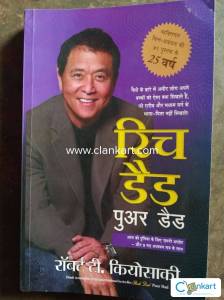
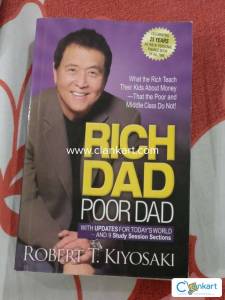
Rich Dad Poor Dad
Rich Dad Poor Dad is Robert's story of growing up with two dads — his real father and the father of his best friend, his rich dad — and the ways in which both men shaped his thoughts about money and investing. The book explodes the myth that you need to earn a high income to be rich and explains the difference between working for money and having your money work for you.
CAIIB BOOKS
The Certified Credit Research Analyst (CCRATM) is a comprehensive global education program designed to give an expert level understanding of credit markets to fresh graduates and experienced professionals. It integrates the fundamentals of financial analysis, credit analysis, rating methodologies, credit strategy and structuring. It offers the tools a candidate needs to occupy key positions in the world of finance, private banking, credit ratings and fixed income domain
Cambridge IGCSE and O level Business Studies Coursebook
This revised set of resources for Cambridge IGCSE, IGCSE (9-1) and O Level Business Studies syllabuses (0450, 0986, 7115) is thoroughly updated for first examinations from 2020. This coursebook and digital bundle contain exam-style case studies from businesses around the world – ranging from a social enterprise in China to a fast food outlet in Zimbabwe. These give an international view of the real world applications of Business Studies theory. Cambridge Elevate enhanced contains auto-marked questions with feedback as well as extra case studies, giving students everything they need for self-study. This edition also contains mind maps, revision questions, crosswords, word searches and more. The final chapter gives revision tips and advice on writing well-structured responses. Answers to coursebook questions are in the teacher's resource.
Rich dad poor dad book
April 2017 marks 20 years since Robert Kiyosaki’s Rich Dad Poor Dad first made waves in the Personal Finance arena.It has since become the #1 Personal Finance book of all time... translated into dozens of languages and sold around the world.Rich Dad Poor Dad is Robert's story of growing up with two dads — his real father and the father of his best friend, his rich dad — and the ways in which both men shaped his thoughts about money and investing. The book explodes the myth that you need to earn a high income to be rich and explains the difference between working for money and having your money work for you.20 Years... 20/20 HindsightIn the 20th Anniversary Edition of this classic, Robert offers an update on what we’ve seen over the past 20 years related to money, investing, and the global economy. Sidebars throughout the book will take readers “fast forward” — from 1997 to today — as Robert assesses how the principles taught by his rich dad have stood the test of time.In many ways, the messages of Rich Dad Poor Dad, messages that were criticized and challenged two decades ago, are more meaningful, relevant and important today than they were 20 years ago.As always, readers can expect that Robert will be candid, insightful... and continue to rock more than a few boats in his retrospective.Will there be a few surprises? Count on it.Rich Dad Poor Dad...• Explodes the myth that you need to earn a high income to become rich• Challenges the belief that your house is an asset• Shows parents why they can't rely on the school system to teach their kids about money• Defines once and for all an asset and a liability• Teaches you what to teach your kids about money for their future financial success
The Psychology of Money
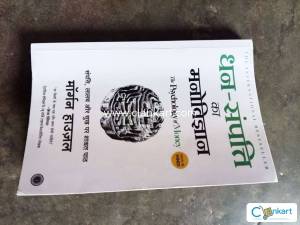
Morgan Housel's *The Psychology of Money* delves into the intricate relationship between human behavior and financial decision-making. Rather than focusing solely on numbers and strategies, Housel emphasizes the profound impact of psychology on our financial choices. Here's a comprehensive overview of the book's key themes and insights:---## 1. **Behavior Over Intelligence**Success in personal finance isn't determined by intelligence or academic prowess but by behavior. Emotional discipline, patience, and the ability to manage one's reactions to market fluctuations are paramount. Even the most knowledgeable individuals can falter financially if they lack behavioral control.---## 2. **The Role of Luck and Risk**Housel underscores the significant roles that luck and risk play in financial outcomes. While hard work and smart decisions are essential, external factors beyond our control can influence results. Recognizing this helps cultivate humility and reduces the tendency to judge others' financial situations harshly.([Kotak Life][1])---## 3. **The Power of Compounding**One of the most potent forces in finance is compounding. Housel illustrates how consistent, long-term investing can yield substantial results over time. The key is patience and allowing investments to grow without unnecessary interference.---## 4. **Wealth vs. Richness**There's a distinction between being rich and being wealthy. Being rich often refers to high income, while wealth is about accumulating assets and having the freedom to choose how to spend one's time. True wealth is what you don't seeit's the cars not purchased, the vacations not taken, and the luxury items not bought.---## 5. **Savings as a Foundation**Regardless of income level, cultivating a habit of saving is crucial. Savings provide flexibility, security, and the ability to seize opportunities. It's not about how much you earn but how much you keep.---## 6. **Avoiding Lifestyle Inflation**As income increases, there's a natural tendency to increase spending. Housel warns against this "lifestyle inflation," emphasizing the importance of maintaining a modest lifestyle to build and preserve wealth.---## 7. **The Importance of Financial Independence**Money's greatest intrinsic value is its ability to give you control over your time. Achieving financial independence allows individuals to make choices that align with their values and desires, rather than being driven solely by financial necessity.---## 8. **Embracing Reasonable Over Rational**While rational financial decisions are ideal, they aren't always feasible given human emotions and biases. Housel advocates for making reasonable decisions that align with one's comfort level, even if they aren't the most optimized from a purely financial standpoint.---## 9. **The Fallacy of Forecasting**Predicting financial markets is inherently uncertain. Housel emphasizes the importance of acknowledging the limits of our knowledge and being wary of overconfidence in forecasts. Instead, focus on building resilience and adaptability into your financial plans.---## 10. **The Influence of Personal Experiences**Our financial decisions are heavily influenced by our personal experiences and the era we grow up in. Recognizing this can help individuals understand their biases and make more informed choices.---## 11. **Staying Wealthy Requires Different Skills**Acquiring wealth and maintaining it are two distinct challenges. While boldness and risk-taking might help accumulate wealth, preserving it requires frugality, humility, and a keen awareness of risks.---## 12. **The Value of Room for Error**Incorporating a margin of safety into financial decisions provides a buffer against unforeseen events. This approach acknowledges the unpredictability of life and the markets, promoting long-term stability.---## 13. **Tail Events Drive Outcomes**
Business policy for bba
This innovative introduction to business policy and strategic management, covering both the illustrative cases and conceptual foundation, offers authoritative approaches to strategic leadership in emerging markets. Among its many unique features, this comprehensively updated and revised second edition is structured to help students think strategically. The major organizational issues in strategy development are covered through an analytical study of: Nine different perspectives on organization to capture the rich history of the discipline and enlighten the nature of strategy. The concept of strategic intent to guide action. 9-M model to analyze strategies in functional areas of manpower, materials, methods, money, manufacturing, machine, marketing, motivating, and manipulating. Competitive gaming model to strategize different types of market structures. Internetworking model to develop high-performance Internet ventures. Strategic business model to unfold hidden value into new directions. Value model to explain strategic elements of innovation and technology management. Ethical and international issues in the context of corporate governance. Strategic leadership model relevant to the emerging market ground realities. Strategic control model (both balanced and extended scorecard) to explore the influence of environmental and cultural contexts on effective performance. The text is well supported by more than one thousand sources of international research, India-focused case studies and experiential assignments. This comprehensive text on theory and practice of strategic management is a must read for management students as well as business practitioners and consultants.
The Making of a Manager by Julie Zhuo. A Management book
No idea what you're doing? No problem. Good managers are made, not borne. Facebook VP Julie Zhuo remembers the moment when she was asked to lead a team. She felt like she’d won the golden ticket, until reality came crashing in. She was just 25 and had barely any experience being managed, let alone managing others.Her co-workers became her employees overnight, and she faced a series of anxiety-inducing firsts, including agonising over whether to hire an interviewee; seeking the respect of reports who were cleverer than her; and having to fire someone she liked. Like most first-time managers, she wasn’t given any formal training, and had no resources to turn to for help. It took her years to find her way, but now she’s offering you the short-cut to success.This is the book she wishes she had on day one. Here, she offers practical, accessible advice like:· Don’t hide thorny problems from your own manager; you’re better off seeking help quickly and honestly· Before you fire someone for failure to collaborate, figure out if the problem is temperamental or just a lack of training or coaching· Don’t offer critical feedback in a ‘compliment sandwich’ – there’s a better way!If you’re looking to be promoted or in your first decade of management, this is your go-to-guide.
CBSE Business studies
This book has been specifically designed to meet the academic requirements of the new syllabus issued by the CBSE Board. It is divided into two parts-Part A covers the syllabus of Foundations of Business and Part B- covers Finance and Trade. For a better understanding of the topic, Keywords and Flow Charts are provided after each topic. The use of diagrams, tables, etc, has been made to make the subject matter self-explanatory. It Includes Objective Type Questions and Case Studies based on the most recent CBSE guidelines. Understanding-based questions, HOTS and Case Studies are included to help students expand their knowledge. Previous Year's Questions are also included to help students prepare for the Board Exam. QUICK REVISION and FLOW CHART to help you quickly review all of the topics. There are also Project Guidelines and a Project Sample.
Statistics for economics for class 11
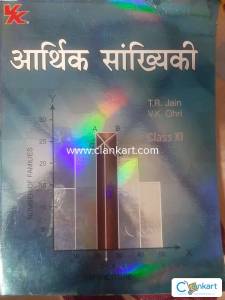
The CBSE board has recently shown a bent towards analysis and interpretation based questions under the label of ‘competency- based questions’. This book is prepared according to revised syllabus and new paper pattern. ‘The Same but Different’: Revised and restructured on positive feedback, the Statistics for Economics Textbook is all geared up to provide its readers step by step comprehension of the subject matter. Novelties of the text include: 1. NEW TYPOLOGY OF QUESTIONS: (Image/Data interpretation, defend and refute type questions etc.) have been incorporated in each chapter. 2. ‘BRAIN TEASER’ BLOCKS: Implication based questions related to current happenings around have been incorporated in each chapter. These help gauge the inferences the students are able to draw from the text and how easily they are able to relate economic theory to the ground level realities. 3. OTHERS: HOTS & Focus Zones DAV Board Question Paper (Solved) Sample Paper By “VK Global Study Group”[A specimen paper woven along the same structure and blueprint as suggested in the CBSE released Sample Question Paper-2023.]
Why my horse doesn't drink- Motivational Book
You can take a horse to the pond but cannot make it drink is an old proverb. A horse wins race for his master, helps his master to charge at the opposing army. However, the same horse sometimes kicks back, goes into the wrong direction and of course drinks only when it pleases. The irony is that it is true of human beings as well.If your team member refuses to carry out your instructions willingly, is it a problem or a symptom? After reading this book, you can be sure that refusing to work is a symptom, not the problem. The problem could be lack of interest in the job, stubbornness, excessive fear or refusing the way you are forcing him to work . No doubt, a motivated team is the secret of all successful businesses. However, motivating a team member is easier said than done. If you are faced with an unmanageable team or uncooperative colleagues, and your productivity chart is threatening to take a downturn, you must read this book! With this in hand, YOU WILL NOT ONLY TAKE YOUR HORSE TO THE POND BUT MAKE IT DRINK TOO!