Buy used Business & Economics online in India
Buy Second Hand Books, Used Books Online In India
Stay hungry stay foolish
The inspiring stories of 25 IIM Ahmedabad graduates who chose the rough road of entrepreneurship. They are diverse in age, in outlook and the industries they made a mark in. But they have one thing in common: they believed in the power of their dreams. This book seeks to inspire young graduates to look beyond placements and salaries. To believe in their dreams.
Good Economics For Hard Times
Figuring out how to deal with today's critical economic problems is perhaps the great challenge of our time. Much greater than space travel or perhaps even the next revolutionary medical breakthrough, what is at stake is the whole idea of the good life as we have known it.Immigration and inequality, globalization and technological disruption, slowing growth and accelerating climate change--these are sources of great anxiety across the world, from New Delhi and Dakar to Paris and Washington, DC. The resources to address these challenges are there--what we lack are ideas that will help us jump the wall of disagreement and distrust that divides us. If we succeed, history will remember our era with gratitude; if we fail, the potential losses are incalculable.In this revolutionary book, renowned MIT economists Abhijit V. Banerjee and Esther Duflo take on this challenge, building on cutting-edge research in economics explained with lucidity and grace. Original, provocative, and urgent, Good Economics for Hard Times makes a persuasive case for an intelligent interventionism and a society built on compassion and respect and show how economics, when done right, can help us solve the thorniest social and political problems of the day. It is an extraordinary achievement, one that shines a light to help us appreciate and understand our precariously balanced world.
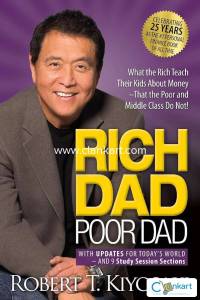
Rich Dad Poor Dad by Robert T. Kiyosaki
April 2017 marks 20 years since Robert Kiyosaki’s Rich Dad Poor Dad first made waves in the Personal Finance arena.It has since become the #1 Personal Finance book of all time... translated into dozens of languages and sold around the world.Rich Dad Poor Dad is Robert's story of growing up with two dads — his real father and the father of his best friend, his rich dad — and the ways in which both men shaped his thoughts about money and investing. The book explodes the myth that you need to earn a high income to be rich and explains the difference between working for money and having your money work for you.20 Years... 20/20 HindsightIn the 20th Anniversary Edition of this classic, Robert offers an update on what we’ve seen over the past 20 years related to money, investing, and the global economy. Sidebars throughout the book will take readers “fast forward” — from 1997 to today — as Robert assesses how the principles taught by his rich dad have stood the test of time.In many ways, the messages of Rich Dad Poor Dad, messages that were criticized and challenged two decades ago, are more meaningful, relevant and important today than they were 20 years ago.As always, readers can expect that Robert will be candid, insightful... and continue to rock more than a few boats in his retrospective.Will there be a few surprises? Count on it.Rich Dad Poor Dad...• Explodes the myth that you need to earn a high income to become rich• Challenges the belief that your house is an asset• Shows parents why they can't rely on the school system to teach their kids about money• Defines once and for all an asset and a liability• Teaches you what to teach your kids about money for their future financial success
Corporate Chanakya
Chanakya, who lived in 3rd Century BC, was a leadership guru par excellence. His ideas on how to identify leaders and groom them to govern a country has been well documented in his book Kautilya’s Arthashastra. This book contains 6000 aphorisms or sutras. In the present book the author simplifies the age old formula of success for leaders of the corporate world. Divided into 3 sections of Leadership, Management and Training Corporate Chanakya includes tips on various topics like – organizing and conducting effective meetings, dealing with tricky situations, managing time, decision making and responsibilities and powers of a leader.
The Psychology of Money
Timeless lessons on wealth, greed, and happiness doing well with money isn’t necessarily about what you know. It’s about how you behave. And behavior is hard to teach, even to really smart people. How to manage money, invest it, and make business decisions are typically considered to involve a lot of mathematical calculations, where data and formulae tell us exactly what to do. But in the real world, people don’t make financial decisions on a spreadsheet. They make them at the dinner table, or in a meeting room, where personal history, your unique view of the world, ego, pride, marketing, and odd incentives are scrambled together. In the psychology of money, the author shares 19 short stories exploring the strange ways people think about money and teaches you how to make better sense of one of life’s most important matters.
The 7 habits of highly effective people
In The 7 Habits of Highly Effective People, author Stephen R. Covey presents a holistic, integrated, principle-centered approach for solving personal and professional problems. With penetrating insights and pointed anecdotes, Covey reveals a step-by-step pathway for living with fairness, integrity, service, and human dignity -- principles that give us the security to adapt to change and the wisdom and power to take advantage of the opportunities that change creates.
Novel book
Book Summary of Rich Dad Poor Dad Table of Contents Iskit Bahut Jarurat Hain Rich Dad, Poor Dad Ameer Log Paise ke Liye Kaam Nahi Karte Paise ki Samajh Kyo Sikhai Jana Chahiye? Apne Kaam se Kaam Rakho Tax ke Itihas aur Corporations ki Takat Ameer Log Paise ke Avishkar Karte Hain Seekhane ke Liye Kaam Kare-Paise ke Liye Kaam Na Kare Badhao ko Paar Karna Shuru Karna Aur Jyada Chahiye? Kewal 7,000 Dollar mein hi Collge ki Shiksha
NCERT ACCOUNT FOR CLASS 12
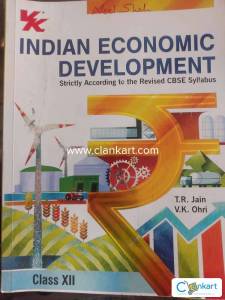
Restructured and revised in sync with the revised syllabus & updated guidelines by the CBSE board. A gist of major modifications: Brain Teaser blocks to test logical clarity and implication based learning. Test Your Understanding blocks to promote application, analysis & evaluation of concepts. Basic Numericals following hand-holding approach for budding economists. Categorisation & sub-classification of numericals for easy identification of nature of problem. HOTS: Each chapter is splashed with HOTS to promote clarity of the basics and provide some food for thought to the avid readers. ‘Did You Know’ blocks are provided in each chapter to highlight the significance of core concepts. Wide variety of questions: A wide variety of questions patterned along the CBSE released Sample Question Paper (2023) have been incorporated in each Chapter. The category of questions incorporated are: Competency-Based Learning: Objective Questions: Multiple Choice Questions Fill in the Blanks True-False alternatives Choose the Correct Pair of Statements/Identify the Correct Sequence of Alternatives One Liners: Answer with Reason Competency Based Learning: Data/Picture Based & Case-Study Based Questions Data/Picture Based Questions, Case-Study Based Questions Competency Based Learning: Descriptive Questions: Very Short Answer Type Questions HOTS & applications Analysis & Evaluation NCERT questions (with hints to answers) Miscellaneous Questions and Reference to the Text for Answers Solved Numericals Unsolved Numericals We have also added sample projects patterned along the latest CBSE format for the reference of the students. Sample Paper by “VK Global Study Group” based on the specimen paper woven along the same structure and blueprint as suggested in the CBSE released Sample Question Paper-2023 has been included. Harmony and Synchronisation: To maintain clarity of thought; the information in our book has been compiled and presented in a step by step manner so that students are able to comprehend things better. Comprehensive and elu
The Five Dysfunctions of a team
In The Five Dysfunctions of a Team Patrick Lencioni once again offers a leadership fable that is as enthralling and instructive as his first two best-selling books, The Five Temptations of a CEO and The Four Obsessions of an Extraordinary Executive. This time, he turns his keen intellect and storytelling power to the fascinating, complex world of teams. Kathryn Petersen, Decision Tech's CEO, faces the ultimate leadership crisis: Uniting a team in such disarray that it threatens to bring down the entire company. Will she succeed? Will she be fired? Will the company fail? Lencioni's utterly gripping tale serves as a timeless reminder that leadership requires as much courage as it does insight. Throughout the story, Lencioni reveals the five dysfunctions which go to the very heart of why teams even the best ones-often struggle. He outlines a powerful model and actionable steps that can be used to overcome these common hurdles and build a cohesive, effective team. Just as with his other books, Lencioni has written a compelling fable with a powerful yet deceptively simple message for all those who strive to be exceptional team leaders.
Blink ( the power of thinking like no-one else)
'Mesmerizing' TimeAn art expert instantly spots a fake. A cop decides whether to shoot. A psychologist accurately predicts a couple's future in minutes. This book is about those moments when we 'know' something without knowing why. It shows that honing your instincts could change the way you think about thinking forever. 'Trust my snap judgement, buy this book: you'll be delighted' David Brooks, The New York Times'Fiendishly clever' Evening Standard'Provocative, fascinating, radical' Fergal Byrne, Financial Times
Fooled by randomness
Fooled by Randomness is a standalone book in Nassim Nicholas Taleb’s landmark Incerto series, an investigation of opacity, luck, uncertainty, probability, human error, risk, and decision-making in a world we don’t understand. The other books in the series are The Black Swan, Antifragile, and The Bed of Procrustes.Now in a striking new hardcover edition, Fooled by Randomness is the word-of-mouth sensation that will change the way you think about business and the world. Nassim Nicholas Taleb–veteran trader, renowned risk expert, polymathic scholar, erudite raconteur, and New York Times bestselling author of The Black Swan–has written a modern classic that turns on its head what we believe about luck and skill. This book is about luck–or more precisely, about how we perceive and deal with luck in life and business. Set against the backdrop of the most conspicuous forum in which luck is mistaken for skill–the world of trading–Fooled by Randomness provides captivating insight into one of the least understood factors in all our lives. Writing in an entertaining narrative style, the author tackles major intellectual issues related to the underestimation of the influence of happenstance on our lives. The book is populated with an array of characters, some of whom have grasped, in their own way, the significance of chance: the baseball legend Yogi Berra; the philosopher of knowledge Karl Popper; the ancient world’s wisest man, Solon; the modern financier George Soros; and the Greek voyager Odysseus. We also meet the fictional Nero, who seems to understand the role of randomness in his professional life but falls victim to his own superstitious foolishness. However, the most recognizable character of all remains unnamed–the lucky fool who happens to be in the right place at the right time–he embodies the “survival of the least fit.” Such individuals attract devoted followers who believe in their guru’s insights and methods. But no one can replicate what is obtained by chance. Are we capable of distinguishing the fortunate
Book on AI
Disruption resulting from the proliferation of AI is coming. The authors of the bestselling Prediction Machines describe what you can do to prepare.Banking and finance, pharmaceuticals, automotive, medical technology, retail. Artificial intelligence (AI) has made its way into many industries around the world. But the truth is, it has just begun its odyssey toward cheaper, better, and faster predictions to drive strategic business decisions--powering and accelerating business. When prediction is taken to the max, industries transform. The disruption that comes with such transformation is yet to be felt--but it is coming.How do businesses prepare? In their bestselling first book, Prediction Machines, eminent economists Ajay Agrawal, Joshua Gans, and Avi Goldfarb explained the simple yet game-changing economics of AI. Now, in Power and Prediction, they go further to reveal AI as a prediction technology directly impacting decision-making and to teach businesses how to identify disruptive opportunities and threats resulting from AI. Their exhaustive study of new developments in artificial intelligence and the past history of how technologies have disrupted industries highlights the striking phase we are now in: after witnessing the power of this new technology and before its widespread adoption--what they call "the Between Times." While there continue to be important opportunities for businesses, there are also threats of disruption. As prediction machines improve, old ways of doing things will be upended. Also, the process by which AI filters into the many systems involved in application is very uneven. That process will have winners and losers. How can businesses leverage, or protect, their positions?Filled with illuminating insights, rich examples, and practical advice, Power and Prediction is the must-read guide for any business leader or policy maker on how to make the coming AI disruptions work for you rather than against you.