Buy used Business & Economics online in India
Buy Second Hand Books, Used Books Online In India
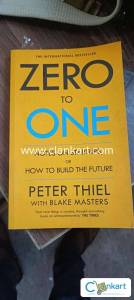
Zero to One
Peter Thiel is the co-founder of PayPal and the first outside investor in Facebook. In the Spring of 2012, he gave a lecture course at Stanford for software engineers, calling on them to think boldly and broadly about how they might use their skills to shape the future, and imparting the lessons he has gleaned from his own experience. One of the students in that class - Blake Masters - took notes and posted them online. The blog posts became a huge success, with hundreds of thousands of hits, and became the basis for Zero to One.We live in an age of technological stagnation, even if we're too distracted by our new mobile devices to notice. Progress has stalled in every industry except computers, and globalization is hardly the revolution people think it is. It's true that the world can get marginally richer by building new copies of old inventions, making horizontal progress from '1 to n'. But true innovators have nothing to copy. The most valuable companies of the future will make vertical progress from '0 to 1', creating entirely new industries and products that have never existed before. Zero to One is about how to build these companies.A business book that also provides insight into the world of start-ups from a Silicon Valley icon, Thiel shows how to pursue your goals using the most important, most difficult, and most underrated skill in every job or industry: thinking for yourself.
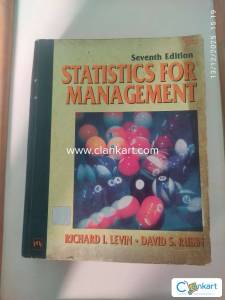
Statistics for management
A new edition of the popular student-friendly textbook, this book explains the statistical concepts from life experiences. Common sense, real world ideas, references, patient explanations and intuitive approaches are the hallmarks of this text, and also which make learning very simple.
48 Laws Of Power by "Robert Greene"
Amoral, cunning, ruthless, and instructive, this piercing work distills three thousand years of the history of power in to forty-eight well explicated laws. As attention-grabbing in its design as it is in its content, this bold volume outlines the laws of power in their unvarnished essence, synthesizing the philosophies of Machiavelli, Sun-tzu, Carl von Clausewitz, and other great thinkers. Some laws teach the need for prudence ("Law 1: Never Outshine the Master"), the virtue of stealth ("Law 3: Conceal Your Intentions"), and many demand the total absence of mercy ("Law 15: Crush Your Enemy Totally"), but like it or not, all have applications in real life. Illustrated through the tactics of Queen Elizabeth I, Henry Kissinger, P. T. Barnum, and other famous figures who have wielded--or been victimized by--power, these laws will fascinate any reader interested in gaining, observing, or defending against ultimate control.
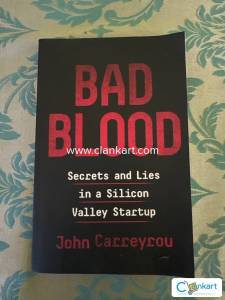
BAD BLOOD: Secret and Lies in a Silicon Valley Startup
In 2015, Theranos founder and CEO Elizabeth Holmes was widely seen as the female Steve Jobs: a brilliant Stanford dropout whose startup 'unicorn' promised to revolutionize the medical industry with a machine that would make medical blood testing significantly faster and easier. Backed by investors such as Oracle's Larry Ellison and Tim Draper, Theranos sold shares in a fundraising round that valued the company at more than $9 billion, putting Holmes's worth at an estimated $4.5 billion. There was just one problem: the technology didn't work.For years, Holmes had been misleading investors and retail partners. The deception would lead to nearly one million false test results, some of which seriously jeopardized the health of patients.When John Carreyrou, a reporter at the Wall Street Journal, started asking questions, both Carreyrou and the Journal were threatened with lawsuits, as were many of Carreyrou's sources. Undaunted, the newspaper ran the first of dozens of Theranos articles in late 2015. By early 2017, the company's value was zero, and in March 2018, the U.S. Security and Exchange Commission charged Holmes with perpetrating 'an elaborate, years-long fraud'.
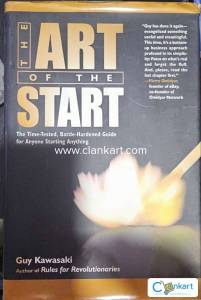
the art of the start
A new product, a new service, a new company, a new division, a new organization, a new anything—where there’s a will, here’s the way. It begins with a dream that just won’t quit, the once-in-a-lifetime thunderbolt of pure inspiration, the obsession, the world-beater, the killer app, the next big thing. Everyone who wants to make the world a better place becomes possessed by a grand idea.But what does it take to turn your idea into action? Whether you are an entrepreneur, intrapreneur, or not-for-profit crusader, there’s no shortage of advice available on issues such as writing a business plan, recruiting, raising capital, and branding. In fact, there are so many books, articles, and Web sites that many startups get bogged down to the point of paralysis. Or else they focus on the wrong priorities and go broke before they discover their mistakes. In The Art of the Start, Guy Kawasaki brings two decades of experience as one of business’s most original and irreverent strategists to offer the essential guide for anyone starting anything, from a multinational corporation to a church group. At Apple in the 1980s, he helped lead one of the great companies of the century, turning ordinary consumers into evangelists. As founder and CEO of Garage Technology Ventures, a venture capital firm, he has field-tested his ideas with dozens of newly hatched companies. And as the author of bestselling business books and articles, he has advised thousands of people who are making their startup dreams real. From raising money to hiring the right people, from defining your positioning to creating a brand, from creating buzz to buzzing the competition, from managing a board to fostering a community, this book will guide you through an adventure that’s more art than science—the art of the start.
Eat That Frog (Hindi -Sabse Muskil Kam Sabse Pehle))
The legendary Eat That Frog! (more than 450,000 copies sold and translated into 23 languages) provides the 21 most effective methods for conquering procrastination and accomplishing more. This new edition is revised and updated throughout, and includes brand new information on how to keep technology from dominating our time.
The psychology of money
Timeless lessons on wealth, greed, and happiness doing well with money isn’t necessarily about what you know. It’s about how you behave. And behavior is hard to teach, even to really smart people. How to manage money, invest it, and make business decisions are typically considered to involve a lot of mathematical calculations, where data and formulae tell us exactly what to do. But in the real world, people don’t make financial decisions on a spreadsheet. They make them at the dinner table, or in a meeting room, where personal history, your unique view of the world, ego, pride, marketing, and odd incentives are scrambled together. In the psychology of money, the author shares 19 short stories exploring the strange ways people think about money and teaches you how to make better sense of one of life’s most important matters.