Clankart Logo

Find from over 1000s of used books online

Buy Second Hand Books, Used Books Online In India

Advertisement
Want to see your books here? Have Used Books?
Make some extra cash by selling your old books for actual money in your UPI/Bank account. Go on, it's quick and easy.
Advertisement
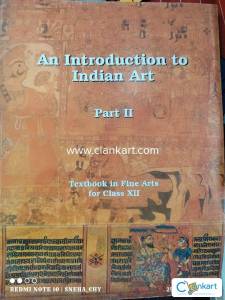
NCERT Fine Arts for Class 12 Part 2

NCERT Fine Arts for Class 12 Part 2

₹120 ₹140
14% off

This beautifully written and profusely illustrated catalogue of Pahari paintings in the Jagdish and Kamla Mittal Museum of Indian art in Hyderabad is a major contribution to the study of miniature painting in the Punjab Hills. It Presents in detail many exquisite but hitherto unknown examples of the key centres of painting from the mid 17th to the mid 19th century, and provides sensitive analyses of a number of works of crucial art historical importance. Incorporating the latest research into their discussions of the themes and formal aspects of the 128 works reproduced here, the authors pay special attention to the movement of artists from one state to another within the Pahari region, and formulate ground-breaking accounts of the early phases of painting at courts such as Chamba, Mandi, and Kullu. Particularly noteworthy are their strikingly original insights into the family workshop of Pandit Seu and his highly talented sons, Manaku and Nainsukh, whose paintings and legacy into the next two generations are exceptionally well represented in the collection. They devote unprecedented attention processes, and frequently arrive at fresh and convincing distinction among the paintings produced by various members of a given family workshop. The superb quality of the illustrations, the selection of choice details, and the inclusion of revealing comparative material make this book essential to anyone who studies or enjoys Pahari painting.

2 years ago
Advertisement
Historical fiction novel

Historical fiction novel

₹199 ₹399
50% off

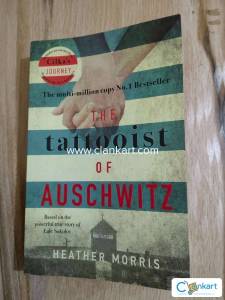
The Tattooist of Auschwitz is based on the true story of Lale and Gita Sokolov, two Slovakian Jews who survived Auschwitz and eventually made their home in Australia. In that terrible place, Lale was given the job of tattooing the prisoners marked for survival - literally scratching numbers into his fellow victims' arms in indelible ink to create what would become one of the most potent symbols of the Holocaust. Lale used the infinitesimal freedom of movement that this position awarded him to exchange jewels and money taken from murdered Jews for food to keep others alive. If he had been caught, he would have been killed; many owed him their survival.There have been many books about the Holocaust - and there will be many more. What makes this one so memorable is Lale Sokolov's incredible zest for life. He understood exactly what was in store for him and his fellow prisoners, and he was determined to survive - not just to survive but to leave the camp with his dignity and integrity intact, to live his life to the full. Terrible though this story is, it is also a story of hope and of courage. It is also - almost unbelievably - a love story. Waiting in line to be tattooed, terrified and shaking, was a young girl. For Lale - a dandy, a jack-the-lad, a bit of a chancer - it was love at first sight, and he determined not only to survive himself but to ensure that Gita did, too. His story - their story - will make you weep, but you will also find it uplifting. It shows the very best of humanity in the very worst of circumstances.Like many survivors, Lale and Gita told few people their story after the war. They eventually made their way to Australia, where they raised a son and had a successful life. But when Gita died, Lale felt he could no longer carry the burden of their past alone. He chose to tell his story. Publisher's Summary

1 year ago
Certificate physical and human geography

Certificate physical and human geography

₹190

This book is a textbook approach that aims at providing an understanding of our planet's physical topography, climatic and vegetative environment, and the relationship that human beings share across regions. The Physical Geography section deals with topics that span the planet's various topographies like the Earth's Crust, Weathering, Mass Movement and Groundwater; Landforms of Glaciation, The Ocean, Lakes, Coastal Landforms, etc. Each chapter has a questions section to help readers evaluate their understanding of the subject explained in that chapter. Various illustrations and photographs enhance the text, to enable all students to easily understand the concepts. Part two of the book, The Weather, Climate and Vegetation section, covers subjects like different climates and climatic zones like Equatorial, Savanna, Tropical or Arctic climates. Table Of Contents PART I PHYSICAL GEOGRAPHY 1. The Earth and the Universe 1 Exploring the Universe 2. The Earth's Crust 3. Vulcanism and Earthquakes 4. Weathering, Mass Movement and Groundwater 5. Landforms made by Running Water 6. Landforms of Glaciation 7. Arid or Desert Landforms 8. Limestone and Chalk Landforms 9. Lakes 66 General, 10. Coastal Landforms 11. Islands and Coral Reefs 12. The Oceans PART 2 WEATHER, CLIMATE AND VEGETATION 13. Weather 14. Climate 15. The Hot, Wet Equatorial Climate 16. The Tropical Monsoon and Tropical Marine Climates 17. The Savanna or Sudan Climate 18. The Hot Desert and Mid-Latitude Desert Cli-mates 19. The Warm Temperate Western Margin (Mediterranean) Climate 20. The Temperate Continental (Steppe) Climate 21. The Warm Temperate Eastern Margin (China Type) Climate 22. The Cool Temperate Western Margin (British Type) Climate 23, The Cool Temperate Continental (Siberian) Climate 24. The Cool Temperate Eastern Margin (Lauren-tian) Climate 25. The Arctic or Polar Climate .

2 years ago
Advertisement
Advertisement