Clankart Logo

Find from over 1000s of used books online

Buy Second Hand Books, Used Books Online In India

Advertisement

Want to see your books here? Have Used Books?
Make some extra cash by selling your old books for actual money in your UPI/Bank account. Go on, it's quick and easy.

Advertisement

Think like a monk

Think like a monk

₹100 ₹599
83% off

Dopo aver conseguito la laurea in Economia alla Cass Business School di Londra, Jay Shetty si trova di fronte a un bivio: può intraprendere una sicura carriera nel mondo degli affari oppure seguire un sentiero meno battuto e investigare la profondità di una chiamata interiore. Decidendo per la seconda opzione, pochi mesi dopo è in India in un noto ashram dove decide di diventare un monaco. Lì impara che dare ascolto a quella parte più profonda di noi stessi che spesso ignoriamo è il primo passo per riuscir ad accettare chi intimamente siamo, e che solo così facendo possiamo rendere significative le nostre vite e toccare la felicità. Jay Shetty comprende anche che essere un monaco è fondamentalmente uno stato d'animo e così dopo tre anni dedicati alla ricerca interiore, in pieno accordo con il suo maestro, decide di lasciare il monastero per raccontare al mondo tutta la bellezza di quell'antica sapienza.E in Pensa come un monaco condivide con il lettore le sue intuizioni maturate a partire da quell'esperienza, sottolineando che non è necessario trasferirsi a vivere in un monastero perché la saggezza insegnata dai monaci è sempre accessibile, e una volta che la si sappia accendere è capace di offrire una risposta a molte delle domande che quotidianamente affollano la mente. La magnetica capacità comunicativa di Jay Shetty è formidabile nel rendere attualissima la saggezza e nel farci comprendere che è possibile raggiungere l'agognata armonia con il nostro sé più intimo e dimorare in quel fugace equilibro interiore che sembra altrimenti sempre sfuggirci. Ci sono tre fasi di apprendimento della mentalità del monaco.La prima è il lasciar andare, liberandoci dalle influenze esterne, dagli ostacoli interni e dalle paure che ci bloccano. Potete vederla come una pulizia che farà spazio per la crescita. La seconda fase è la crescita. Ci aiuterà a ripensare la nostra vita in modo da poter prendere le decisioni con intenzione, determinazione e sicurezza. La terza è il dare, volgendoci al mondo al di fuori di noi, espandendo

1 year ago
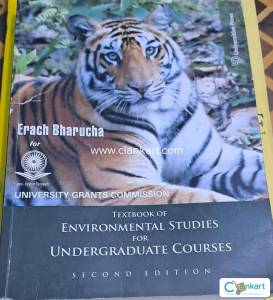
Environmental studies Textbook By Erach Bharucha

Environmental studies Textbook By Erach Bharucha

₹100

The importance of Environmental Studies cannot be disputed since the need for sustainable development is a key to the future of mankind. Recognizing this, the Honourable Supreme Court of India directed the UGC to introduce a basic course on environmental education for undergraduate courses in all disciplines, to be implemented by every university in the country. Accordingly, the UGC constituted an expert committee to formulate a six-month core module syllabus for environmental studies. This textbook is the outcome of the UGC s efforts and has been prepared as per the syllabus. It is designed to bring about an awareness on a variety of environmental concerns. It attempts to create a pro-environmental attitude and a behavioural pattern in society that is based on creating sustainable lifestyles and a new ethic towards conservation. This textbook stresses on a balanced view of issues that affect our daily lives. These issues are related to the conflict between existing `development strategies and the need for `conservation . It not only makes the student better informed on these concerns, but is expected to lead the student towards positive action to improve the environment. Based on a multidisciplinary approach that brings about an appreciation of the natural world and human impact on its integrity, this textbook seeks practical answers to make human civilization sustainable on the earth s finite resources. Attractively priced at Rupees One Hundred and Fifteen only, this textbook covers the syllabus as structured by the UGC, divided into 8 units and 50 lectures. The first 7 units, which cover 45 lectures are classroom teaching-based, and enhance knowledge skills and attitude to environment. Unit 8 is based on field activities to be covered in 5 lecture hours and would provide students with first hand knowledge on various local environmental issues.

1 year ago
Advertisement
Advertisement
Advertisement