Clankart Logo

Find from over 1000s of used books online

Buy Second Hand Books, Used Books Online In India

Advertisement

Want to see your books here? Have Used Books?
Make some extra cash by selling your old books for actual money in your UPI/Bank account. Go on, it's quick and easy.

Advertisement

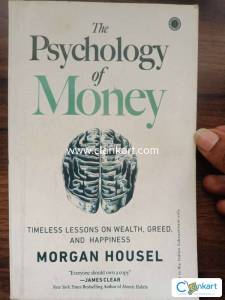
The Psychology of Money

The Psychology of Money

₹399 ₹499
20% off

Morgan Housel's *The Psychology of Money* delves into the intricate relationship between human behavior and financial decision-making. Rather than focusing solely on numbers and strategies, Housel emphasizes the profound impact of psychology on our financial choices. Here's a comprehensive overview of the book's key themes and insights:---## 1. **Behavior Over Intelligence**Success in personal finance isn't determined by intelligence or academic prowess but by behavior. Emotional discipline, patience, and the ability to manage one's reactions to market fluctuations are paramount. Even the most knowledgeable individuals can falter financially if they lack behavioral control.---## 2. **The Role of Luck and Risk**Housel underscores the significant roles that luck and risk play in financial outcomes. While hard work and smart decisions are essential, external factors beyond our control can influence results. Recognizing this helps cultivate humility and reduces the tendency to judge others' financial situations harshly.([Kotak Life][1])---## 3. **The Power of Compounding**One of the most potent forces in finance is compounding. Housel illustrates how consistent, long-term investing can yield substantial results over time. The key is patience and allowing investments to grow without unnecessary interference.---## 4. **Wealth vs. Richness**There's a distinction between being rich and being wealthy. Being rich often refers to high income, while wealth is about accumulating assets and having the freedom to choose how to spend one's time. True wealth is what you don't seeit's the cars not purchased, the vacations not taken, and the luxury items not bought.---## 5. **Savings as a Foundation**Regardless of income level, cultivating a habit of saving is crucial. Savings provide flexibility, security, and the ability to seize opportunities. It's not about how much you earn but how much you keep.---## 6. **Avoiding Lifestyle Inflation**As income increases, there's a natural tendency to increase spending. Housel warns against this "lifestyle inflation," emphasizing the importance of maintaining a modest lifestyle to build and preserve wealth.---## 7. **The Importance of Financial Independence**Money's greatest intrinsic value is its ability to give you control over your time. Achieving financial independence allows individuals to make choices that align with their values and desires, rather than being driven solely by financial necessity.---## 8. **Embracing Reasonable Over Rational**While rational financial decisions are ideal, they aren't always feasible given human emotions and biases. Housel advocates for making reasonable decisions that align with one's comfort level, even if they aren't the most optimized from a purely financial standpoint.---## 9. **The Fallacy of Forecasting**Predicting financial markets is inherently uncertain. Housel emphasizes the importance of acknowledging the limits of our knowledge and being wary of overconfidence in forecasts. Instead, focus on building resilience and adaptability into your financial plans.---## 10. **The Influence of Personal Experiences**Our financial decisions are heavily influenced by our personal experiences and the era we grow up in. Recognizing this can help individuals understand their biases and make more informed choices.---## 11. **Staying Wealthy Requires Different Skills**Acquiring wealth and maintaining it are two distinct challenges. While boldness and risk-taking might help accumulate wealth, preserving it requires frugality, humility, and a keen awareness of risks.---## 12. **The Value of Room for Error**Incorporating a margin of safety into financial decisions provides a buffer against unforeseen events. This approach acknowledges the unpredictability of life and the markets, promoting long-term stability.---## 13. **Tail Events Drive Outcomes**

1 year ago
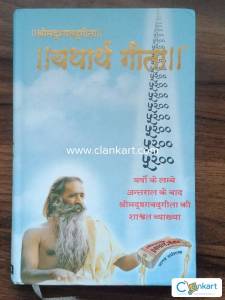
Yatharth bhagvat Geeta

Yatharth bhagvat Geeta

₹299 ₹499
40% off

The **Bhagavad Gita**, often referred to as the **Gita**, is a 700-verse Hindu scripture that is part of the Indian epic **Mahabharata**, specifically in the **Bhishma Parva** (Book of Bhishma), chapters 2340. It is written in **Sanskrit** and is presented as a dialogue between **Prince Arjuna** and **Lord Krishna**, who serves as his charioteer.### Key Highlights of the Bhagavad Gita:1. **Context**: * Set on the battlefield of **Kurukshetra**, where two groups of royal cousins, the Pandavas and the Kauravas, are about to go to war. * Arjuna, a warrior prince, is morally troubled about fighting his own kin and teachers in battle.2. **Main Themes**: * **Dharma (duty/righteousness)**: Krishna urges Arjuna to perform his Kshatriya (warrior) duty without attachment. * **Yoga**: The Gita discusses different paths of yoga: * **Karma Yoga**: Path of selfless action. * **Bhakti Yoga**: Path of devotion to God. * **Jnana Yoga**: Path of knowledge and wisdom. * **Detachment**: Emphasis on acting without attachment to results. * **The Self**: Discussion of the eternal nature of the soul (Atman) and its difference from the body.3. **Philosophical Significance**: * The Gita combines elements of Vedanta, Sankhya, and Yoga philosophy. * It addresses the moral, ethical, and spiritual dilemmas faced by individuals.4. **Universal Appeal**: * Revered by Hindus and respected globally as a spiritual and philosophical classic. * Commentaries have been written by great thinkers like **Adi Shankaracharya**, **Madhvacharya**, **Swami Vivekananda**, and **Mahatma Gandhi**.

1 year ago
Advertisement
Advertisement

Advertisement