Find from over 1000s of used books online
Buy Second Hand Books, Used Books Online In India

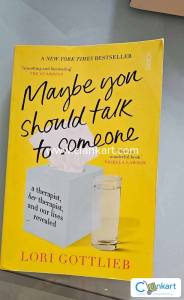
Maybe you should talk to someone 9781913348922
The bestselling book that reveals what your therapist is really thinking.Therapist Lori Gottlieb takes us behind the scenes of her practice — where her patients are looking for answers, and so is she.She recounts her experiences with her own therapist, Wendell, and explores the inner lives of her patients — a self-absorbed Hollywood producer, a young newlywed with a terminal illness, a depressed senior citizen, and a self-destructive twenty-something — realising that the questions they are struggling with are often the same questions she is asking herself.Maybe You Should Talk to Someone offers a rare and candid insight into a profession that is conventionally bound with rules and secrecy.
The Vegetarian
An alternative cover edition for this ISBN can be found here.Yeong-hye and her husband are ordinary people. He is an office worker with moderate ambitions and mild manners; she is an uninspired but dutiful wife. The acceptable flatline of their marriage is interrupted when Yeong-hye, seeking a more 'plant-like' existence, decides to become a vegetarian, prompted by grotesque recurring nightmares. In South Korea, where vegetarianism is almost unheard-of and societal mores are strictly obeyed, Yeong-hye's decision is a shocking act of subversion. Her passive rebellion manifests in ever more bizarre and frightening forms, leading her bland husband to self-justified acts of sexual sadism. His cruelties drive her towards attempted suicide and hospitalisation. She unknowingly captivates her sister's husband, a video artist. She becomes the focus of his increasingly erotic and unhinged artworks, while spiralling further and further into her fantasies of abandoning her fleshly prison and becoming - impossibly, ecstatically - a tree. Fraught, disturbing and beautiful, The Vegetarian is a novel about modern day South Korea, but also a novel about shame, desire and our faltering attempts to understand others, from one imprisoned body to another.
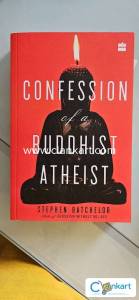
Confession of a Buddhist Atheist
Written with the same brilliance and boldness that made "Buddhism Without Beliefs" a classic in its field, Confession of a Buddhist Atheist is Stephen Batchelor'saccount of his journey through Buddhism, which culminates in a groundbreaking new portrait of the historical Buddha. Stephen Batchelor grew up outside London and came of age in the 1960s. Like otherseekers of his time, instead of going to college he set off to explore the world. Settling in India, he eventually became a Buddhist monk in Dharamsala, the Tibetan capital-in-exile, and entered the inner circle of monksaround the Dalai Lama. He later moved to a monastery in South Korea to pursue intensive training in Zen Buddhism. Yet the more Batchelor read about the Buddha, the more he came to believe that the way Buddhism was beingtaught and practiced was at odds with the actual teachings of the Buddha himself. Charting his journey from hippie to monk to lay practitioner, teacher, and interpreter of Buddhist thought, Batchelor reconstructs the historical Buddha's life, locating him within the social and political context of his world. In examining the ancient texts of the Pali Canon, the earliest record of theBuddha's life and teachings, Batchelor argues that the Buddha was a man who looked at human life in a radically new way for his time, more interested in the question of how human beings should live in this worldthan in notions of karma and the afterlife. According to Batchelor, the outlook of the Buddha was far removed from the piety and religiosity that has come to define much of Buddhism as we know it today. Both controversial and deeply personal, Confession of a Buddhist Atheist is a fascinating exploration of a religion that continues to engage the West. Batchelor'sinsightful, deeply knowledgeable, and persuasive account will be an essential book for anyone interested in Buddhism. "From the Hardcover edition."
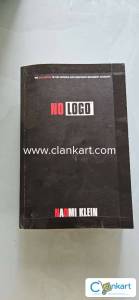
No Logo Naomi Klein
A sensation when it was first published, No Logo has gone on to become an international phenomenon and a cultural manifesto for critics of unfettered capitalism worldwide. In these troubled economic times, Klein’s analysis of our corporate and branded world is as timely and powerful as ever.Equal parts cultural analysis, political manifesto, mall-rat memoir, and journalistic exposé, No Logo is the first book to put the new resistance into pop-historical and clear economic perspective. Naomi Klein tells a story rebellion and self-determination in the face of our new branded world.
Sunny Days
Sunny Days is the fascinating record of the growth of India's greatest batsman; one whose astonishing feats on the cricket field have had innumerable records rewritten, and yet more difficult targets set.How did Sunil Manohar Gavaskar begin and what were the early days like? It is not merely out of curiosity that one may ask the question; the knowledge of the shaping up of the process of greatness is essential for a true understanding of the greatness. Before we can ask the Little Master to tell us about the dizzying heights of his career we need to know the beginning. And Sunny Days is all about it. The baby is switched after birth, luckily restored by an eagle-eyed uncle; he grows up and almost breaks his mother's nose with a mighty hit (a childhood habit persisting in later life); plays good cricket in school and college; graduates inevitably through university and Trophy cricket; is at times booed by the crowd as his uncle happens to be a Selector - in fact all that could happen does happen to make him reach the age of twenty-one, when at Port of Spain Gavaskar bursts upon the cricket scene with his Test debut. The year is 1971, Gavaskar's year, and sunny days have truly begun for Indian cricket. By the end of the 1975-76 season Gavaskar has played 147 first class matches, amassed 11574 runs and 38 hundreds. He has played in 24 matches in 8 Tests, with 2123 runs and 8 hundreds. Still eight years to go for the great days of the Kotla and the Chidambaram Stadium; but as it is said, in the beginning is the end. Fluently written, self-effacing modesty imparting a rare grace to the pages, Sunny Days is great to read.
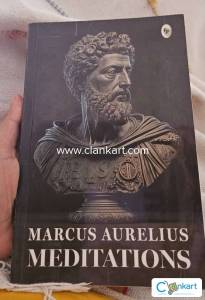
Meditations
Written in Greek, without any intention of publication, by the only Roman emperor who was also a philosopher, the Meditations of Marcus Aurelius (AD 121-180) offer a remarkable series of challenging spiritual reflections and exercises developed as the emperor struggled to understand himself and make sense of the universe. Ranging from doubt and despair to conviction and exaltation, they cover such diverse topics as the nature of moral virtue, human rationality, divine providence, and Marcus' own emotions. But while the Meditations were composed to provide personal consolation and encouragement, in developing his beliefs Marcus Aurelius also created one of the greatest of all works of philosophy: a timeless collection of extended meditations and short aphorisms that has been consulted and admired by statesmen, thinkers and readers through the centuries.
Beyond good and evil
A caustic criticism of nearly every philosophic predecessor and a challenge of traditionally held views on right and wrong, Friedrich Nietzsche’s Beyond Good and Evil paved the way for modern philosophical thought. Through nearly three hundred transformative aphorisms, Nietzsche presents a worldview in which neither truth nor morality are absolutes, and where good and evil are not opposites but counterparts that stem from the same desires.This work dramatically rejects the tradition of Western thought with its notions of truth and God, good and evil. Nietzsche demonstrates that the Christian world is steeped in a false piety and infected with a "slave morality." With wit and energy, he turns from this critique to a philosophy that celebrates the present and demands that the individual impose their own "will to power" upon the world.Beyond Good and Evil was a foundational text for early twentieth-century thinkers, including philosophers, psychologists, novelists, and playwrights. Today’s readers will delight in Nietzsche’s pithy wit and irony while gaining a deeper understanding of his core ideology.
The Alchemist
Like the one-time bestseller Jonathan Livingston Seagull, The Alchemist presents a simple fable, based on simple truths and places it in a highly unique situation. And though we may sniff a bestselling formula, it is certainly not a new one: even the ancient tribal storytellers knew that this is the most successful method of entertaining an audience while slipping in a lesson or two. Brazilian storyteller Paulo Coehlo introduces Santiago, an Andalusian shepherd boy who one night dreams of a distant treasure in the Egyptian pyramids. And so he's off: leaving Spain to literally follow his dream. Along the way he meets many spiritual messengers, who come in unassuming forms such as a camel driver and a well-read Englishman. In one of the Englishman's books, Santiago first learns about the alchemists--men who believed that if a metal were heated for many years, it would free itself of all its individual properties, and what was left would be the "Soul of the World." Of course he does eventually meet an alchemist, and the ensuing student-teacher relationship clarifies much of the boy's misguided agenda, while also emboldening him to stay true to his dreams. "My heart is afraid that it will have to suffer," the boy confides to the alchemist one night as they look up at a moonless night. "Tell your heart that the fear of suffering is worse than the suffering itself," the alchemist replies. "And that no heart has ever suffered when it goes in search of its dreams, because every second of the search is a second's encounter with God and with eternity." --Gail Hudson