Find from over 1000s of used books online
Buy Second Hand Books, Used Books Online In India
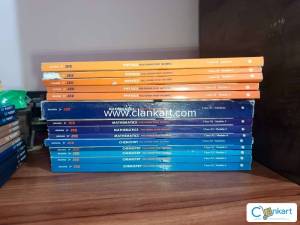
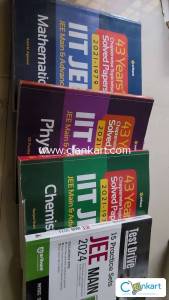
JEE modules (pw) 11th (untouched)
this is my untouched modules of pw arjuna batchthe condition of the book is excellentat minimal pricecontact me for more info- 7338393628i have 12th module also .. which is at best condition untouchedif u need it both gets little cheapercontact me if u want
Atlas Shrugged
A towering philosophical novel that is the summation of her Objectivist philosophy, Ayn Rand's Atlas Shrugged is the saga of the enigmatic John Galt, and his ambitious plan to 'stop the motor of the world', published in Penguin Modern Classics.Opening with the enigmatic question 'Who is John Galt?', Atlas Shrugged envisions a world where the 'men of talent' - the great innovators, producers and creators - have mysteriously disappeared. With the US economy now faltering, businesswoman Dagny Taggart is struggling to get the transcontinental railroad up and running. For her John Galt is the enemy, but as she will learn, nothing in this situation is quite as it seems. Hugely influential and grand in scope, this story of a man who stopped the motor of the world expounds Rand's controversial philosophy of Objectivism, which champions competition, creativity and human greatness. Ayn Rand (1905-82), born Alisa Rosenbaum in St. Petersburg, Russia, emigrated to America with her family in January 1926, never to return to her native land. Her novel The Fountainhead was published in 1943 and eventually became a bestseller. Still occasionally working as a screenwriter, Rand moved to New York City in 1951 and published Atlas Shrugged in 1957. Her novels espoused what came to be called Objectivism, a philosophy that champions capitalism and the pre-eminence of the individual. If you enjoyed Atlas Shrugged, you might like Rand's The Fountainhead, also available in Penguin Modern Classics.'A writer of great power ... she writes brilliantly, beautifully, bitterly'The New York Times'Atlas Shrugged ... is a celebration of life and happiness'Alan Greenspan
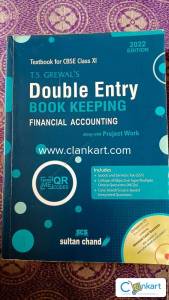
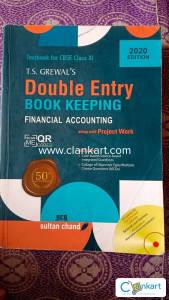
Ts grewal accountancy for class 11
The book has been designed topic and subtopic-wise, keeping the students’ needs in mind. The current edition has certain unique features: Each chapter starts with a To Do list. It gives the central idea of the chapter and the way it has been addressed. Each chapter is divided into several sections corresponding to different components of the syllabus. Each chapter is splashed with HOTS. This is to promote clarity of the basics. Focus Zones in each chapter present a crux of the concepts. Blocks in each chapter include matter of special significance. Power Points and Revision Window offer a quick glance of the subject matter. ‘Exercise’ is tuned to the pattern of examination. Answers to important questions focus on the technique of writing. The exercise includes: objective type questions (remembering & understanding based questions), divided into five sections: (a) multiple choice questions, (b) fill in the blanks, (c) true or false, (d) matching the correct statements, (e) ‘very short answer’ objective type questions reason-based questions HOTS & applications analysis & evaluation CBSE questions (with answers or reference to the text for answers) NCERT questions (with hints to answers) miscellaneous and add-on questions (with hints or reference to the text for answers) Dos and Don’ts (at the end of each chapter) should serve as a safeguard against misinterpretation of the concepts. Ability Zone is a uniquely designed section at the end of the chapter. This raises the difficulty level, of course, but should serve as a useful material for the outstanding learners. Solved & Unsolved numericals are given to boost a grip on the subject.
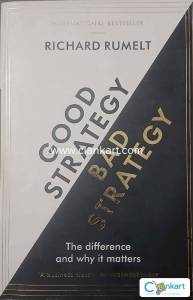
Good Strategy Bad Strategy: The Difference and Why It Matters
Developing and implementing a strategy is the central task of a leader, whether the CEO at a Fortune 100 company, an entrepreneur, a church pastor, the head of a school, or a government official. Richard Rumelt argues that the heart of a good strategy is insight - into the true nature of the situation, into the hidden power in a situation, and into an appropriate response. He shows you how insight can be cultivated with a wide variety of tools for guiding your own thinking.Good Strategy/Bad Strategy integrates fascinating examples from business, nonprofit, and military affairs to bring its original ideas to life: From Apple to General Motors, from the two Iraq wars to Afghanistan, from a small local market to Wal-Mart, from the Getty Trust to the Los Angeles Unified School District, from Global Crossing to the 2007-08 financial crisis, and many more. The abundance of business-ready insights offered by Rumelt stem from his decades of digging beyond the superficial to address hard questions with honesty and integrity.
Ts grewal accountancy for class 11
The book has been designed topic and subtopic-wise, keeping the students’ needs in mind. The current edition has certain unique features: Each chapter starts with a To Do list. It gives the central idea of the chapter and the way it has been addressed. Each chapter is divided into several sections corresponding to different components of the syllabus. Each chapter is splashed with HOTS. This is to promote clarity of the basics. Focus Zones in each chapter present a crux of the concepts. Blocks in each chapter include matter of special significance. Power Points and Revision Window offer a quick glance of the subject matter. ‘Exercise’ is tuned to the pattern of examination. Answers to important questions focus on the technique of writing. The exercise includes: objective type questions (remembering & understanding based questions), divided into five sections: (a) multiple choice questions, (b) fill in the blanks, (c) true or false, (d) matching the correct statements, (e) ‘very short answer’ objective type questions reason-based questions HOTS & applications analysis & evaluation CBSE questions (with answers or reference to the text for answers) NCERT questions (with hints to answers) miscellaneous and add-on questions (with hints or reference to the text for answers) Dos and Don’ts (at the end of each chapter) should serve as a safeguard against misinterpretation of the concepts. Ability Zone is a uniquely designed section at the end of the chapter. This raises the difficulty level, of course, but should serve as a useful material for the outstanding learners. Solved & Unsolved numericals are given to boost a grip on the subject.
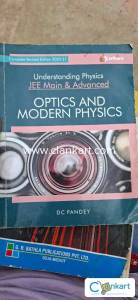
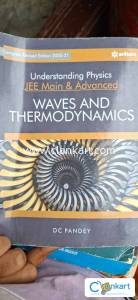
Arihant waves and thermodynamics for jee main and advanced
•Detailed “theory” is given with the figures to understand the topic well. •“Sample examples” are given for subject understanding before the text. •Each topic includes the “introductory exercise” to test the ability. •“Extra Points” are given to follow the points in brief. •2 leveled solved examples are given at the end of chapter •Consist 2 leveled exercise level 1 for AIEEE and level 2 for IIT JEE, including subjective Questions, Single Correct Option, Assertion & Reason, Match the Column including Reasoning, Aptitude & Comprehension, etc. •Chapter-wise Hints & Solutions are provided at the end of the book.
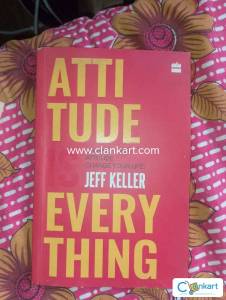
Attitude is everything thin
Do you dread going to work? Do you feel tired, unhappy, weighed down? Have you given up on your dreams? The road to a happier, more successful life starts with your attitude-and your attitude is within your control. Whether your outlook is negative, positive or somewhere in between, Jeff Keller, motivational speaker and coach, will show you how to take control and unleash your hidden potential through three powerful steps: -THINK! Success begins in the mind. The power of attitude can change your destiny. -SPEAK! Watch your words. How you speak can propel you towards your goals. -ACT! Don't sit back. Take active steps to turn your dreams into reality.Soon, you will be energized and see new possibilities. You will be able to counter adversities and develop talents unique to you. Your relationships will improve, both at work and in your personal life. All you need is this step-by-step programme to change your attitude and your life!
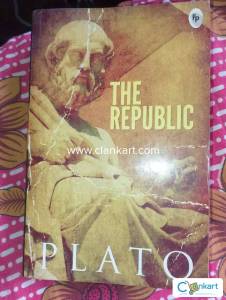
The Republic
Presented in the form of a dialogue between Socrates and three different interlocutors, this classic text is an enquiry into the notion of a perfect community and the ideal individual within it. During the conversation, other questions are raised: what is goodness?; what is reality?; and what is knowledge? The Republic also addresses the purpose of education and the role of both women and men as guardians of the people. With remarkable lucidity and deft use of allegory, Plato arrives at a depiction of a state bound by harmony and ruled by philosopher kings.