Clankart Logo

Find from over 1000s of used books online

Buy Second Hand Books, Used Books Online In India
Advertisement
Want to see your books here? Have Used Books?
Make some extra cash by selling your old books for actual money in your UPI/Bank account. Go on, it's quick and easy.
Advertisement
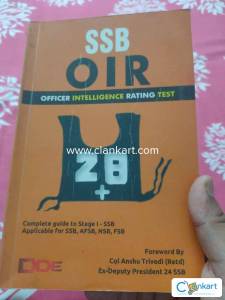
SSB OIR officer intelligence rating test

SSB OIR officer intelligence rating test

₹250 ₹419
40% off

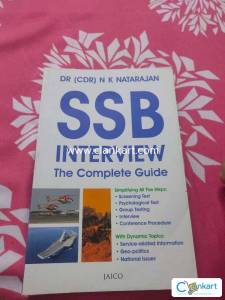
Simplifying All The Steps: • Screening Test • Psychological Test • Group Testing • Interview • Conference Procedure With Dynamic Topics: • Service-related Information • Geopolitics • National Issues In this new and updated edition the author takes the candidates through the various stages of the SSB test. He lists out the different phases of the tests that are conducted in exact sequential order with his vast experience in this field. The content in this new edition has been divided into two parts and nine sections. The first part addresses the screening tests, which includes verbal, non-verbal, picture perception and discussion tests followed by psychological tests, group testing, interview techniques and conference procedure. The second part covers service-related information, geopolitics and national issues. KEY FEATURES • Simplified and reader-friendly approach towards all necessary steps: Screening Test, Psychological Test Series, Group Testing Series, Interview Techniques and Conference Procedure • Coverage of essential topics like Service-Related Information with Geopolitics and National Issues DR (CDR) N K NATARAJAN has an experience of over 25 years in the Indian Navy, and a three year stint as a Group Testing Officer at the Selection Center in Bhopal. In addition to serving in the navy, he also holds a degree in management and a doctorate in psychology. He has helped assess more than 1500 candidates during his term as a selection officer.

11 months ago
Advertisement
MY OWN MAZAGON

MY OWN MAZAGON

₹300

This is the story of Mazagon, once an island inhabited by Kolis, Bhandaris and Agris. It remained so under the Portuguese, fetching them the highest revenue among all the islands of Bombay. Falling into British hands through a disputed dowry deed, Mazagon retained its identity as an island for many more years with its own fort, dock, churches and even a gunpowder factory. Then, like the other islands of the archipelago, Mazagon too got merged into a single entity called Bombay. But that did not diminish the importance of this place, which soon became a sought-after suburb of British Bombay, patronised by the rich and famous. They connected up Mazagon to the rest of their Urbs Prima in Indis with tramways and railways, and extensively reclaimed the waterfront to expand the dock and harbour to berth and build sail-ships and steamers that conveyed colonial commerce. Mazagon, which once upon a time grew mangoes for the Mughals and got attacked by Sidis on their behalf, has a history of its own. It is from here that steamers sailed with cotton and opium; and Eliza, the lover of a romantic novelist eloped with a seafarer. It is here that a hanging garden was built, and an East Indian gaothan came up. It is here that Christian missionaries set up churches, schools and orphanages, and an unlikely nawab built a mosque and a tank. It is here that justice was dispensed for crimes committed in many parts of Bombay. It is here that dockworkers built the only standing Chinese temple in Bombay, and darghas came up for saints who never came here to preach their faith. It is also here that Aga Khan, Rattanbai Jinnah and Meena Kumari were laid to rest. This book rediscovers the forgotten history of Mazagon and resurrects the identity of Maza Gaon, or ‘My own Village’

11 months ago
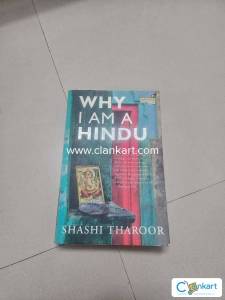
WHY I AM A HINDU

WHY I AM A HINDU

₹500

In Why I Am a Hindu, one of India’s finest public intellectuals gives us a profound book about one of the world’s oldest and greatest religions. Starting with a close examination of his own belief in Hinduism, he ranges far and wide in his study of the faith. He talks about the Great Souls of Hinduism, Adi Shankara, Patanjali, Ramanuja, Swami Vivekananda, Ramakrishna Paramahamsa, and many others who made major contributions to the essence of Hinduism. He delves deep into Hinduism’s most important schools of thought (such as the Advaita Vedanta). He explains, in easily accessible language, important aspects and concepts of Hindu philosophy like the Purusharthas and Bhakti, masterfully summarizes the lessons of the Gita and Vivekananda’s ecumenism, and explores with sympathy the ‘Hinduism of habit’ practised by ordinary believers. He looks at the myriad manifestations of political Hinduism in the modern era, including violence committed in the name of the faith by right-wing organizations and their adherents. He analyzes Hindutva, explains its rise and dwells at length on the philosophy of Deen Dayal Upadhyaya, its most significant ideologue. He is unsparing in his criticism of extremist ‘bhakts’, and unequivocal in his belief that everything that makes India a great and distinctive culture and country will be imperiled if religious ‘fundamentalists’ are allowed to take the upper hand. However, he also makes the point that it is precisely because Hindus form the majority that India has survived as a plural, secular democracy.A book that will be read and debated now and in the future, Why I Am a Hindu is a revelatory and original masterwork.

11 months ago
Advertisement
Advertisement