Find from over 1000s of used books online
Buy Second Hand Books, Used Books Online In India
Computer science
Designed to meet the requirements of UG students, the book deals with the theoretical as well as the practical aspects of the subject. Equal emphasis has been given to both 2D as well as 3D geometry. The book follows a systematic approach with adequate examples for better understanding of the concepts.
Computer science
Generation of Electrical Energy is written primarily for the undergraduate students of electrical engineering while also covering the syllabus of AMIE and act as a refresher for the professionals in the field. The subject itself is now rejuvenated with important new developments. With this in view, the book covers conventional topics like load curves, steam generation, hydro-generation parallel operation as well as new topics like new sources of energy generation, hydrothermal coordination, static reserve reliability evaluation among others.
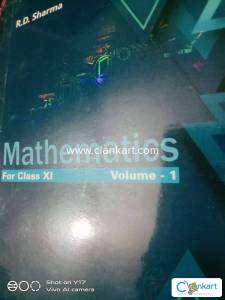
RD Sharma mathematics class 11
This textbook is based on the latest syllabus prescribed by the CBSE. The text has been divided into two volumes. Volume 1 Consists of chapters 1-21 and Volume 2 Consists of chapters 22-23 for ease of handling. Illustrative examples and exercises are given at the end of every section in each Chapter at the end of the each Chapter exercises consisting of MCQs, Fill in the blanks, very Short Answer Type questions and activities have been given. Summary for quick revision concepts and formulae have also been given. Ncert problems in the exercises have been solved in the section "hints to NCERT & selected problems".
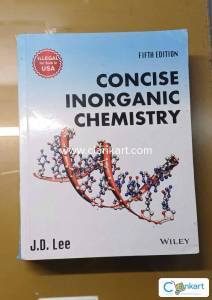
J.D. LEE Inorganic Chemistry Textbook
This textbook is divided into six parts: theoretical concepts and hydrogen, the s-block, the p-block, the d-block, the f-block, and other topics (the nucleus and spectra). It also focuses on the commercial exploitation of inorganic chemicals and the treatment of the inorganic aspects of environmental chemistry has also been extended.· Atomic structure and the Periodic table· Introduction to bonding· The ionic bond· The covalent bond· The metallic bond· General properties of the elements· Coordination compounds· Hydrogen and the hydrides· Group 1 - The alkali metals· The chlor-alkali industry· Group 2 - The alkaline earth elements· The group 13 elements· The group 14 elements· The group 15 elements· Group 16 - the chalcogens· Group 17 - the halogens· Group 18 - the noble gases· An introduction to the transition elements· Group 3 - The scandium group· Group 4 - The titanium group· Group 5 - The vanadium group· Group 6 - The chromium group· Group 7 - The manganese group· Group 8 - The iron group· Group 9 - The cobalt group· Group 10 - The nickel Group· Group 11 - The copper group: Coinage metals· Group 12 - The zinc group· The lanthanide series· The actinides· The atomic nucleus· Spectra