Find from over 1000s of used books online
Buy Second Hand Books, Used Books Online In India
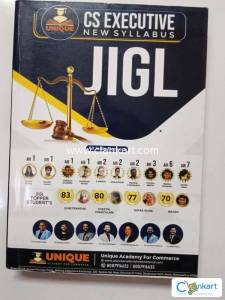
CS Executive Paper 1 (JIGL) New Syllabus 2025-26
CS Executive Paper 1: Jurisprudence, Interpretation and General Laws (JIGL)Applicable for: [Dec 2025 / June 2026]Ideal for Concepts & Law Articles!This material is visually optimized to make the diverse General Laws subject manageable:Part A (General Laws): Covers the Constitution, Contract Act, Torts, etc. (Visual distinction between Acts and Rules).Part B (Interpretation): Focuses on Interpretation of Statutes (Key sections and procedures are easy to grasp).Condition: Excellent. Minimal, neat highlighting only. Pages are vibrant and perfect for your main study reference.
S Chand lakhmir singh
Biology: Science For Class - 10 (Part - 3) is the last book in the series of three science books prescribed by the CBSE, completely covering the NCERT syllabus for class 10 Science. This book is a part of a series, which includes Science For Tenth Class: Physics (Part 1), Science For Tenth Class: Chemistry (Part 2): Chemistry, and Science For Tenth Class (Part 3): Biology. One of the highlights of this book is the inclusion of a large number of unsolved and solved questions, in accordance to CCE pattern of School Education as a means for analyzing a student's learning skills. There are six chapters in this book, and some of them include How Do Organisms Reproduce, Life Processes, Our Environment, and Control and Coordination.
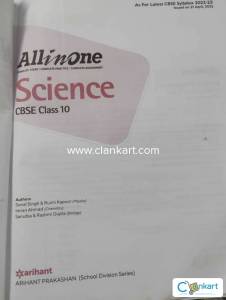
Science all in one class 10
While beginning, the preparation for Medical and Engineering Entrances, aspirants need to go beyond traditional NCERT textbooks to gain a complete grip over it to answer all questions correctly during the exam. The revised edition of MASTER THE NCERT, based on NCERT Classes XI and XII, once again brings a unique set of all kinds of Objective Type Questions for Physics, Chemistry, Biology and Mathematics. This book “Master the NCERT for NEET” Biology Vol-1, based on NCERT Class XI is a one-of-its-kind book providing 22 Chapters equipped with topic-wise objective questions, NCERT Exemplar Objective Questions, and a special separate format questions for NEET and other medical entrances. It also provides explanations for difficult questions and past exam questions for knowing the pattern. Based on a unique approach to master NCERT, it is a perfect study resource to build the foundation over NEET and other medical entrances.
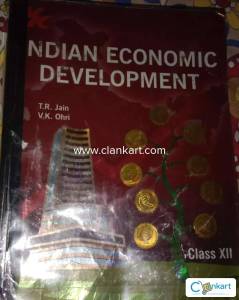
CLASS 12 INDIAN ECONOMIC DEVELOPMENT
1. This book deals with CBSE New Pattern Economics for Class 12 2. It is divided into2 Parts as per Term 1 Syllabus 3. Quick Revision Notes covering all the Topics of the chapter 4. Carries all types of Multiple Choice Questions (MCQs) 5. Detailed Explanation for all types of questions 6. 3 practice papers based on entire Term 1 Syllabus with OMR Sheet With the introduction of new exam pattern, CBSE has introduced 2 Term Examination Policy, where; Term 1 deals with MCQ based questions, while Term 2 Consists of Subjective Questions. Introducing, Arihant’s “CBSE New Pattern Series”, the first of its kind providing the complete emphasize on Multiple Choice Questions which are designated in TERM 1 of each subject from Class 9th to 12th. Serving as a new preparatory guide, here’s presenting the all new edition of “CBSE New Pattern Economics for Class 12 Term 1” that is designed to cover all the Term I chapters as per rationalized syllabus in a Complete & Comprehensive form. Focusing on the MCQs, this book divided the first have syllabus of Economics into 2 Parts giving the complete coverage. Quick Revision Notes are covering all the Topics of the chapter. As per the prescribed pattern by the board, this book carries all types of Multiple Choice Questions (MCQs) including; Assertion – Reasoning Based MCQs and Cased MCQs for the overall preparation. Detailed Explanations of the selected questions help students to get the pattern and questions as well. Lastly, 3 Practice Questions are provided for the revision of the concepts. TOC PART – A: Money and Banking, Government Budget and Economy, Foreign Exchange, Balance of Payments, PART – B: Indian Economy on the Eve of Independence, Indian Economy, (1950-1990), Liberalisation, Privatisation and Globalisation, Poverty, Human Capital Formation in India, Rural Development in India, Practice Papers (1-3).
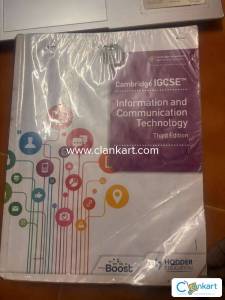
IGCSE ICT Textbook-Newly used
This title is endorsed by Cambridge Assessment International Education to support the full syllabus for examination from 2023. Written by renowned expert authors, our updated resources enable the learner to effectively navigate through the content of the updated Cambridge IGCSE(tm) Information and Communication Technology syllabuses (0417/0983). - Develop skills when working with documents, databases and presentations: detailed step-by-step guidance demonstrates precisely how to perform a full range of software skills. - Build an understanding of theory: concepts are carefully explained and consolidated with a range of different activities. - Tackle spreadsheets and website authoring with confidence: challenging ideas are fully exemplified, with plenty of opportunity to practice using embedded Tasks. - Navigate the syllabus confidently: learning content is clearly mapped to the syllabus, with introductions to each topic outlining the learning objectives. - Consolidate skills and check understanding: activities and exam-style questions are embedded throughout the book, alongside key definitions of technical terms and a Glossary.
Blackbook english vocabulary
DID THE GREAT FLOOD OF INDIAN LEGEND ACTUALLY HAPPEN? WHY DID THE BUDDHA WALK TO SARNATH TO GIVE HIS FIRST SERMON? HOW DID THE EUROPEANS MAP INDIA? The history of any country begins with its geography. With sparkling wit and intelligence, Sanjeev Sanyal sets off to explore India and look at how the country’s history was shaped by, among other things, its rivers, mountains and cities. Traversing remote mountain passes, visiting ancient archaeological sites, crossing rivers in shaky boats and immersing himself in old records and manuscripts, he considers questions about Indian history that we rarely ask: Why do Indians call their country Bharat? How did the British build the railways across the subcontinent? Why was the world’s highest mountain named after George Everest? Moving from the geological beginnings of the subcontinent to present-day Gurgaon, Land of the Seven Rivers is riveting, wry and full of surprises. It is the most entertaining history of India you will ever read.
Marketing Management by Philip Kotler used in Business Schools
For the MBA Marketing Management course and/or undergraduate capstone marketing strategy course. This is the #1 selling marketing management textbook worldwide because it consistently delivers on its brand promise: to be the first to reflect changes in marketing theory and practice.