Find from over 1000s of used books online
Buy Second Hand Books, Used Books Online In India
Concise Inorganic Chemistry
This textbook is divided into six parts: theoretical concepts and hydrogen, the s-block, the p-block, the d-block, the f-block, and other topics (the nucleus and spectra). It also focuses on the commercial exploitation of inorganic chemicals and the treatment of the inorganic aspects of environmental chemistry has also been extended.· Atomic structure and the Periodic table· Introduction to bonding· The ionic bond· The covalent bond· The metallic bond· General properties of the elements· Coordination compounds· Hydrogen and the hydrides· Group 1 - The alkali metals· The chlor-alkali industry· Group 2 - The alkaline earth elements· The group 13 elements· The group 14 elements· The group 15 elements· Group 16 - the chalcogens· Group 17 - the halogens· Group 18 - the noble gases· An introduction to the transition elements· Group 3 - The scandium group· Group 4 - The titanium group· Group 5 - The vanadium group· Group 6 - The chromium group· Group 7 - The manganese group· Group 8 - The iron group· Group 9 - The cobalt group· Group 10 - The nickel Group· Group 11 - The copper group: Coinage metals· Group 12 - The zinc group· The lanthanide series· The actinides· The atomic nucleus· Spectra
When Breath Becomes Air
At the age of thirty-six, on the verge of completing a decade’s training as a neurosurgeon, Paul Kalanithi was diagnosed with inoperable lung cancer. One day he was a doctor treating the dying, the next he was a patient struggling to live.When Breath Becomes Air chronicles Kalanithi’s transformation from a medical student asking what makes a virtuous and meaningful life into a neurosurgeon working in the core of human identity – the brain – and finally into a patient and a new father.What makes life worth living in the face of death? What do you do when when life is catastrophically interrupted? What does it mean to have a child as your own life fades away?Paul Kalanithi died while working on this profoundly moving book, yet his words live on as a guide to us all. When Breath Becomes Air is a life-affirming reflection on facing our mortality and on the relationship between doctor and patient, from a gifted writer who became both.Source: penguin.co.uk
Sciences myp1
Exam Board: IB Level: MYP Subject: Science First Teaching: September 2016 First Exam: June 2017 Develop your skills to become an inquiring learner; ensure you navigate the MYP framework with confidence using a concept-driven and assessment-focused approach to Sciences presented in global contexts. - Develop conceptual understanding with key MYP concepts and related concepts at the heart of each chapter. - Learn by asking questions with a statement of inquiry in each chapter. - Prepare for every aspect of assessment using support and tasks designed by experienced educators. - Understand how to extend your learning through research projects and interdisciplinary opportunities. Contents 1 What do scientists do? 2 What changes? 3 How do living things work? 4 What makes change happen? 5 How can we study the living world? 6 Where do we fit into the world? Glossary Acknowledgements Index
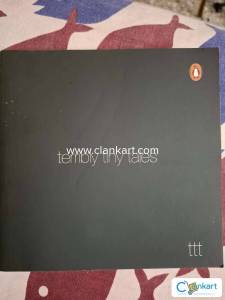
Terribly Tiny Tales
Big ideas and tiny talesTerribly Tiny Tales, the champion of contemporary micro-fiction, and Penguin come together on the same page to bring their readers a handpicked collection of stellar tales, each in under 140 characters. The book features curated old favourites and brand new tales as well as exclusive entries by Penguin's bestselling authors.The page-turner of the year, the volume is sure to occupy a unique space on your shelf, making for great introspection and even better conversation.
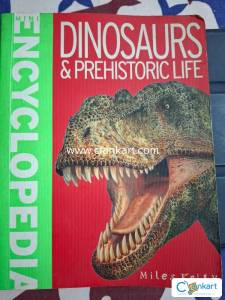
Encyclopedia of Dinosaur and Prehistoric Life
MINI ENCYCLOPEDIA - DINOSAURS & PREHISTORIC LIFE is the mini book crammed with masses of knowledge about the prehistoric world. Interesting bulleted facts for easy understanding. Color-coded sections help children to navigate the book. Brilliantly detailed illustrations and photos support learning. The ultimate dinosaur book for kids, Mini Encyclopedia Dinosaurs and Prehistoric Life is small enough to slot into school bags, making this a fantastic resource for school projects and homework in senior elementary school. This compact, comprehensive children's encyclopedia uses clear, bulleted facts and incredible info panels to present a detailed look at early humans, dinosaurs and prehistoric plants, fish, amphibians, reptiles and mammals. Every topic is supported by photographs, realistic artwork and detailed diagrams, and colour-coded sections make navigation through the topics easy and quick. Chapters and topic examples of Mini Encyclopedia Dinosaurs and Prehistoric Life: Ancient life: Prehistoric time, Anthropods, Sharks, Turtles and tortoises, Snakes, and Mosasaurs Dinosaurs: Ancestors, Tyrannosaurus, Raptors, Herbivores, Triceratops, and the Age of dinosaurs Age of mammals: Ward birds, Marsupials, Carnivores, Rodents, Bats, and Woolly mammoths Humans: Early primates, Apes, Homo erectus, Brains and intelligence, Language, and Hunting Fascinating facts for kids to learn: Dilophosaurus probably weighed over 500 kg as much as the biggest polar bears today. An example of a fossilized egg is one belonging to the extinct elephant bird, Aepyornis. The egg was also huge it could hold 8.5 liters of liquid! Homo habilis used stone tools to crack open animal bones so it could eat the nutritious marrow inside.
Language and Literature
Exam Board: IB Level: MYP Subject: English First Teaching: September 2016 First Exam: June 2017 Develop your skills to become an inquiring learner; ensure you navigate the MYP framework with confidence using a concept-driven and assessment-focused approach to Language and Literature presented in global contexts. - Develop conceptual understanding with key MYP concepts and related concepts at the heart of each chapter. - Learn by asking questions with a statement of inquiry in each chapter. - Prepare for every aspect of assessment using support and tasks designed by experienced educators. - Understand how to extend your learning through research projects and interdisciplinary opportunities.
Computing 7
This title has been endorsed by Cambridge Assessment International Education Deliver an exciting computing course for ages 11-14, building on students' existing computing skills and experience whilst demonstrating new concepts, with practice opportunities to ensure progression. - Recap and activate students' prior knowledge with 'Do you remember?' panels and introduce more advanced skills with 'Challenge yourself!' tasks. - Allow students to demonstrate their knowledge creatively with engaging end of unit projects that apply skills and concepts in a range of different contexts. - Develop computational thinking with an emphasis on broadening understanding throughout the activities. - Provide clear guidance on e-safety with a strong focus throughout. Contents Introduction 1 Block it out: Moving from blocks to text 2 Decomposing problems: Creating a smart solution 3 Connections are made: Accessing the Internet 4 The power of data: Using data modelling 5 Living with AI: Digital data 6 Software development: Planning and prototyping Glossary Index