Find from over 1000s of used books online
Buy Second Hand Books, Used Books Online In India
Cambridge IGCSE First Language English Coursebook Fifth edition
Fully updated, flexible resources taking an active-learning approach that encourages students to aim higher in the 0500, 0524 and 0990 syllabuses. With travel writing, magazine articles, blogs and extracts from writers such as Roald Dahl and D. H. Lawrence, this coursebook helps students develop their English Language skills through an active, communicative approach. The first unit in each part covers text analysis, summary writing and note-taking. The second deals with directed writing and the third looks at descriptive and narrative composition and includes suggestions for coursework topics if your school follows this pathway. Suggested answers to coursebook questions are included in the teacher's book.
Half Girlfriend Chetan Bhagat
HALF GIRLFRIEND (HINDI) Once upon a time, there was a Bihari boy called Madhav. He fell in love with a girl from Delhi called Riya. Madhav didn't speak English well. Riya did. Madhav wanted a relationship. Riya didn't. Riya just wanted friendship. Madhav didn't. Riya suggested a compromise. She agreed to be his half girlfriend. From the author of the blockbuster novels Five Point Someone, One Night @ the Call Center, The 3 Mistakes of My Life, 2 States and Revolution 2020 comes a simple and beautiful love story that will touch your heart and inspire you to chase your dreams. (Written By Chetan Bhagat)
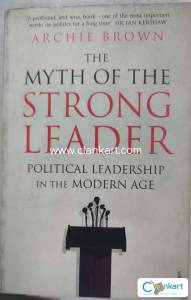
The Myth of strong leader, Political leadership by Archie Brown
Archie Brown challenges the widespread belief that 'strong leaders', dominate individual wielders of power, are the most successful and admirable.Within authoritarian regimes, a collective leadership is a lesser evil compared with a personal dictatorship. Within democracies, although ‘strong leaders’ are seldom as strong or independent as they purport to be, the idea that just one person is entitled to take the big decisions is harmful and should be resisted.Examining Franklin D. Roosevelt and Mikhail Gorbachev, Deng Xiaoping and Nelson Mandela, Margaret Thatcher and Tony Blair amongst many others, this landmark study pinpoints different types and qualities of leadership. Overturning the popular notion of the strong leader, it makes us rethink preconcpetions about what it means to lead.
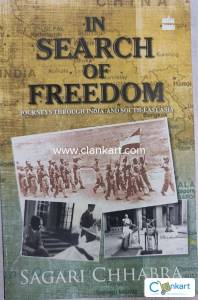
In Search of Freedom by Sagari Chhabra : Must-Read Memoir
9 August 1942: a group of women raised the tricolour inside the Lahore Women's Jail, but this act of heroism went unrecorded. Inspired by ordinary people doing extraordinary acts of courage, Sagari Chhabra journeyed across India, Malaysia, Thailand, Singapore and Burma, seeking out men and women of the INA - forgotten freedom fighters of India, joined for a time in a universal human quest. In Search of Freedom is an account of how the story of India's independence marginalizes people who do not 'officially' belong to independent India. This include the brave hearts of the Rani of Jhansi Regiment, the world's first all-woman military wing which had women from the Indian subcontinent and South-East Asia who had never been to India, many of whom, after the army disbanded, went back to their 'regular' lives. It also chronicles the many quiet acts of courage that don't feature in history textbooks, but without which the history of this land would have been different. It asks important questions: Why did these freedom fighters remain silent? Why were they not recognized and honoured? Why did they not receive even the paltry pension that is the due of freedom fighters? Personal and political, historical and contemporary, this in an invaluable account of India's unknown and unacknowledged freedom fighters, of what it meant to fight for the freedom of the country and yet remain largely in oblivion. It is also an insightful narrative of the contemporary situation in India and South-East Asia, particularly what it is like to live in Burma under the military regime.
The Great Derangement by Amitav Ghosh Must-Read Climate Book
Are we deranged? The acclaimed Indian novelist Amitav Ghosh argues that future generations may well think so. How else to explain our imaginative failure in the face of global warming? In his first major book of nonfiction since In an Antique Land, Ghosh examines our inability—at the level of literature, history, and politics—to grasp the scale and violence of climate change.The extreme nature of today’s climate events, Ghosh asserts, make them peculiarly resistant to contemporary modes of thinking and imagining. This is particularly true of serious literary fiction: hundred-year storms and freakish tornadoes simply feel too improbable for the novel; they are automatically consigned to other genres. In the writing of history, too, the climate crisis has sometimes led to gross simplifications; Ghosh shows that the history of the carbon economy is a tangled global story with many contradictory and counterintuitive elements.Ghosh ends by suggesting that politics, much like literature, has become a matter of personal moral reckoning rather than an arena of collective action. But to limit fiction and politics to individual moral adventure comes at a great cost. The climate crisis asks us to imagine other forms of human existence—a task to which fiction, Ghosh argues, is the best suited of all cultural forms. His book serves as a great writer’s summons to confront the most urgent task of our time.