Clankart Logo

Buy used Science and Mathematics Textbooks books online in India

Buy Second Hand Books, Used Books Online In India
Advertisement
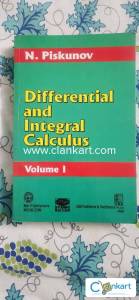
Want to see your books here? Have Used Books?
Make some extra cash by selling your old books for actual money in your UPI/Bank account. Go on, it's quick and easy.
Advertisement
Advertisement
A Concise history of mathematics, DIRK J. STRUIK

A Concise history of mathematics, DIRK J. STRUIK

₹750 ₹900
17% off

This compact, well-written history — first published in 1948, and now in its fourth revised edition — describes the main trends in the development of all fields of mathematics from the first available records to the middle of the 20th century. Students, researchers, historians, specialists — in short, everyone with an interest in mathematics — will find it engrossing and stimulating.Beginning with the ancient Near East, the author traces the ideas and techniques developed in Egypt, Babylonia, China, and Arabia, looking into such manuscripts as the Egyptian Papyrus Rhind, the Ten Classics of China, and the Siddhantas of India. He considers Greek and Roman developments from their beginnings in Ionian rationalism to the fall of Constantinople; covers medieval European ideas and Renaissance trends; analyzes 17th- and 18th-century contributions; and offers an illuminating exposition of 19th century concepts. Every important figure in mathematical history is dealt with — Euclid, Archimedes, Diophantus, Omar Khayyam, Boethius, Fermat, Pascal, Newton, Leibniz, Fourier, Gauss, Riemann, Cantor, and many others.For this latest edition, Dr. Struik has both revised and updated the existing text, and also added a new chapter on the mathematics of the first half of the 20th century. Concise coverage is given to set theory, the influence of relativity and quantum theory, tensor calculus, the Lebesgue integral, the calculus of variations, and other important ideas and concepts. The book concludes with the beginnings of the computer era and the seminal work of von Neumann, Turing, Wiener, and others."The author's ability as a first-class historian as well as an able mathematician has enabled him to produce a work which is unquestionably one of the best." — Nature Magazine.

1 year ago
High performance Cluster Computing

High performance Cluster Computing

₹500

Learn advanced state-of-the-art deep learning techniques and their applications using popular Python libraries Key Features Build a strong foundation in neural networks and deep learning with Python libraries Explore advanced deep learning techniques and their applications across computer vision and NLP Learn how a computer can navigate in complex environments with reinforcement learning Book DescriptionWith the surge in artificial intelligence in applications catering to both business and consumer needs, deep learning is more important than ever for meeting current and future market demands. With this book, you’ll explore deep learning, and learn how to put machine learning to use in your projects. This second edition of Python Deep Learning will get you up to speed with deep learning, deep neural networks, and how to train them with high-performance algorithms and popular Python frameworks. You’ll uncover different neural network architectures, such as convolutional networks, recurrent neural networks, long short-term memory (LSTM) networks, and capsule networks. You’ll also learn how to solve problems in the fields of computer vision, natural language processing (NLP), and speech recognition. You'll study generative model approaches such as variational autoencoders and Generative Adversarial Networks (GANs) to generate images. As you delve into newly evolved areas of reinforcement learning, you’ll gain an understanding of state-of-the-art algorithms that are the main components behind popular games Go, Atari, and Dota. By the end of the book, you will be well-versed with the theory of deep learning along with its real-world applications.What you will learn Grasp the mathematical theory behind neural networks and deep learning processes Investigate and resolve computer vision challenges using convolutional networks and capsule networks Solve generative tasks using variational autoencoders and Generative Adversarial Networks Implement complex NLP tasks using recurrent networks (LSTM and GRU) and attention models

1 year ago
Advertisement
Advertisement