Buy used Business & Economics books online in India
Buy Second Hand Books, Used Books Online In India
Super Thinking By Gabriel Weinberg and LaurenMccann
"You can't really know anything if you just remember isolated facts. If the facts don't hang together on a latticework of theory, you don't have them in a usable form. You've got to have models in your head."- Charlie Munger, investor, vice chairman of Berkshire HathawayThe world's greatest problem-solvers, forecasters, and decision-makers all rely on a set of frameworks and shortcuts that help them cut through complexity and separate good ideas from bad ones. They're called mental models, and you can find them in dense textbooks on psychology, physics, economics, and more.Or, you can just read Super Thinking, a fun, illustrated guide to every mental model you could possibly need. How can mental models help you? Well, here are just a few examples... • If you've ever been overwhelmed by a to-do list that's grown too long, maybe you need the Eisenhower Decision Matrix to help you prioritize. • Use the 5 Whys model to better understand people's motivations or get to the root cause of a problem. • Before concluding that your colleague who messes up your projects is out to sabotage you, consider Hanlon's Razor for an alternative explanation. • Ever sat through a bad movie just because you paid a lot for the ticket? You might be falling prey to Sunk Cost Fallacy. • Set up Forcing Functions, like standing meeting or deadlines, to help grease the wheels for changes you want to occur.So, the next time you find yourself faced with a difficult decision or just trying to understand a complex situation, let Super Thinking upgrade your brain with mental models.Note: in the US the subtitle is The Big Book of Mental Models and outside it is Upgrade Your Reasoning and Make Better Decisions with Mental Models.
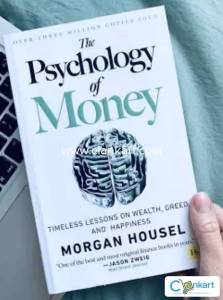
The Psychology of Money
Timeless lessons on wealth, greed, and happiness doing well with money isn’t necessarily about what you know. It’s about how you behave. And behavior is hard to teach, even to really smart people. How to manage money, invest it, and make business decisions are typically considered to involve a lot of mathematical calculations, where data and formulae tell us exactly what to do. But in the real world, people don’t make financial decisions on a spreadsheet. They make them at the dinner table, or in a meeting room, where personal history, your unique view of the world, ego, pride, marketing, and odd incentives are scrambled together. In the psychology of money, the author shares 19 short stories exploring the strange ways people think about money and teaches you how to make better sense of one of life’s most important matters.
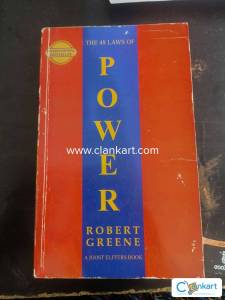
48 laws of power, paperback
Amoral, cunning, ruthless, and instructive, this piercing work distills three thousand years of the history of power in to forty-eight well explicated laws. As attention-grabbing in its design as it is in its content, this bold volume outlines the laws of power in their unvarnished essence, synthesizing the philosophies of Machiavelli, Sun-tzu, Carl von Clausewitz, and other great thinkers. Some laws teach the need for prudence ("Law 1: Never Outshine the Master"), the virtue of stealth ("Law 3: Conceal Your Intentions"), and many demand the total absence of mercy ("Law 15: Crush Your Enemy Totally"), but like it or not, all have applications in real life. Illustrated through the tactics of Queen Elizabeth I, Henry Kissinger, P. T. Barnum, and other famous figures who have wielded--or been victimized by--power, these laws will fascinate any reader interested in gaining, observing, or defending against ultimate control.
Think and Grow Rich by Napoleon Hill
Think and Grow Rich. Think and Grow Rich was written in 1937 by Napoleon Hill, promoted as a personal development and self-improvement book. Hill writes that he was inspired by a suggestion from business magnate and later-philanthropist Andrew Carnegie. ... It remains the biggest seller of Napoleon Hill's books.
Eat that frog!
The legendary Eat That Frog! (more than 450,000 copies sold and translated into 23 languages) provides the 21 most effective methods for conquering procrastination and accomplishing more. This new edition is revised and updated throughout, and includes brand new information on how to keep technology from dominating our time.
Rich dad poor dad- ROBERT T. KIYOSAKI- barley used half read paperbook
April 2017 marks 20 years since Robert Kiyosaki’s Rich Dad Poor Dad first made waves in the Personal Finance arena.It has since become the #1 Personal Finance book of all time... translated into dozens of languages and sold around the world.Rich Dad Poor Dad is Robert's story of growing up with two dads — his real father and the father of his best friend, his rich dad — and the ways in which both men shaped his thoughts about money and investing. The book explodes the myth that you need to earn a high income to be rich and explains the difference between working for money and having your money work for you.20 Years... 20/20 HindsightIn the 20th Anniversary Edition of this classic, Robert offers an update on what we’ve seen over the past 20 years related to money, investing, and the global economy. Sidebars throughout the book will take readers “fast forward” — from 1997 to today — as Robert assesses how the principles taught by his rich dad have stood the test of time.In many ways, the messages of Rich Dad Poor Dad, messages that were criticized and challenged two decades ago, are more meaningful, relevant and important today than they were 20 years ago.As always, readers can expect that Robert will be candid, insightful... and continue to rock more than a few boats in his retrospective.Will there be a few surprises? Count on it.Rich Dad Poor Dad...• Explodes the myth that you need to earn a high income to become rich• Challenges the belief that your house is an asset• Shows parents why they can't rely on the school system to teach their kids about money• Defines once and for all an asset and a liability• Teaches you what to teach your kids about money for their future financial success
Essential Mathematics for Economic Analysis Author(s) Knut Sydster
Please Read Notes: Brand New, International Softcover Edition, Printed in black and white pages, minor self wear on the cover or pages, Sale restriction may be printed on the book, but Book name, contents, and author are exactly same as Hardcover Edition. Fast delivery through DHL/FedEx express.
Modern Microeconomics Author(s) A. Koutsoyiannis
This book provides a thorough exposition of the traditional and the 'modern' micro-theory. It concentrates on the models of behaviour of the basic economic units, consumers and producers. The main emphasis is on oligopoly, which is the typical market structure of the modern industrial world. In addition, this Second Edition includes a third part covering the three important topics of the theory of factor pricing, general equilibrium theory and welfare theory. The new edition thus covers all the topics usually included in textbooks on price theory.The book is written at an intermediate level, and is designed for undergraduate micro-theory courses. In addition, postgraduate courses, in which micro theory is taught not at too specialized a level, could make use of the text. The author has adopted the verbal approach, with extensive use of diagrams to illustrate the verbal exposition. Mathematical proofs (where necessary) are presented in footnotes, or, when in the text, they are printed in small print so as not to interrupt the main theme.A wealth of features make this textbook unique in both coverage and approach.
Indian Economy Author Ramesh Singh
India’s struggle for Independence by Bipin Chandra is your go to book for an in-depth and detailed overview on Indian independence movement . Indian freedom struggle is one of the most important parts of its history. A lot has been written and said about it, but there still remains a gap. Rarely do we get to hear accounts of the independence from the entire country and not just one region at one place. This book fits in perfectly in this gap and also provides a narration on the impact this movement had on the people. Bipin Chandra’s book is a well-documented history of India's freedom struggle against the British rule. It is one of the most accurate books which have been painstakingly written after thorough research based on legal and valid verbal and written sources. It maps the first war of independence that started with Mangal Pandey’s mutiny and witnessed the gallant effort of Sri Rani Laxmi Bai. Many of the pages of this book are dedicated to Mahatma Gandhi’s non-cooperation and the civil disobedience movements. It contains detailed description of Subash Chandra Bose’s weapon heavy tactics and his charisma. This book includes all the independence movements and fights, irrespective of their size and impact, covering India in its entirety. Although these movements varied in means and ideas, but they shared a common goal of independence. This book contains oral and written narratives from different parts of the country, making this book historically rich and diverse. The book captures the evolution of Indian independence struggle in full detail and leaves no chapter of this story untouched. This book is a good read for the students of Indian modern history and especially for students who are preparing for UPSC examination and have taken History as their subject.
Principles of economics
Key Features Created by economist Ron Cronovich of Carthage College, the ground breaking Premium PowerPoint Presentations feature chapter-by-chapter slides designed to ease your course preparation time while increasing student involvement in the classroom through interactive examples and applications. The presentations organize lecture points into sections that students can easily digest, animate graphs the way you might draw them, and include Student Note Prompt handouts to facilitate effective note taking without distracting students from active Participation in class. "In the News" boxes include excerpts from many newspaper articles and encourage students to apply basic economic theory to discover how economics can provide an illuminating new perspective and enable greater understanding of world events. "FYI" boxes provide additional material to expand key concepts and discussions by offering a glimpse into the history of economic thought, clarifying technical issues, and exploring supplementary topics you might choose to complement your core lectures. Economic theory is most useful and interesting when applied to actual events and policies, which is why the text contains numerous Case Studies to vividly illustrate the real-world applications and consequences of key principles. "Quick Quizzes" follow each major section to help students check their comprehension of what they just learned and to focus their review when preparing for exams. Each chapter contains a variety of problems and applications that encourage students to apply the material they have learned. These practical, interesting activities serve equally well as homework assignments and starting points for lively classroom discussions. About the Book: Principles of Economics Principles of Economics, Sixth Edition, became a best sellerafter its introduction and continues to be the most popular andwidely used text in the economics classroom. Instructors found itthe perfect complement to their teaching.