Clankart Logo

Buy used Business & Economics books online in India

Buy Second Hand Books, Used Books Online In India

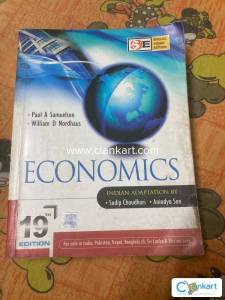
Ncert guidelines class 11 economics

Ncert guidelines class 11 economics

₹300 ₹465
35% off

PART A : STATISTICS FOR ECONOMICS Unit I : Introduction 1. What is Economics ?, 2. Statistics : Meaning, Scope and Importance. Unit II : Collection, Organisation and Presentation of Data 3.Collection of Data : Primary and Secondary Data, 4. Methods of Data Collection : Census and Sampling Methods, 5. Some Important Sources of Secondary Data : Census and N.S.S.O., 6. Organization of Data : Classification, 7. Presentation of Data : Tables, 8. Diagrammatic Presentation of Data, 9. Graphic (Time Series and Frequency Distribution) Presentation of Data. Unit III : Statistical Tools and Interpretation 10. Measures of Central Tendency: Arithmetic Average, 11. Measures of Central Tendency : Median and Mode, 12. Measures of Dispersion, 13. Correlation, 14. Index Number, 15. Some Mathematical Tools Used in Economics : Slope of a Line, Slope of a Curve and Equation of a Line. Unit IV : Developing Projects in Economics 16. Formation of Project in Economics. PART B : INDIAN ECONOMIC DEVELOPMENT Unit V : Development Experience, (1947-90) and Economic Reforms Since 1991 1. State of Indian Economy on the Eve of Independence, 2. Common Goals of Five Year Plans in India, 3. Agriculture—Features, Problems and Policies, 4. Industries : Features, Problems & Policies (Industrial Licensing etc.), 5. Foreign Trade of India—Features, Problems and Policies. Unit VI : Economic Reforms Since 1991 6.Economic Reforms in India—Liberalisation, Privatisation and Globalisation (L.P.G.) Policies. Unit VII : Current Challenges facing Indian Economy 7. Poverty and Main Programmes of Poverty Alleviation, 8. Rural Development : Key Issues, 9. Human Capital Formation, 10. Employment : Growth, Informalisation and Other Issues, 11. Inflation : Problems and Policies, 12. Infrastructure : Meaning and Types (Case Studies : Energy and Health), 13. Sustainable Economic Development and Environment. Unit VIII : Development Experience of India 14.Development Experience of India : A Comparison with Pakistan & China.

1 year ago
Advertisement
Want to see your books here? Have Used Books?
Make some extra cash by selling your old books for actual money in your UPI/Bank account. Go on, it's quick and easy.

Advertisement
Advertisement
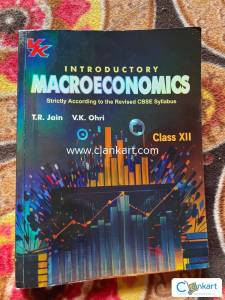
NCERT economics for class 12th

NCERT economics for class 12th

₹222 ₹405
45% off

Part A : Introductory Micro Economics 1.Micro Economics : An Introduction, 2. Central Problems of an Economy, 3. Consumer’s Equilibrium, 4. Demand and Law of Demand, 5. Price Elasticity of Demand, 6. Production Function : Returns to a Factor and Returns to Scale, 7. Production Costs, 8. Concepts of Revenue, 9. Producer’s Equilibrium : Meaning and Conditions, 10. Supply and Law of Supply, 11. Elasticity of Supply, 12. Different Forms of Market : Meaning and Features, 13. Market Equilibrium Under Perfect Competition and Effects of Shifts in Demand & Supply, 14. Simple Applications of Tools of Demand and Supply, Part B : Introductory Macro Economics 15. Macro Economics : Meaning, 16. Circular Flow of Income, 17. Concepts and Aggregates related to National Income, 18. Measurement of National Income, 19. Money : Meaning, Evolution and Functions, 20. Commercial Banks and Credit Creation, 21. Central Bank : Meaning and Functions, 22. Recent Significant Reforms and Issues in Indian Banking System : Privatisation and Modernisation, 23. Aggregate Demand, Aggregate Supply and Related Concepts (Propensity to Consume, Propensity to Save and Investment), 24. Short Run Equilibrium Output, 25. Investment Multiplier and its Mechanism, 26. Problems of Deficient and Excess Demand, 27. Measures to Correct Deficient Demand and Excess Demand, 28. Government Budget and Economy, 29. Foreign Exchange Rate, 30. Balance of Payment Accounts : Meaning and Components.

1 year ago
Advertisement
Advertisement