Buy used Bachelor of Technology (B.Tech) books online in India
Buy Second Hand Books, Used Books Online In India
Microcontroller Book
The 8051 Microcontroller and Embedded Systems: Using Assembly and C (Paperback) by Muhammad Ali Mazidi (Author) The 8051 Microcontroller and Embedded Systems Using Assembly and C, 2/e is a powerful book that focuses on the 8051 microcontroller. The readers of this book are provided with a detailed explanation of the software and hardware specifications of this microcontroller. This microcontroller is considered to be the most popular microprocessor, in terms of usage and production. Owing to its immense popularity, it is being produced by more than fifty companies. The content of this book has been categorized into seventeen chapters, along with eight appendices. The first six chapters of this book provide you with all that you need to know on the basic architecture of this microcontroller, using assembly languages. The chapters that follow show you just how this microcontroller interfaces with the necessary devices, using C and assembly languages. The 8051 microcontroller uses these languages to interact with several devices, which include LCDs, Keyboards, sensors and stepper motors. The second edition of this book is inclusive of several other features, which were not present in the first book. These include topics such as DS12887 real-time clock chip, C Programming and optoisolators. These changes have been made to ensure that the book is up-to-date. The second edition of The 8051 Microcontroller and Embedded Systems Using Assembly and C, 2/e has been published by Pearson, in the year 2008 and is available in paperback.Key Features:The book gives you updated information on various topics that pertain to the 8051 microcontroller.The author has included various new sections in many of the original chapters in this book.About the AuthorMuhammad Ali Mazidi is one of the authors of The 8051 Microcontroller And Embedded Systems Using Assembly And C, 2/e. He went to Tabriz University and has earned his Master's degree from Southern Methodist University, along with another Master's degree from the University of Texas
Let us C by Y Kanetkar
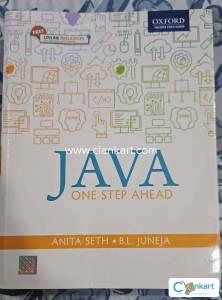
Learn the basics of most favoured dynamic language for application development Key Features Major reorganisation of chapters with a view to improve comprehension of concepts involved Comprehensive coverage of all the concepts of Core Java Simple language, crystal clear approach, user-friendly book Concepts are duly supported by several examples and self-explanatory analogies. Description Java Language is very popularly used for creating applications for PC, Laptop, Tablet, Web and Mobile world Learning a language that can work on so many different platforms can be a challenge. This is where you would find this book immediately useful. It follows a simple and easy narration style. It doesn't assume any programming background. It begins with the basics and steadily builds the pace so that the reader finds it easy to handle complex topics towards the end. Each chapter has been designed to create a deep and lasting impression on the reader's mind. Object-Oriented Programming has been covered in detail to give a strong foundation for Java Programming. Well thought out and fully working example programs and carefully crafted exercises of this book, cover every aspect of Java programming. What will you learn Data types & Control Instructions Classes & Objects Arrays & Strings Inheritance & Polymorphism Interfaces, Packages Exception Handling, Effective IO Multithreading & Synchronization Generics, Collection classes, GUI Using Swing Database Connectivity Using JDBC Who this book is for This book will prove to be a "must have" for beginners as well as experienced professionals as it is a stepping stone for learning Java technology. Table of Contents 1. An Overview of Java 2. Getting Started 3. Java Data Types and Instructions 4. Decision Control Instruction 5. Loop Control Instruction 6. Case-Control Instruction 7. Functions 8. Advanced Features of Functions 9. Introduction to OOP 10. Classes and Objects 11. Arrays 12. Strings and Enums 13. Inheritance 14. Polymorphism 15. Exception Handling 16. Effective Input/ Output 1
Switching Theory and Logic Design
This comprehensive text on switching theory and logic design is designed for the undergraduate students of electronics and communication engineering, electrical and electronics engineering, electronics and computers engineering, electronics and instrumentation engineering, telecommunication engineering, computer science and engineering, and information technology. It will also be useful to M.Sc (electronics), M.Sc (computers), AMIE, IETE and diploma students. Written in a student-friendly style, this book, now in its Third Edition, provides an in-depth knowledge of switching theory and the design techniques of digital circuits. Striking a balance between theory and practice, it covers topics ranging from number systems, binary codes, logic gates and Boolean algebra to minimization using K-maps and tabular method, design of combinational logic circuits, synchronous and asynchronous sequential circuits, and algorithmic state machines. The book discusses threshold gates and programmable logic devices (PLDs). In addition, it elaborates on flip-flops and shift registers. Each chapter includes several fully worked-out examples so that the students get a thorough grounding in related design concepts. Short questions with answers, review questions, fill in the blanks, multiple choice questions and problems are provided at the end of each chapter. These help the students test their level of understanding of the subject and prepare for examinations confidently.
A Book On C
Now in its fourth edition, A Book on C retains the features that have made it a proven best-selling tutorial and reference on the ANSI C programming language. This edition builds on the many existing strength of the text to improve, update, and extend the coverage of C, and now includes information on transitioning to Java and C++ from C. New and updated programming examples and dissections--the authors' trademark technique for illustrating and teaching language concepts. Recursion is emphasized with revised coverage in both text and exercises. Multifile programming is given greater attention, as are the issues of correctness and type safety. Function prototypes are now used throughout the text. Abstract Data Types, the key concept necessary to understanding objects are carefully covered. Updated material on transitioning to C++, including coverage of the important concepts of object-oriented programming. New coverage is provided on transitioning from C to Java References to key programming functions and C features are provided in convenient files. Preface Starting from Zero An Overview of C Lexical Elements, Operators, and the C System The Fundamental Data Types Flow of Control Functions Arrays, Pointers, and Strings Bitwise Operators and Enumeration Types The Preprocessor Structures and Unions Structures and List Processing Input/Output and the Operating System Advanced Applications Moving from C to C++ Moving from C to Java Appendices The Standard Library Language Syntax ANSI C Compared to Traditional C ASCII Character Codes Operator Precedence and Associability Index A.L. Kelley & Ira Pohl are professors of computer science at the University of California, Santa Cruz.
Theory of Computer Science
This Third Edition, in response to the enthusiastic reception given by academia and students to the previous edition, offers a cohesive presentation of all aspects of theoretical computer science, namely automata, formal languages, computability, and complexity. Besides, it includes coverage of mathematical preliminaries. NEW TO THIS EDITION • Expanded sections on pigeonhole principle and the principle of induction (both in Chapter 2) • A rigorous proof of Kleene’s theorem (Chapter 5) • Major changes in the chapter on Turing machines (TMs) – A new section on high-level description of TMs – Techniques for the construction of TMs – Multitape TM and nondeterministic TM • A new chapter (Chapter 10) on decidability and recursively enumerable languages • A new chapter (Chapter 12) on complexity theory and NP-complete problems • A section on quantum computation in Chapter 12. • KEY FEATURES • Objective-type questions in each chapter—with answers provided at the end of the book. • Eighty-three additional solved examples—added as Supplementary Examples in each chapter. • Detailed solutions at the end of the book to chapter-end exercises. The book is designed to meet the needs of the undergraduate and postgraduate students of computer science and engineering as well as those of the students offering courses in computer applications.