Buy used Bachelor of Technology (B.Tech) books online in India
Buy Second Hand Books, Used Books Online In India
Electrical Power Systems
Electrical power system together with Generation, Distribution and utilization of Electrical Energy by the same author covers almost six to seven courses offered by various universities under Electrical and Electronics Engineering curriculum. Also, this combination has proved highly successful for writing competitive examinations viz. UPSC, NTPC, National Power Grid, NHPC, etc. In a clear and systematic manner, this book presents an exhaustive exposition of the various dimensions of electrical power systems. Both basic and advanced topics have been thoroughly explained and illustrated through solved examples. Salient Features Fundamentals of power systems, line constant calculations and performance of overhead lines have been discussed. Mechanical design of lines, HVDC lines, Corona, Insulators and Insulated cables have been explained. Voltage control, Neutral grounding and Transients in power systems explained. Fault calculation, protective relays including digital relays and circuit breakers discussed in that order. Power systems synchronous stability and voltage stability explained. Insulation coordination and overvoltage protection explained. Modern topics like Load flows, Economic load dispatch, Load frequency control and compensation in power system nicely developed and explained using Flow Charts wherever required. Z bus formulation, power transformers and synchronous machines as power system elements highlighted. Large number of solved examples, practice problems and multiple choice questions included. Answers to problems and multiple choice ques
ELECTRONICS DEVICES AND CIRCUIT THEORY FOR ENGINEERING
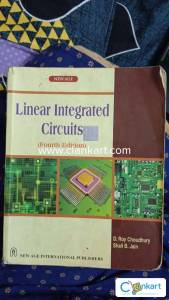
The eleventh edition of Electronic Devices and Circuit Theory offers students a complete, comprehensive coverage of the subject, focusing on all the essentials they will need to succeed on the job. Setting the standard for nearly 30 years, this highly accurate text is supported by strong pedagogy and content that is ideal for new students of this rapidly changing field. This text is an excellent reference work for anyone involved with electronic devices and other circuitry applications, such as electrical and technical engineers.
MICROELECTRONICS FOR ENGINEERING
This junior level electronics text provides a foundation for analyzing and designing analog and digital electronics throughout the book. Extensive pedagogical features including numerous design examples, problem solving technique sections, Test Your Understanding questions, and chapter checkpoints lend to this classic text. The author, Don Neamen, has many years experience as an Engineering Educator. His experience shines through each chapter of the book, rich with realistic examples and practical rules of thumb.The Third Edition continues to offer the same hallmark features that made the previous editions such a success.Extensive Pedagogy: A short introduction at the beginning of each chapter links the new chapter to the material presented in previous chapters. The objectives of the chapter are then presented in the Preview section and then are listed in bullet form for easy reference.Test Your Understanding Exercise Problems with provided answers have all been updated. Design Applications are included at the end of chapters. A specific electronic design related to that chapter is presented. The various stages in the design of an electronic thermometer are explained throughout the text.Specific Design Problems and Examples are highlighted throughout as well.
Database Management System
Advanced Java is a textbook specially designed for undergraduate and post graduate students of Computer Science. It focuses on developing the applications both at basic and moderate level. This text book is divided into seven units. The first unit introduces Java network programming. In this unit along with the basic concepts of networking, the programming using Sockets, InetAddress, URL and URLConnection class is discussed in a lucid manner. The second unit is based on JDBC programming. In this unit, connecting with the database is discussed with examples and illustrations. Then next two chapters focuses on server side programming by means of Servlet programming and JSP. In third unit, the illustration of how to create and execute servlets is given. Then the concept of cookies and session management is discussed. In the next subsequent unit the Java Server Pages - its overview and programming is studied. In the last three units the advanced concepts of Java programming such as JSF, Hibernate and Java Web Framework : Spring is discussed. The contents of this textbook is supported with numerous illustrations, examples, program codes, and screenshots. With its lucid presentation and inclusion of numerous examples the book will be very useful for the readers.
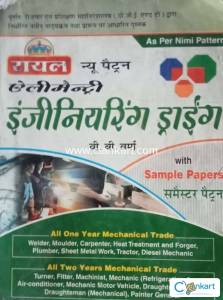
Engineering Drawing by N.D Bhatt
I had bought this book for 400 but have not used even once. So i want to sell this book. It is same as a brand new book, not even a scratch, not a tear, and you will get the cd also as shown in the pictures i have uploaded. I will sell this if i get 300 rupees.
Wiley operating system concepts 9th edition
The tenth edition of has been revised to keep it fresh and up-to-date with contemporary examples of how operating systems function, as well as enhanced interactive elements to improve learning and the student�s experience with the material. It combines instruction on concepts with real-world applications so that students can understand the practical usage of the content. End-of-chapter problems, exercises, review questions, and programming exercises help to further reinforce important concepts. New interactive self-assessment problems are provided throughout the text to help students monitor their level of understanding and progress. A Linux virtual machine (including C and Java source code and development tools) allows students to complete programming exercises that help them engage further with the material.
Cengage Probability and statistics for engineering and the sciences
Designed as a text for the undergraduate students of all branches of engineering, this compendium gives an opportunity to learn and apply the popular drafting software AutoCAD in designing projects. The textbook is organized in three comprehensive parts. Part I (AutoCAD) deals with the basic commands of AutoCAD, a popular drafting software used by engineers and architects. Part II (Projection Techniques) contains various projection techniques used in engineering for technical drawings. These techniques have been explained with a number of line diagrams to make them simple to the students. Part III (Descriptive Geometry), mainly deals with 3-D objects that require imagination. The accompanying CD contains the animations using creative multimedia and PowerPoint presentations for all chapters. In a nutshell, this textbook will help students maintain their cutting edge in the professional job market. KEY FEATURES : Explains fundamentals of imagination skill in generic and basic forms to crystallize concepts. Includes chapters on aspects of technical drawing and AutoCAD as a tool. Treats problems in the third angle as well as first angle methods of projection in line with the revised code of Indian Standard Code of Practice for General Drawing.
Elements of Civil Engineering and Mechanics
So far working stress method was used for the design of steel structures. Nowadays whole world is going for the limit state method which is more rational. Indian national code IS:800 for the design of steel structures was revised in the year 2007 incorporating limit state method. This book is aimed at training the students in using IS: 800 2007 for designing steel structures by limit state method. The author has explained the provisions of code in simple language and illustrated the design procedure with a large number of problems. It is hoped that all universities will soon adopt design of steel structures as per IS: 2007 and this book will serve as a good textbook.A sincere effort has been made to present design procedure using simple language, neat sketches and solved problems.
Engineering Physics Text book for VTU
Primarily written for the first year undergraduate students of engineering, A Textbook of Engineering Physics also serves as a reference text for B.Sc students, technologists and practitioners. The book explains all the relevant and important topics in an easy-to-understand manner. Forty chapters, beginning with a detailed discussion on oscillation, the book goes on to discuss optical fibres, lasers and nanotechnology. A rich pedagogy helps in understanding of every concept explained. A book which has seen, foreseen and incorporated changes in the subject for more than 25 years, it continues to be one of the most sought after texts by the students.
Chemical Engineering Thermodynamics
About the Book: Textbook of Chemical Engineering Thermodynamics Designed as an undergraduate level textbook in Chemical Engineering, this student friendly, thoroughly class-room tested book, now in its second edition, continues to provide an in-depth analysis of chemical engineering thermodynamics. The book has been so organized that it gives comprehensive coverage of basic concepts and applications of the laws of thermodynamics in the initial chapters, while the later chapters focus at length on important areas of study falling under the realm of chemical thermodynamics. The reader is thus introduced to a thorough analysis of the fundamental laws of thermodynamics as well as their applications to practical situations. This is followed by a detailed discussion on relationships among thermodynamic properties and an exhaustive treatment on the thermodynamic properties of solutions. The role of phase equilibrium thermodynamics in design, analysis, and operation of chemical separation methods is also deftly dealt with. Finally, the chemical reaction equilibria are skillfully explained. Besides numerous illustrations, the book contains over 200 worked examples, over 400 exercise problems (all with answers) and several objective-type questions, which enable students to gain an in-depth understanding of the concepts and theory discussed. The book will also be a useful text for students pursuing courses in chemical engineering-related branches such as polymer engineering, petroleum engineering, and safety and environmental engineering. Contents: Preface Preface to the First Edition 1. Introduction and Basic Concepts 2. First Law of Thermodynamics 3. P-V-T Behaviour and Heat Effects 4. Second Law of Thermodynamics 5. Some Applications of the Laws Thermodynamics 6. Thermodynamic Properties of Pure Fluids 7. Properties of Solutions 8. Phase Equilibria 9. Chemical Reaction Equilibria Appendixes Answers to Problems Index About the Author: K.V. Narayanan K.V. Narayanan, PhD,
Engineering Mathematics for College students
The book is a textbook for students of engineering, physics, mathematics, and computer science. The material is arranged in seven independent parts: ordinarydifferential equations, linear algebra, vector calculus, Fourier analysis, partial differential equations, complex analysis, numerical methods, optimization, graphs, probability, and statistics.