Buy used Bachelor of Medicine and Bachelor of Surgery (MBBS) books online in India
Buy Second Hand Books, Used Books Online In India
Physiology Prep Manual for UG - VD JOSHI
The Second Edition of this Volume is updated in accordance with the syllabus of Anatomy recommended by the Medical Council of India. It covers in detail the anatomy of abdomen and lower limb. Following recent trends of anatomy education, the book in addition to basic information provides knowledge on anatomical, embryological, and histological basis of clinical conditions through its features — Clinical Correlation and Clinical Case Study. Written in simple and easy-to-understand language, this profusely illustrated book provides knowledge of anatomy without extraneous details – ideal for undergraduate medical and dental students. It is highly recommended for those preparing for various entrance examinations, like PG entrance, USMLE, PLAB, etc. Salient Features - Detailed exposition on abdominal hernias, joints, and nerve injuries - Chapters on anterior abdominal wall; inguinal region/groin; male external genital organs; liver and extrahepatic biliary apparatus; kidneys, ureters and suprarenal glands; urinary bladder and urethra; bones of the lower limb; medial side of the thigh; back of the leg; joints of the lower limb; innervation of the lower limb have been revised thoroughly - Clinical Correlations integrated in the text, highlighting practical application of anatomical facts, have been modified extensively - Addition of new line diagrams and improvement in earlier diagrams - Addition of halftone figures to enrich the understanding of clinical correlations - Inclusion of new tables and flowcharts and revision in earlier tables - Clinical Case Study at the end of each chapter to initiate interest of students in problem based learning (PBL) - Additional information of higher academic value presented in a simple way in N.B. to make it more interesting for readers, especially aspiring postgraduates - Important facts useful for candidates appearing in various entrance examinations like PGME, USMLE, PLAB, listed under Golden Facts to Remember - Multiple Choice Questions at the end of the book for self-assessment o
A Textbook of practical physiology
The book covers the syllabi and course of practical physiology laid down by the Medical Council of India. It has three sections- contains information on electronic recorders ans stimulators. Explain principles, use of apparatus, a step by step procedures with instruction on applicatiobn of devices of experiments. The book describes to students to work with their hands in devising and setting up an experiment making careful observatins, critically analyzing the results and the drawing appropriate conclusions. It aims to strenghen their ability to solve problems which is the ultimate skill of a sucessful physicians. It provides clear cut solutions to remove confusion in undertaking any experiment. 1. The Compound Microscope, 2. The Study of common objects, 3. Collection of Blood Samples, 4. Hemocytometry (Cell Counting) The Diluting Pipettes, 5. Hemocytometry (Cell Counting) The Counting Chamber, 6. Examination of fresh blood (A) Drop Preparation, (B) Preparing a Peripheral Blood Film, 7. Estimation of Hemoglobin, 8. The Red Cell Count, 9. Determination of Hematocrit (Hct), 10. Normal Blood Standard, 11. The Total Leucocyte Count, White Cell Count, 12. Staining a Peripheral Blood Film The Differential Leucocyte Count, 13. The Cooke-Arneth Count, 14. Absolute Eosinophil Count, 15. Study of Morphology of Red Blood Cells, 16. The Reticulocyte Count, 17. The Erythrocyte Sedimentation Rate, 18. Blood Grouping, 19. Tests for Hemostasis, 20. Osmotic Fragility of Red Blood Cells, 21. Specific Gravity of Blood and Plasma, 22. Determination of Viscosity of Blood, SECTION Human Experiments; SECTION Clinical Examination; SECTION Experimental Physiology.
MBBS 1st - 3rd year complete book set
Chapters have been rearranged and often split to work towards one chapter-one lecture model so that the text is linked to curriculum objectives which appeals to both students and faculty. Narrative length has been reduced while ensuring the original flow and explanation of concepts is not affected. Updated Learning Objectives (e.g. Applied physiology of the Renal System) and Glossary of Terms in the beginning of every chapter.Short, easy-to-read, masterfully edited chapters and a user-friendly full-color design facilitates better learning and retention. Features expanded clinical coverage including obesity, metabolic and cardiovascular disorders, Alzheimer's disease, and other degenerative diseases.Complex Concepts/Processes are summarized in flowcharts/flow diagram for better understanding. Contains more than 1000 carefully crafted diagrams and drawings ensures better understanding of Physiology. Offers Clinically Oriented perspective - bridging basic physiology with pathophysiology, including cellular and molecular mechanism important for Clinical medicine.Updated throughout based on the Guyton and Hall Textbook of Physiology 14th edition to reflect the latest knowledge in the field. The information of the book has been updated to include all areas of the new MCI curriculum (these are either embedded within the existing chapters or as several new chapters at the end of the book).
Vishram singh vol I
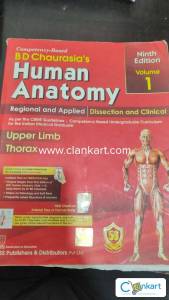
The Second Edition of this Volume is updated in accordance with the syllabus of Anatomy recommended by the Medical Council of India. It covers in detail the anatomy of upper limb and thorax. The anatomy of heart and lungs is co-related cllinically in depth. Following recent trends of anatomy education, the book in addition to basic information provides knowledge on anatomical/embryological/histological basis of clinical conditions through its features — Clinical Correlation and Clinical Case Study. Written in simple and easy-to-understand language, this profusely illustrated book provides knowledge of anatomy without extraneous details – ideal for undergraduate medical and dental students. It is highly recommended for those preparing for various entrance examinations, like PG entrance, USMLE, PLAB, etc. Salient Features  ? Detailed exposition on joints and nerves of the upper limb ??Surgical anatomy of heart and lungs ? Chapters on Bones of the Upper Limb, Pectoral Region, Axilla (Armpit), Arm, Forearm, Elbow and Radio-ulnar Joints, Lungs (Pulmones), Trachea and Esophagus have been revised thoroughly ? Clinical Correlations integrated in the text, highlighting practical application of anatomical facts, have been modified extensively ? Addition of new line diagrams and improvement in earlier diagrams ? Addition of halftone figures to enrich the understanding of clinical correlations ? Inclusion of new tables and flowcharts and revision in earlier tables ? Clinical Case Study at the end of each chapter to initiate interest of students in problem based learning (PBL) ? Additional information of higher academic value presented in a simple way in N.B. to make it more interesting for readers, especially the aspiring postgraduates ? Important facts useful for candidates appearing in various entrance examinations like PGME, USMLE, PLAB, listed under Golden Facts to Remember ? Multiple Choice Questions at the end of the book for self-assessment of the topics studied
Mbbs books for sale
The present edition is revised, updated and expanded. New clinical photographs, diagrams, tables and fl owcharts have been added to make the subject clear. A unique feature of this edition is white board lectures and videos, depicting through animations, the surgical procedures.
Mbbs books for sale
All chapters have been thoroughly revised and updated. Contents have been tailored to the requirement of a medical student and those preparing for PG entrance examination. New chapter on Orthopedic Imaging. The section on clinical methods makes it an "all-in-one" book for medical students and residents. The "problem-solving approach" have been uniformly appreciated by students, teachers and practising doctors. This has been further improved.
Microbiology textbook - Apurba sastry/3rd ed
Part I: General Microbiology, Immunology and Hospital Infection Control Section 1: General Microbiology Section 2: Immunology Section 3: Hospital Infection Control PART II: SYSTEMIC MICROBIOLOGY (INFECTIOUS DISEASES) Section 4: Bloodstream and Cardiovascular System Infections Section 5: Gastrointestinal (GI) Infections Section 6: Hepatobiliary System Infections Section 7: Skin, Soft Tissue and Musculoskeletal System Infections Section 8: Respiratory Tract Infections Section 9: Central Nervous System Infections Section 10: Urogenital Tract Infections Section 11: Miscellaneous Infective Syndromes Annexures Index
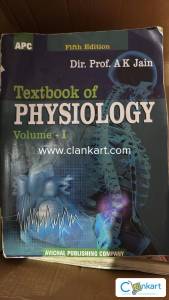
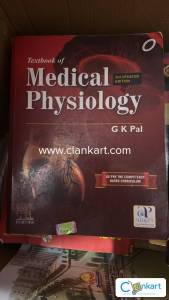
Physiology textbook - GK pal - 2nd edition Vol I
This two volume set is a complete guide to medical physiology for undergraduate medical students. Beginning with a general overview of the subject the following chapters each provide in depth discussion on the physiology of each anatomical system. Each section covers both clinical and applied physiology with topics enhanced by numerous photographs and diagrams. The book features the following invaluable learning - Learning objective - defined at the start of each chapter - Application boxes - key points of applied physiology highlighted in green boxes - Clinical boxes - core concepts of related diseases and patient management highlighted in pink boxes - Important notes - miscellaneous information that may be asked in viva voce examinations - Chapter summary - each chapter ends with a two-part summary outlining key concepts of the topic and listing possible long and short questions, and viva questions that may be asked in examinations - 'Scientist contributed' boxes - explain historical links - highlighted in orange boxes
Comprehensive Ophthalmology, A K Khurana for MBBS
Optical coherence tomography angiography (OCTA) is a non-invasive technique for imaging the microvasculature of the retina and the choroid. The advent of OCTA has allowed ophthalmologists to identify new pathologies, recognise new syndromes, and organise disorders with new classifications. This atlas provides clinicians with state-of-the-art principles of clinical OCTA imaging, helping them interpret and understand the features of the angiographic images. Following the success of the first edition (9789351528999) published in 2015, this second edition has been fully revised, with all chapters rewritten and new topics added to provide the very latest advances in the field. New knowledge about existing diseases and new disorders are described in depth, and operating principles, clinical applications, and future developments are explained thoroughly by the pioneers of the technology. The first part of the atlas covers the basic principles of OCT angiography, methods and technology, image interpretation, vascular anatomy of the retina, and clinical applications. Part two provides a general update on current research into OCT angiography in various retinal, choroid and anterior chamber disorders. The third and final part of the book describes future clinical applications and implications of next generation devices. This new edition is an invaluable guide for ophthalmologists and trainees for use in everyday practice.