Buy used Bachelor of Computer Applications (BCA) books online in India
Buy Second Hand Books, Used Books Online In India
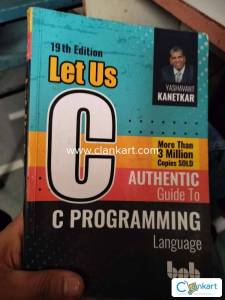
LET US C 19th edition
Learn the basics of most favoured dynamic language for application development Key Features Major reorganisation of chapters with a view to improve comprehension of concepts involved Comprehensive coverage of all the concepts of Core Java Simple language, crystal clear approach, user-friendly book Concepts are duly supported by several examples and self-explanatory analogies. Description Java Language is very popularly used for creating applications for PC, Laptop, Tablet, Web and Mobile world Learning a language that can work on so many different platforms can be a challenge. This is where you would find this book immediately useful. It follows a simple and easy narration style. It doesn't assume any programming background. It begins with the basics and steadily builds the pace so that the reader finds it easy to handle complex topics towards the end. Each chapter has been designed to create a deep and lasting impression on the reader's mind. Object-Oriented Programming has been covered in detail to give a strong foundation for Java Programming. Well thought out and fully working example programs and carefully crafted exercises of this book, cover every aspect of Java programming. What will you learn Data types & Control Instructions Classes & Objects Arrays & Strings Inheritance & Polymorphism Interfaces, Packages Exception Handling, Effective IO Multithreading & Synchronization Generics, Collection classes, GUI Using Swing Database Connectivity Using JDBC Who this book is for This book will prove to be a "must have" for beginners as well as experienced professionals as it is a stepping stone for learning Java technology. Table of Contents 1. An Overview of Java 2. Getting Started 3. Java Data Types and Instructions 4. Decision Control Instruction 5. Loop Control Instruction 6. Case-Control Instruction 7. Functions 8. Advanced Features of Functions 9. Introduction to OOP 10. Classes and Objects 11. Arrays 12. Strings and Enums 13. Inheritance 14. Polymorphism 15. Exception Handling 16. Effective Input/ Output 1
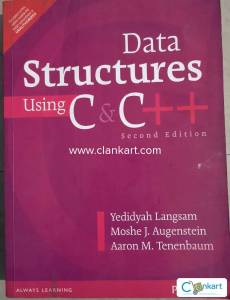
Data Structures Using C And C++
Formal languages and automata theory is the study of abstract machines and how these can be used for solving problems. The book has a simple and exhaustive approach to topics like automata theory, formal languages and theory of computation. These descriptions are followed by numerous relevant examples related to the topic. A brief introductory chapter on compilers explaining its relation to theory of computation is also given.
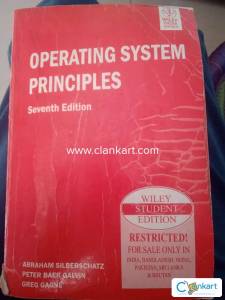
OPERATING SYSTEM PRINCIPLES - Seventh Edition Abraham Silverschatz
The seventh edition has been updated to offer coverage of the most current topics and applications, improved conceptual coverage and additional content to bridge the gap between concepts and actual implementations. The new two-color design allows for easier navigation and motivation. New exercises, lab projects and review questions help to further reinforce important concepts.· Overview· Process Management· Process Coordination· Memory Management· Storage Management· Distributed Systems· Protection and Security· Special-Purpose Systems
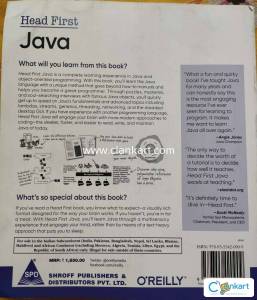
Head First Java
Learn the hand-crafted notes on C programming Key Features Strengthens the foundations, as a detailed explanation of programming language concepts are given Lucid explanation of the concept Well thought-out, fully working programming examples End-of-chapter exercises that would help you practice the skills learned in the chapter Hand-crafted "KanNotes" at the end of the each chapter that would help the reader remember and revise the concepts covered in the chapter Focuses on how to think logically to solve a problem Description The new edition of this classic book has been thoroughly revamped, but remains faithful to the principles that have established it as a favourite amongst students, teachers and software professionals round the world. "Simplicity"- that has been the hallmark of this book in not only its previous sixteen English editions, but also in the Hindi, Gujrati, Japanese, Korean, Chinese and US editions. This book doesn't assume any programming background. It begins with the basics and steadily builds the pace so that the reader finds it easy to handle advanced topics towards the end of the book. What will you learn C Instructions Decision Control Instruction, Loop Control Instruction, Case Control Instruction Functions, Pointers, Recursion Data Types, The C Preprocessor Arrays, Strings Structures, Console Input/Output, File Input/Output Who this book is for Students, Programmers, researchers, and software developers who wish to learn the basics of C++ programming language.Table of Contents 1. Getting Started 2. C Instructions 3. Decision Control Instruction 4. More Complex Decision Making 5. Loop Control Instruction 6. More Complex Repetitions 7. Case Control Instruction 8. Functions 9. Pointers 10. Recursion 11. Data Types Revisited 12. The C Preprocessor 13. Arrays 14. Multidimensional Arrays 15. Strings 16. Handling Multiple Strings 17. Structures 18. Console Input/Output 19. File Input/Output 20. More Issues In Input/Output 21. Operations On Bits 22. Miscellaneous Features 23. Interview FAQs App
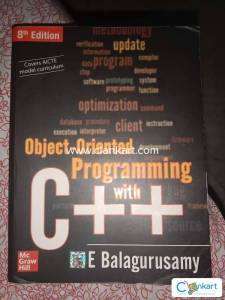
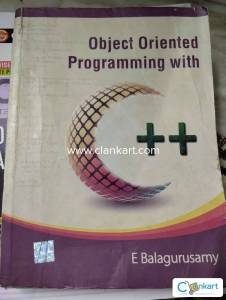
Object oriented programming by E Balagirusamy
Table Of Contents Preface Principles Of Object-Oriented Programming Beginning with C++ Tokens, Expressions and Control Structures Functions in C++ Classes and Objects Constructors and Destructors Operator Overloading and Type Conversions Inheritance: Extending Classes Pointers, Virtual Functions and Polymorphism Managing Console I/O Operations Working with Files Templates Exception Handling Introduction to the Standard Template Library Manipulating Strings New Features of ANSI C++ Standard Object-Oriented Systems Development Appendix A: Projects Appendix B: Answers to Debugging Exercises Appendix C: Executing Turbo C++ Appendix D: Executing C++ Under Windows Appendix E: Glossary of ANSI C++ Keywords Appendix F: C++ Operator Precedence Appendix G: Points to Remember Appendix H: Glossary of Important C++ and OOP Terms Appendix I: C++ Proficiency Test with Answers Bibliography Index