Buy used Politics Books online in India
Buy Second Hand Books, Used Books Online In India
Prisoners of Geography
THE MILLION COPY INTERNATIONAL BESTSELLERGeography shapes not only our history, but where we're headed...All leaders are constrained by geography. Their choices are limited by mountains, rivers, seas and concrete. Yes, to follow world events you need to understand people, ideas and movements - but if you don't know geography, you'll never have the full picture.If you've ever wondered why Putin is so obsessed with Crimea, why the USA was destined to become a global superpower, or why China's power base continues to expand ever outwards, the answers are all here.In ten chapters and ten maps, Prisoners of Geography looks at the past, present and future to offer an essential insight into one of the major factors that determines world history.It's time to put the 'geo' back into geopolitics._____'Like having a light shone on your understanding... I can't think of another book that explains the world situation so well. - Nicolas Lezard, Evening Standard'Sharp insights into the way geography shapes the choices of world leaders.' - Gideon Rachman, Financial Times_____Ten maps; ten chapters:Russia * China * United States of America * Latin America * the Middle East * Africa * India and Pakistan * Europe * Japan and Korea * the Arctic'A fresh and original insight into the geopolitics behind today’s foreign policy challenges’ — Andrew Neil‘Crisply written and brilliantly argued’ — Dame Ann Leslie‘An essential and detailed reflection of the geopolitical dynamics that exist globally’ — Dr Sajjan M. Gohel'Quite simply, one of the best books about geopolitics you could imagine: reading it is like having a light shone on your understanding…. Marshall is clear-headed, lucid and possessed of an almost uncanny ability to make the broad picture accessible and coherent … the book is, in a way which astonished me, given the complexities of the subject, unputdownable…. I can’t think of another book that explains the world situation so well.' – Nicholas Lezard, Evening Standard 'Compels a fresh way of looking at maps – not just as objec
Being Muslim In Hindu India
Anyone who follows the news knows that the Muslims of India are under siege. They face what author Ziya Us Salam calls the gravest challenge to the community, and to the definition of a secular India enshrined in India's Constitution, since independence. To be a Muslim in India today is to live with the reality of daily stigmatization and ever-increasing threats of violence. In several places, Muslims are expected to abide by the preferences of the majority community. At others, they might be killed on mere suspicion of cow slaughter, or much worse, just because they 'look' Muslim. There are attacks on their attire, language and culture. Being Muslim in Hindu India is an impassioned cry for attention, an attempt to highlight just what has gone wrong with our polity and society in recent years. Painstakingly researched, the book talks of the constant 'othering' of Muslims, using tactics of both peace and violence. Starting from a denial of tickets to Muslim candidates by political parties or missing names from electoral rolls, the book goes on to talk of attempts to wipe out complete passages of the history of medieval India, as if the period from 1206 to 1857 existed in a vacuum. Amidst these grave challenges, the book ends on a note of hope. This stems from the fact that even as the community faces political marginalization, the success of many of its young men and women gives India's Muslims hope for a better tomorrow.
The End of History & The Last Man
Ever since its first publication in 1992, The End of History and the Last Man has provoked controversy and debate. Francis Fukuyama's prescient analysis of religious fundamentalism, politics, scientific progress, ethical codes, and war is as essential for a world fighting fundamentalist terrorists as it was for the end of the Cold War. Now updated with a new afterword, The End of History and the Last Man is a modern classic.
After The Prophet
In this gripping narrative history, Lesley Hazleton tells the tragic story at the heart of the ongoing rivalry between the Sunni and Shia branches of Islam, a rift that dominates the news now more than ever. Even as Muhammad lay dying, the battle over who would take control of the new Islamic nation had begun, beginning a succession crisis marked by power grabs, assassination, political intrigue, and passionate faith. Soon Islam was embroiled in civil war, pitting its founder's controversial wife Aisha against his son-in-law Ali, and shattering Muhammad’s ideal of unity. Combining meticulous research with compelling storytelling, After the Prophet explores the volatile intersection of religion and politics, psychology and culture, and history and current events. It is an indispensable guide to the depth and power of the Shia–Sunni split.
Literature novel
Book contains the original statement given by Nathuram Godse (Assassin of Mahatma Gandhi).Writer is real brother of Nathuram Godse himself and narrates his accounts of all the events and takes us through the day of assassination till the day Nathuram Godse was hanged.Writer also puts forward crucial accounts of public and political opinions and reactions which were stirred up by assassination itself and also by Nathuram Godse's official statement to court.
Selling myself
It's a belief that unites the left and right, psychologists and philosophers, writers and historians. It drives the headlines that surround us and the laws that touch our lives. From Machiavelli to Hobbes, Freud to Dawkins, the roots of this belief have sunk deep into Western thought. Human beings, we're taught, are by nature selfish and governed by self-interest.Humankind makes a new argument: that it is realistic, as well as revolutionary, to assume that people are good. The instinct to cooperate rather than compete, trust rather than distrust, has an evolutionary basis going right back to the beginning of Homo sapiens. By thinking the worst of others, we bring out the worst in our politics and economics too.In this major book, internationally bestselling author Rutger Bregman takes some of the world's most famous studies and events and reframes them, providing a new perspective on the last 200,000 years of human history. From the real-life Lord of the Flies to the Blitz, a Siberian fox farm to an infamous New York murder, Stanley Milgram's Yale shock machine to the Stanford prison experiment, Bregman shows how believing in human kindness and altruism can be a new way to think – and act as the foundation for achieving true change in our society.It is time for a new view of human nature.
THE ARTHASHASTRA- Book EVERYONE SHOULD read
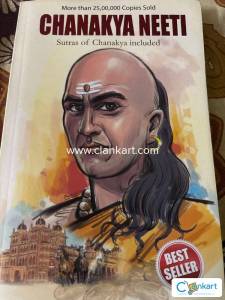
The Arthashastra is an ancient Indian treatise on statecraft, economic policy and military strategy, written in Sanskrit. It identifies its author by the names 'Kauṭilya' and 'Vishnugupta', both names that are traditionally identified with Chanakya (c. 350–283 BC), who was a scholar at Takshashila and the teacher and guardian of Emperor Chandragupta Maurya, founder of the Mauryan Empire. The text was influential until the 12th century, when it disappeared. It was rediscovered in 1904 by R. Shamasastry, who published it in 1909. The first English translation was published in 1915.Roger Boesche describes the Arthaśāstra as "a book of political realism, a book analysing how the political world does work and not very often stating how it ought to work, a book that frequently discloses to a king what calculating and sometimes brutal measures he must carry out to preserve the state and the common good."Centrally, Arthaśāstra argues how in an autocracy an efficient and solid economy can be managed. It discusses the ethics of economics and the duties and obligations of a king. The scope of Arthaśāstra is, however, far wider than statecraft, and it offers an outline of the entire legal and bureaucratic framework for administering a kingdom, with a wealth of descriptive cultural detail on topics such as mineralogy, mining and metals, agriculture, animal husbandry, medicine and the use of wildlife. The Arthaśāstra also focuses on issues of welfare (for instance, redistribution of wealth during a famine) and the collective ethics that hold a society together.
INDIA 2020 A VISION FOR THE NEW MILLENNIUM
In India 2020: A Vision for the New Millennium, Dr A.P.J. Abdul Kalam, our most distinguished scientist, and close associate Y.S. Rajan examine India's strengths—and weaknesses—to offer a vision of how India can be among the world's first five economic powers in the year 2020. They cite growth rates and develoent trends to show that the goal is not an unrealistic one. Past successes, too, bear them out. For example, we were able to launch the green revolution at a time when experts had all but given up on India ever becoming self-sufficient in food. Similarly, in the field of space technology we started from scratch to have today a system of satellite-based communication linking remote regions of the country. The same sense of purpose can lead us to success in many other areas crucial to achieving the goal of a prosperous, strong nation, assert Kalam and Rajan.
NEET objective chemistry volume 1
From being elected as Congress president in 1929 till his death in 1964, Jawaharlal Nehru remained a towering figure in Indian politics, a man who left an indelible stamp on the history of South Asia. As a leading light of the nationalist struggle and as India's first and longest-serving prime minister, his ideas shaped the political contours of the country and left an imprint so deep that his legacy continues to be debated furiously today. In life, as in afterlife, Nehru was many things to many people. Going beyond the imposed labels of contemporary discourse, this book illuminates four encounters that Nehru had with contemporaries from across the political spectrum - Muhammad Iqbal, Muhammad Ali Jinnah, Sardar Patel and Syama Prasad Mookerjee - that are critical to understanding his ideas, and his long afterlife and impress on the present. Nehru may no longer be alive to answer his critics today, but there was a time when he pitted himself vigorously against his opponents in the marketplace of ideas, debating the most profound questions in South Asian history and decisively influencing political events. It is this intellectually combative Nehru whom we meet in this book - voicing ideological disagreements, forging political alliances, moulding political opinion, offering visions of the future and staking out the political field - a key figure in the debates that defined India
novel book
In late-2000, a young boy in Ahmedabad called Govind dreamt of having a business. To accomodate his friends Ish and Omi's passion, they open a cricket shop. Govind's wants to make money and thinks big. Ish is all about nurturing Ali, the batsman with a rare gift. Omi knows his limited capabiltiies and just wants to be with his friends. However, nothing comes easy in a turbulent city. To realize their goals, they will have to face it all - religious politics, earthquakes, riots, unacceptable love and above all, their own mistakes. Will they make it? Can an individual's dreams overcome the nightmares offered by real life? Can we succeed despite a few mistakes?
autobiography
Avul Pakir Jainulabdeen Abdul Kalam, the son of a little-educated boat-owner in Rameswaram, Tamil Nadu, had an unparalleled career as a defence scientist, culminating in the highest civilian award of India, the Bharat Ratna. As chief of the country's defence research and development programme, Kalam demonstrated the great potential for dynamism and innovation that existed in seemingly moribund research establishments. This is the story of Kalam's rise from obscurity and his personal and professional struggles, as well as the story of Agni, Prithvi, Akash, Trishul and Nag-missiles that have become household names in India and that have raised the nation to the level of a missile power of international reckoning. This is also the saga of independent India's struggle for technological self-sufficiency and defensive autonomy-a story as much about politics, domestic and international, as it is about science.
Gandhi's Hinduism - The Struggle Against Jinnah's Islam
Gandhi, a devout Hindu, believed faith could nurture the civilizational harmony of India, a land where every religion had flourished. Jinnah, a political Muslim rather than a practicing believer, was determined to carve up a syncretic subcontinent in the name of Islam. His confidence came from a wartime deal with Britain, embodied in the 'August Offer' of 1940. Gandhi's strength lay in ideological commitment which was, in the end, ravaged by the communal violence that engineered partition. The price of this epic confrontation, paid by the people, has stretched into generations. M.J. Akbar's book, meticulously researched from original sources, reveals the astonishing blunders, lapses and conscious chicanery that permeated the politics of seven explosive years between 1940 and 1947. Facts from the archives challenge the conventional narrative, and disturb the conspiratorial silence used to protect the image of famous icons. Gandhi's Hinduism: The Struggle Against Jinnah's Islam delves into both the ideology and the personality of those who shaped the fate of a region between Iran and Burma. It is essential reading for anyone interested in modern Indian history, and the past as a prelude to the future.
India since independence
ISBNs moved from this editionThe story of the forging of contemporary India, the world's largest democracy, is a rich and inspiring one. This volume analyses the challenges India has faced and the successes it has achieved over the last five decades, in the light of its colonial legacy and century-long struggle for freedom. In doing so, it shows how unique the Indian experience is in the Third World combining development with democracy and civil liberties. seeking the widest possible consensus, as also how the Nehruvian political and economic agenda and basics of foreign policy were evolved and developed. Essential to the quest for consolidation of the nation was the integration of the princely states, the linguistic reorganization of the states, the integration of the tribals into the mainstream and the countering of regional imbalances. Among the other contentious issues considered here, with all their implications for the present situation, are India's foreign policy, party politics in the Centre and the states, the Punjab problem, the growth of communalism, and anticaste politics and untouchability. There are detailed analyses of the Indian economy, including the reforms since 1991, the wide-ranging land reforms and the Green Revolution. These, along with the objective assessments of Jawaharlal Nehru, Indira Gandhi, Jayaprakash Narayan, Lal Bahadur Shastri, Rajiv Gandhi, Vishwanath Pratap Singh and Atal Behari Vajpayee constitute a remarkable overview of a nation on the move.
Satyayoddha Kalki: Eye of Brahma (Kalki #2)
About the BookAfter a defeat at the hands of Lord Kali, Kalki Hari must journey towards the Mahendragiri mountains with his companions to finally become the avatar he is destined to be.But the road ahead is not without peril . . .Not only is he trapped by the cannibalistic armies of the Pisach, he is also embroiled in the civil war of the Vanars. And in midst of all this, he meets a face from the legends.Meanwhile, Manasa, the sister of the late Vasuki, plots to overthrow Lord Kali by bringing a massive war to his kingdom. But Naagpuri, her homeland, has been infiltrated by their sworn enemy, the Suparns. Not only does she need to protect her kingdom from the Suparns, she must also protect her close ones from the league of conspirators at her own home. Who can she really trust? And will she be able to put an end to Lord Kali’s rule?As the plot thickens and Lord Kali sees his ambition crushed right before his eyes, he comes to know about his race and its history that threatens to destroy the very fabric of this world’s reality.Kalyug has begun.Can Kalki become the avatar in time before it finally unfolds?Will Manasa fight through the internal politics to bring an invasion against Lord Kali?Can the secret that changes everything change Lord Kali as a person too?About the AuthorKevin Missal is a twenty-one-year-old graduate of St. Stephen’s College. He has recently released the first book of the Kalki Trilogy, DHARMAYODDHA KALKI: AVATAR OF VISHNU, which has received praise from newspapers such as Millennium Post and Sunday Guardian who have termed it as "2017’s mythological phenomenon". Kevin loves reading, watching films, and building stories in his mind. He lives in New Delhi.
Muder in Melur
Set in a small town in South India in the early 1970's, Murder in Melur is the story of Vijayan, a confused idealist who is buffeted by the politics of the period-the Rationalist, Dravidian and Communist movement in the Tamil country as well as the incipient civil war in Sri Lanka. Description taken from the inside of the book jacket.