Buy used Non Fiction Books online in India
Buy Second Hand Books, Used Books Online In India
Hidden Potential by Adam Grant
We live in a world that's obsessed with talent. We celebrate gifted students in school, natural athletes in sports, and child prodigies in music. But admiring people who start out with innate advantages leads us to overlook the distance we ourselves can travel. We underestimate the range of skills that we can learn and how good we can become. We can all improve at improving. And when opportunity doesn't knock, there are ways to build a door.Hidden Potential offers a new framework for raising aspirations and exceeding expectations. Adam Grant weaves together groundbreaking evidence, surprising insights, and vivid storytelling that takes us from the classroom to the boardroom, the playground to the Olympics, and underground to outer space. He shows that progress depends less on how hard you work than how well you learn. Growth is not about the genius you possess-it's about the character you develop. Grant explores how to build the character skills and motivational structures to realize our own potential, and how to design systems that create opportunities for those who have been underrated and overlooked.Many writers have chronicled the habits of superstars who accomplish great things. This book reveals how anyone can rise to achieve greater things. The true measure of your potential is not the height of the peak you've reached, but how far you've climbed to get there.
The Great Derangement by Amitav Ghosh Must-Read Climate Book
Are we deranged? The acclaimed Indian novelist Amitav Ghosh argues that future generations may well think so. How else to explain our imaginative failure in the face of global warming? In his first major book of nonfiction since In an Antique Land, Ghosh examines our inability—at the level of literature, history, and politics—to grasp the scale and violence of climate change.The extreme nature of today’s climate events, Ghosh asserts, make them peculiarly resistant to contemporary modes of thinking and imagining. This is particularly true of serious literary fiction: hundred-year storms and freakish tornadoes simply feel too improbable for the novel; they are automatically consigned to other genres. In the writing of history, too, the climate crisis has sometimes led to gross simplifications; Ghosh shows that the history of the carbon economy is a tangled global story with many contradictory and counterintuitive elements.Ghosh ends by suggesting that politics, much like literature, has become a matter of personal moral reckoning rather than an arena of collective action. But to limit fiction and politics to individual moral adventure comes at a great cost. The climate crisis asks us to imagine other forms of human existence—a task to which fiction, Ghosh argues, is the best suited of all cultural forms. His book serves as a great writer’s summons to confront the most urgent task of our time.
The art of seduction
The season's most talked-about all-purpose personal strategy guide and philosophical compendium," said Newsweek of Robert Greene's bold, elegant, and ingenious manual of modern manipulation, The 48 Laws of Power. Now Greene has once again mined history and literature to distill the essence of seduction, the most highly refined mode of influence, the ultimate power trip. The Art of Seduction is a masterful synthesis of the work of thinkers such as Freud, Ovid, Kierkegaard, and Einstein, as well as the achievements of the greatest seducers throughout history. From Cleopatra to John F. Kennedy, from Andy Warhol to Josephine Bonaparte, The Art of Seduction gets to the heart of the character of the seducer and his or her tactics, triumphs and failures. The seducer's many faces include: the Siren, the Rake, the Ideal Lover, the Dandy, the Natural, the Coquette, the Charmer, and the Charismatic. Twenty-four maneuvers will guide readers through the seduction process, providing cunning, amoral instructions for and analysis of this fascinating, all-pervasive form of power. Just as beautifully packaged and every bit as essential as The 48 Laws of Power, The Art of Seduction is an indispensable primer of persuasion and offers the best lessons on how to take what you want from whomever you want or how to prevent yourself from being taken.
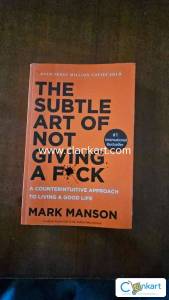
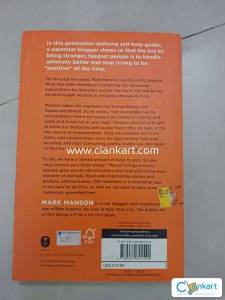
The subtle art of not giving a f*ck
New York Times BestsellerIn this generation-defining self-help guide, a superstar blogger cuts through the crap to show us how to stop trying to be "positive" all the time so that we can truly become better, happier people.For decades, we’ve been told that positive thinking is the key to a happy, rich life. "F**k positivity," Mark Manson says. "Let’s be honest, shit is f**ked and we have to live with it." In his wildly popular Internet blog, Manson doesn’t sugarcoat or equivocate. He tells it like it is—a dose of raw, refreshing, honest truth that is sorely lacking today. The Subtle Art of Not Giving a F**k is his antidote to the coddling, let’s-all-feel-good mindset that has infected American society and spoiled a generation, rewarding them with gold medals just for showing up.Manson makes the argument, backed both by academic research and well-timed poop jokes, that improving our lives hinges not on our ability to turn lemons into lemonade, but on learning to stomach lemons better. Human beings are flawed and limited—"not everybody can be extraordinary, there are winners and losers in society, and some of it is not fair or your fault." Manson advises us to get to know our limitations and accept them. Once we embrace our fears, faults, and uncertainties, once we stop running and avoiding and start confronting painful truths, we can begin to find the courage, perseverance, honesty, responsibility, curiosity, and forgiveness we seek.There are only so many things we can give a f**k about so we need to figure out which ones really matter, Manson makes clear. While money is nice, caring about what you do with your life is better, because true wealth is about experience. A much-needed grab-you-by-the-shoulders-and-look-you-in-the-eye moment of real-talk, filled with entertaining stories and profane, ruthless humor, The Subtle Art of Not Giving a F**k is a refreshing slap for a generation to help them lead contented, grounded lives.
Letters from a Father to his Daughter
A priceless collection of letters from one legendary leader to anotherWhen Indira Gandhi was a little girl of ten, she spent the summer in Mussoorie, while her father, Jawaharlal Nehru, was in Allahabad. Over the summer, Nehru wrote her a series of letters in which he told her the story of how and when the earth was made, how human and animal life began, and how civilizations and societiesevolved all over the world.Written in 1928, these letters remain fresh and vibrant, and capture Nehru's love for people and for nature, whose story was for him 'more interesting than any other story or novel that you may have read'.
Igen-why today's...
A highly readable and entertaining first look at how today’s members of iGen—the children, teens, and young adults born in the mid-1990s and later—are vastly different from their Millennial predecessors, and from any other generation, from the renowned psychologist and author of Generation Me.With generational divides wider than ever, parents, educators, and employers have an urgent need to understand today’s rising generation of teens and young adults. Born in the mid-1990s to the mid-2000s and later, iGen is the first generation to spend their entire adolescence in the age of the smartphone. With social media and texting replacing other activities, iGen spends less time with their friends in person—perhaps why they are experiencing unprecedented levels of anxiety, depression, and loneliness. But technology is not the only thing that makes iGen distinct from every generation before them; they are also different in how they spend their time, how they behave, and in their attitudes toward religion, sexuality, and politics. They socialize in completely new ways, reject once sacred social taboos, and want different things from their lives and careers. More than previous generations, they are obsessed with safety, focused on tolerance, and have no patience for inequality. iGen is also growing up more slowly than previous eighteen-year-olds look and act like fifteen-year-olds used to. As this new group of young people grows into adulthood, we all need to understand Friends and family need to look out for them; businesses must figure out how to recruit them and sell to them; colleges and universities must know how to educate and guide them. And members of iGen also need to understand themselves as they communicate with their elders and explain their views to their older peers. Because where iGen goes, so goes our nation—and the world.
Complex PTsd
I have Complex PTSD [Cptsd] and wrote this book from the perspective of someone who has experienced a great reduction of symptoms over the years. I also wrote it from the viewpoint of someone who has discovered many silver linings in the long, windy, bumpy road of recovering from Cptsd. I felt encouraged to write this book because of thousands of e-mail responses to the articles on my website that repeatedly expressed gratitude for the helpfulness of my work. An often echoed comment sounded like this: At last someone gets it. I can see now that I am not bad, defective or crazy...or alone! The causes of Cptsd range from severe neglect to monstrous abuse. Many survivors grow up in houses that are not homes - in families that are as loveless as orphanages and sometimes as dangerous. If you felt unwanted, unliked, rejected, hated and/or despised for a lengthy portion of your childhood, trauma may be deeply engrained in your mind, soul and body. This book is a practical, user-friendly self-help guide to recovering from the lingering effects of childhood trauma, and to achieving a rich and fulfilling life. It is copiously illustrated with examples of my own and my clients' journeys of recovering. This book is also for those who do not have Cptsd but want to understand and help a loved one who does. This book also contains an overview of the tasks of recovering and a great many practical tools and techniques for recovering from childhood trauma. It extensively elaborates on all the recovery concepts explained on my website, and many more. However, unlike the articles on my website, it is oriented toward the layperson. As such, much of the psychological jargon and dense concentration of concepts in the website articles has been replaced with expanded and easier to follow explanations. Moreover, many principles that were only sketched out in the articles are explained in much greater detail. A great deal of new material is also explored. Key concepts of the book include managing emotional flashbacks, understanding the fou
The body keeps the score
A pioneering researcher transforms our understanding of trauma and offers a bold new paradigm for healing in this New York Times bestseller. Trauma is a fact of life. Veterans and their families deal with the painful aftermath of combat; one in five Americans has been molested; one in four grew up with alcoholics; one in three couples have engaged in physical violence. Dr. Bessel van der Kolk, one of the world’s foremost experts on trauma, has spent over three decades working with survivors. In The Body Keeps the Score, he uses recent scientific advances to show how trauma literally reshapes both body and brain, compromising sufferers’ capacities for pleasure, engagement, self-control, and trust. He explores innovative treatments—from neurofeedback and meditation to sports, drama, and yoga—that offer new paths to recovery by activating the brain’s natural neuroplasticity. Based on Dr. van der Kolk’s own research and that of other leading specialists, The Body Keeps the Score exposes the tremendous power of our relationships both to hurt and to heal—and offers new hope for reclaiming lives.
Emotional Intelligence
Is IQ destiny? Not nearly as much as we think. Daniel Goleman argues that our view of human intelligence is far too narrow, and that our emotions play a far greater role in thought, decision making and individual success than is commonly acknowledged.Emotional intelligence includes self-awareness and impulse control, persistence, zeal and motivation, empathy and social deftness. These are the qualities that mark people who excel: whose relationships flourish, who are stars in the workplace.With new insights into the brain architecture underlying emotion and rationality, Goleman shows precisely how emotional intelligence can be nurtured and strengthened in all of us. And because emotional lessons a child learns actually sculpt the brain's circuitry, Goleman provides detailed guidance as to how parents and schools can benefit from this.
Brainstorm
A New York Times bestseller! Between the ages of twelve and twenty-four, the brain changes in important and, at times, challenging ways. In Brainstorm, Dr. Daniel Siegel busts a number of commonly held myths about adolescence—for example, that it is merely a stage of “immaturity” filled with often “crazy” behavior. According to Siegel, during adolescence we learn vital skills, such as how to leave home and enter the larger world, connect deeply with others, and safely experiment and take risks. Drawing on important new research in the field of interpersonal neurobiology, Siegel explores exciting ways in which understanding how the brain functions can improve the lives of adolescents, making their relationships more fulfilling and less lonely and distressing on both sides of the generational divide.
The Power of Fun
From the bestselling author of HOW TO BREAK UP WITH YOUR PHONE 'This delightful book might just be what we need to start flourishing.' ADAM GRANT, author of Think Again'An antidote to all the darkness ... a guide to tapping into true fun.' New York Times'A practical, evidence-backed plan ... and an argument that fun isn't optional, but essential.' CHARLES DUHIGG, author of The Power of Habit'This is the book everyone needs to read.' Independent__________When did you last feel exhilarated and light-hearted?When did you last feel fully alive?When did you last have fun?In our always-on, tech-addicted lifestyles, the pursuit of fun has become an indulgence. We have forgotten how to relax.Award-winning science journalist Catherine Price argues that fun is the key to living a more meaningful, fulfilling and happier life. If you prioritize fun, you will:* Be healthier, less stressed and have more energy. * Find community and a sense of purpose.* Stop languishing and start flourishing.And best of all? You'll enjoy yourself!Ground-breaking, eye-opening and packed with useful advice, The Power of Fun won't just change the way you think, it will bring you back to life.__________'Inspirational, funny, research-packed and full of practical strategies... The Power of Fun is a game-changer.' ARIANNA HUFFINGTON, founder and CEO, Thrive Global'Sharp, entertaining and persuasive... an essential guide for anyone who can't quite remember what it's like to experience joy.' LAURIE SANTOS, host of The Happiness Lab podcast'The Marie Kondo of Brains.' New York Times
Highly sensitive person
Are you an HSP?Are you easily overwhelmed by stimuli?Affected by other people's moods?Easily startled?Do you need to withdraw during busy times to a private, quiet place?Do you get nervous or shaky if someone is observing you or competing with you?HSP, shorthand for "highly sensitive person," describes 15 to 20 percent of the population. Being sensitive is a normal trait--nothing defective about it. But you may not realize that, because society rewards the outgoing personality and treats shyness and sensitivity as something to be overcome. According to author Elaine Aron (herself an HSP), sensitive people have the unusual ability to sense subtleties, spot or avoid errors, concentrate deeply, and delve deeply.This book helps HSPs to understand themselves and their sensitive trait and its impact on personal history, career, relationships, and inner life. The book offers advice for typical problems.For example, you learn strategies for coping with overarousal, overcoming social discomfort, being in love relationships, managing job challenges, and much more.The author covers a lot of material clearly, in an approachable style, using case studies, self-tests, and exercises to bring the information home.
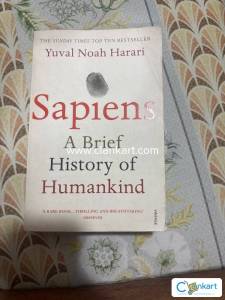
Sapiens: A Brief History Of Humankind
Earth is 4.5 billion years old. In just a fraction of that time, one species among countless other have conquered it: us.What makes us brilliant?What makes us deadly?What makes us sapiens?In this bold and provocative book, Yuval Noah Harari explores who we are, how we got here, and where we're going. Sapiens is the thrilling account of our history -- from insignificant apes to rulers of the world.(taken from the inside cover)
Book on trees
In 'The Hidden Life of Trees', Peter Wohlleben shares his deep love of woods and forests and explains the amazing processes of life, death and regeneration he has observed in the woodland and the amazing scientific mechanisms behind these wonders, of which we are blissfully unaware. Much like human families, tree parents live together with their children, communicate with them and support them as they grow, sharing nutrients with those who are sick or struggling and creating an ecosystem that mitigates the impact of extremes of heat and cold for the whole group. As a result of such interactions, trees in a family or community are protected and can live to be very old. In contrast, solitary trees, like street kids, have a tough time of it and in most cases die much earlier than those in a group.Drawing on groundbreaking new discoveries, Wohlleben presents the science behind the secret and previously unknown life of trees and their communication abilities, he describes how these discoveries have informed his own practices in the forest around him. As he says, a happy forest is a healthy forest and he believes that eco-friendly practices not only are economically sustainable but also benefit the health of our planet and the mental and physical health of all who live on Earth.
Behave by Robert Sapolsky hardcover,fully new.
Why do we do the things we do?More than a decade in the making, this game-changing book is Robert Sapolsky's genre-shattering attempt to answer that question as fully as perhaps only he could, looking at it from every angle. Sapolsky's storytelling concept is delightful but it also has a powerful intrinsic logic: he starts by looking at the factors that bear on a person's reaction in the precise moment a behavior occurs, and then hops back in time from there, in stages, ultimately ending up at the deep history of our species and its evolutionary legacy.And so the first category of explanation is the neurobiological one. A behavior occurs—whether an example of humans at our best, worst, or somewhere in between. What went on in a person's brain a second before the behavior happened? Then Sapolsky pulls out to a slightly larger field of vision, a little earlier in time: What sight, sound, or smell caused the nervous system to produce that behavior? And then, what hormones acted hours to days earlier to change how responsive that individual is to the stimuli that triggered the nervous system? By now he has increased our field of vision so that we are thinking about neurobiology and the sensory world of our environment and endocrinology in trying to explain what happened.Sapolsky keeps going: How was that behavior influenced by structural changes in the nervous system over the preceding months, by that person's adolescence, childhood, fetal life, and then back to his or her genetic makeup? Finally, he expands the view to encompass factors larger than one individual. How did culture shape that individual's group, what ecological factors millennia old formed that culture? And on and on, back to evolutionary factors millions of years old.The result is one of the most dazzling tours d'horizon of the science of human behavior ever attempted, a majestic synthesis that harvests cutting-edge research across a range of disciplines to provide a subtle and nuanced perspective on why we ultimately do the things we do ... for good
To let go the thoughts that keep you stuck
'Life-changing' - Sara Makin, Founder & CEO of Makin WellnessIf you learn to let go,your life will take off.When you let go, you live intuitively. Everything flows, because you are no longer attached to things being a certain way, to being a certain person or always being right. What a relief. The irony is that when you feel stuck in any area of your life - career, relationships, purpose, health or money - letting go can seem very hard. You cling on for dear life just at the moment you need to take the leap.In The Power of Letting Go, John Purkiss explains why we should let go and how we can do it, using proven techniques to make things happen.The stages of letting -Be Present and Enjoy Each Moment-Let Go of the Thoughts that Keep You Stuck-Let Go of the Pain that Runs Your Life-Surrender and Tune into Something Far More Intelligent than Your Brain
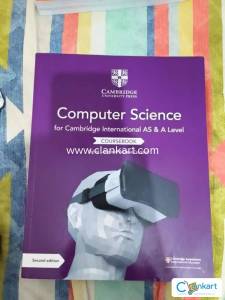
Books for engineering students
Any good text book,particularly that in the fast changing fields such as engineering & technology,is not only expected to cater to the current curricular requirments of various institutions but also should provied a glimplse towards the latest developments in the concerned subject and the relevant disciplines.It should guide the periodic review and updating of the curriculum.
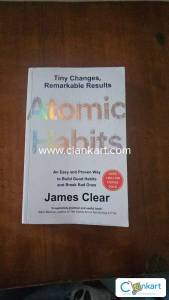
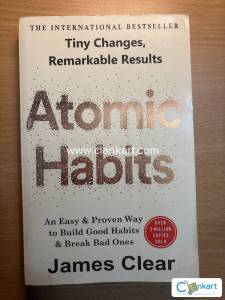
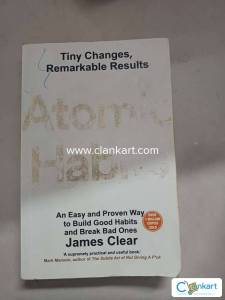
Atomic Habits
An alternative cover edition for this ISBN can be found here. Transform your life with tiny changes in behaviour, starting now. People think that when you want to change your life, you need to think big. But world-renowned habits expert James Clear has discovered another way. He knows that real change comes from the compound effect of hundreds of small decisions: doing two push-ups a day, waking up five minutes early, or holding a single short phone call.He calls them atomic habits.In this ground-breaking book, Clears reveals exactly how these minuscule changes can grow into such life-altering outcomes. He uncovers a handful of simple life hacks (the forgotten art of Habit Stacking, the unexpected power of the Two Minute Rule, or the trick to entering the Goldilocks Zone), and delves into cutting-edge psychology and neuroscience to explain why they matter. Along the way, he tells inspiring stories of Olympic gold medalists, leading CEOs, and distinguished scientists who have used the science of tiny habits to stay productive, motivated, and happy.These small changes will have a revolutionary effect on your career, your relationships, and your life.
Adda247 ace quant
ADDA 247 is launching a complete and comprehensive ebook on "Quantitative Aptitude". The book is updated as per the latest examination pattern and is suitable for all the Banking & Insurance Examinations such as SBI, RBI, IBPS,NICL AO, LIC, GIC, UIIC & Others. The aim of this ebook is to help students learn and understand the new pattern of recruitment exams which will help them to maximise their scores in the competitive examination. The book has been prepared by experienced faculties, subject-matter experts and with the expertise of Adda247 keeping the new pattern and challenges of competitive exams in mind. Salient Features of the eBook -Based on Latest Pattern -3 Level of Exercises -2000+ Multiple Choice Questions with 100% solutions -Includes the Previous Year Questions of all the chapters.