Buy used Non Fiction Books online in India
Buy Second Hand Books, Used Books Online In India
Art of war
Twenty-Five Hundred years ago, Sun Tzu wrote this classic book of military strategy based on Chinese warfare and military thought. Since that time, all levels of military have used the teaching on Sun Tzu to warfare and civilization have adapted these teachings for use in politics, business and everyday life. The Art of War is a book which should be used to gain advantage of opponents in the boardroom and battlefield alike.
The Mindset
Now updated with new research — the book that has changed millions of lives.After decades of research, world-renowned Stanford University psychologist Carol S. Dweck, Ph.D., discovered a simple but groundbreaking idea: the power of mindset. In this brilliant book, she shows how success in school, work, sports, the arts, and almost every area of human endeavor can be dramatically influenced by how we think about our talents and abilities. People with a fixed mindset — those who believe that abilities are fixed — are less likely to flourish than those with a growth mindset — those who believe that abilities can be developed. Mindset reveals how great parents, teachers, managers, and athletes can put this idea to use to foster outstanding accomplishment.In this edition, Dweck offers new insights into her now famous and broadly embraced concept. She introduces a phenomenon she calls false growth mindset and guides people toward adopting a deeper, truer growth mindset. She also expands the mindset concept beyond the individual, applying it to the cultures of groups and organizations. With the right mindset, you can motivate those you lead, teach, and love — to transform their lives and your own.
MEDITATIONS
Written in Greek by the only Roman emperor who was also a philosopher, without any intention of publication, the Meditations of Marcus Aurelius offer a remarkable series of challenging spiritual reflections and exercises developed as the emperor struggled to understand himself and make sense of the universe. While the Meditations were composed to provide personal consolation and encouragement, Marcus Aurelius also created one of the greatest of all works of philosophy: a timeless collection that has been consulted and admired by statesmen, thinkers and readers throughout the centuries.
The Design of Everyday Things
Even the smartest among us can feel inept as we fail to figure out which light switch or oven burner to turn on, or whether to push, pull, or slide a door. The fault, argues this ingenious—even liberating—book, lies not in ourselves, but in product design that ignores the needs of users and the principles of cognitive psychology. The problems range from ambiguous and hidden controls to arbitrary relationships between controls and functions, coupled with a lack of feedback or other assistance and unreasonable demands on memorization. The Design of Everyday Things shows that good, usable design is possible. The rules are simple: make things visible, exploit natural relationships that couple function and control, and make intelligent use of constraints. The goal: guide the user effortlessly to the right action on the right control at the right time.In this entertaining and insightful analysis, cognitive scientist Don Norman hails excellence of design as the most important key to regaining the competitive edge in influencing consumer behavior. Now fully expanded and updated, with a new introduction by the author, The Design of Everyday Things is a powerful primer on how—and why—some products satisfy customers while others only frustrate them.
The Theory of everything the origin and date of the universe
An alternative cover for this ISBN can be found hereIn physicist Stephen Hawking's brilliant opus, A Brief History of Time, he presented us with a bold new look at our universe, how it began, and how our old views of physics and tired theories about the creation of the universe were no longer relevant. In other words, Hawking gave us a new look at our world, our universe, and ourselves. Now, available for the first time in trade paperback, Hawking presents an even more comprehensive look at our universe, its creation, and how we see ourselves within it. Imagine sitting in a comfortable room listening to Hawking discuss his latest theories and place them in historical context with science's other great achievements--it would be like hearing Christopher Columbus deliver the news about the new world. Hawking presents a series of seven lectures in which he describes, more clearly than ever, the history of the universe as we know it. He begins with the history of ideas about the universe, from Aristotle's idea that the Earth is round to Hubble's discovery two millennium later that our universe is growing. Using this history as a launching pad, Hawking takes us on a fascinating journey through the telescopic lens of modern physics to gain a new glimpse of the universe--the nature of black holes, the space-time continuum, and new information about the origin of the universe. He uses this scientific basis to come up with a "unified theory of everything" that the author claims will be "the ultimate triumph of human reason."
The First World War
The story of the First World War, and the people who lived and died fighting in it, specially written for young readers. Chapters include ‘The world at war', ‘Over by Christmas' and ‘The homefront'. Includes photographs, maps and full-colour illustrations, as well as internet links to recommended websites for further information through Usborne Quicklinks. Written and published in association with Imperial War Museums. Part of the Usborne Reading Programme developed with reading experts at the University of Roehampton.
The Power of Habit
Habits are difficult to change. The neuroscience behind the functioning of habits is still not known to many. On one hand, there is always one section of the society which finds it exceptionally easy to adapt to new situations, new environment and frequent changes. On the other hand, there are people and organizations who strive hard to mold themselves into a changing environment.The Power of Habit: Why We Do What We Do and How To Change presents us with brilliant information in the most engaging way that enlightens us towards the depth of human nature and its tremendous potential to transform. Through this book we visit laboratories where neuroscientists explore how habits work and where, exactly, they reside in our brains. We also understand the importance of the right habits which led to the success of great personalities.Keystone habits help earn billions and can also make a difference between failure and success, life and death. Hence, The Power of Habit: Why We Do What We Do and How To Change gives the readers an insight into the world's top notch companies, Rick Warren's Saddleback Church, NFL locker rooms and the nation's largest hospital to suggest the importance of right habits.
Atomic Habits Tiny Changes, Remarkable Results
An alternative cover edition for this ISBN can be found here. Transform your life with tiny changes in behaviour, starting now. People think that when you want to change your life, you need to think big. But world-renowned habits expert James Clear has discovered another way. He knows that real change comes from the compound effect of hundreds of small decisions: doing two push-ups a day, waking up five minutes early, or holding a single short phone call.He calls them atomic habits.In this ground-breaking book, Clears reveals exactly how these minuscule changes can grow into such life-altering outcomes. He uncovers a handful of simple life hacks (the forgotten art of Habit Stacking, the unexpected power of the Two Minute Rule, or the trick to entering the Goldilocks Zone), and delves into cutting-edge psychology and neuroscience to explain why they matter. Along the way, he tells inspiring stories of Olympic gold medalists, leading CEOs, and distinguished scientists who have used the science of tiny habits to stay productive, motivated, and happy.These small changes will have a revolutionary effect on your career, your relationships, and your life.
The diary of a young girl
Anne Frank's extraordinary diary, written in the Amsterdam attic where she and her family hid from the Nazis for two years, has become a world classic and a timeless testament to the human spirit. Now, in a new edition enriched by many passages originally withheld by her father, we meet an Anne more real, more human, and more vital than ever. Here she is first and foremost a teenage girl—stubbornly honest, touchingly vulnerable, in love with life. She imparts her deeply secret world of soul-searching and hungering for affection, rebellious clashes with her mother, romance and newly discovered sexuality, and wry, candid observations of her companions. Facing hunger, fear of discovery and death, and the petty frustrations of such confined quarters, Anne writes with adult wisdom and views beyond her years. Her story is that of every teenager, lived out in conditions few teenagers have ever known.
Davidson principles and practice of medicine
Well over two million medical students, doctors and other health professionals around the globe have owned a copy of Davidson’s Principles and Practice of Medicine since it was first published over 70 years ago. Now in its 24th Edition, this thoroughly updated textbook describes the pathophysiology and clinical features of the most frequently encountered conditions in the major specialties of adult medicine, and explains how to recognise, investigate, diagnose and manage them. Taking its origins from Sir Stanley Davidson’s much-admired lecture notes, Davidson’s has endured because it keeps pace with how modern medicine is taught and provides a wealth of trusted information in an easy-to-read, concise and beautifully illustrated format. Key features: Part 1 ‘Fundamentals of Medicine’ - provides an account of the principles of genetics, immunology, infectious diseases, population health, oncology and pain management, along with a discussion of the core principles behind clinical decision-making and good prescribing. Part 2 ‘Emergency and Critical Care Medicine’ - covers medical emergencies in poisoning, envenomation and medicine in austere environments, as well as common presentations in acute medicine and the recognition and management of the critically ill. Part 3 ‘Clinical Medicine’- covers the major medical specialties, each thoroughly revised and brought fully up to date. A new section on COVID-19 has been added and the impact of this infection is described throughout the book. Clinical Examination overviews - extended and updated to summarise the main elements for each system. Presenting Problems sections - provide a clear pathway for the assessment of and approach to the most common complaints in each specialty. Practice Point summaries - detail the practical skills that medical students and junior doctors must acquire. Emergency boxes - emphasise the core knowledge needed to manage acutely ill patients. In Old Age, In Pregnancy and In Adolescence boxes - highlight differences in the practice of medicine in
MARK MANSON
From the author of the international mega-bestseller The Subtle Art of Not Giving A F*ck comes a counterintuitive guide to the problems of hope. We live in an interesting time. Materially, everything is the best it’s ever been—we are freer, healthier and wealthier than any people in human history. Yet, somehow everything seems to be irreparably and horribly f*cked—the planet is warming, governments are failing, economies are collapsing, and everyone is perpetually offended on Twitter. At this moment in history, when we have access to technology, education and communication our ancestors couldn’t even dream of, so many of us come back to an overriding feeling of hopelessness.What’s going on? If anyone can put a name to our current malaise and help fix it, it’s Mark Manson. In 2016, Manson published The Subtle Art of Not Giving A F*ck, a book that brilliantly gave shape to the ever-present, low-level hum of anxiety that permeates modern living. He showed us that technology had made it too easy to care about the wrong things, that our culture had convinced us that the world owed us something when it didn’t—and worst of all, that our modern and maddening urge to always find happiness only served to make us unhappier. Instead, the “subtle art” of that title turned out to be a bold challenge: to choose your struggle; to narrow and focus and find the pain you want to sustain. The result was a book that became an international phenomenon, selling millions of copies worldwide while becoming the #1 bestseller in 13 different countries.Now, in Everthing Is F*cked, Manson turns his gaze from the inevitable flaws within each individual self to the endless calamities taking place in the world around us. Drawing from the pool of psychological research on these topics, as well as the timeless wisdom of philosophers such as Plato, Nietzsche, and Tom Waits, he dissects religion and politics and the uncomfortable ways they have come to resemble one another. He looks at our relationships with money, entertainment and the internet, a
Nature of Judicial Process
2011 Reprint of 1921 Edition. Full facsimile of the original edition, not reproduced with Optical Recognition Software. In this famous treatise, Cardozo describes in simple and understandable language the conscious and unconscious processes by which a judge decides a case. He discusses the sources of information to which he appeals for guidance and analyzes the contribution that considerations of precedent, logical consistency, custom, social welfare, and the standards of justice and morals have in shaping his decisions. This is a classic text on the subject.
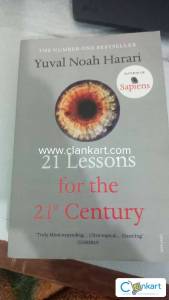
21 Lessons for the 21st Century
**FROM THE AUTHOR OF THE MILLION-COPY BESTSELLER SAPIENS**Sapiens showed us where we came from. Homo Deus looked to the future. 21 Lessons for the 21st Century explores the present.How can we protect ourselves from nuclear war, ecological cataclysms and technological disruptions? What can we do about the epidemic of fake news or the threat of terrorism? What should we teach our children?Yuval Noah Harari takes us on a thrilling journey through today’s most urgent issues. The golden thread running through his exhilarating new book is the challenge of maintaining our collective and individual focus in the face of constant and disorienting change. Are we still capable of understanding the world we have created?
An Era of Darkness: The British Empire in India
In the 18th century, India's share of the world economy was as large as Europe's. By 1947, after two centuries of British rule, it had decreased six-fold. Beyond conquest and deception, the Empire blew rebels from cannons, massacred unarmed protesters, entrenched institutionalized racism, and caused millions to die from starvation. British imperialism justified itself as enlightened despotism for the benefit of the governed, but Shashi Tharoor takes on and demolishes this position, demonstrating how every supposed imperial "gift" - from the railways to the rule of law - was designed in Britain's interests alone. He goes on to show how Britain's Industrial Revolution was founded on India's deindustrialization and the destruction of its textile industry. In this bold and incisive reassessment of colonialism, Tharoor exposes to devastating effect the inglorious reality of Britain's stained Indian legacy.
The Strength in Our Scars
“The Strength In Our Scars” is Bianca Sparacino’s reminder to you: No matter what you’re going through, no matter where you are on your healing journey—you are strong. Through poetry, prose, and compassionate encouragement you would expect from someone who knows exactly what you’re working through, Sparacino is here with the words you need. “The Strength In Our Scars” tackles the gut-wrenching but relatable experiences of moving on, self-love, and ultimately learning to heal. In this book you will find peace, you will find a rock, you will find understanding, and you will find hope. Remember: Whatever is dark within you has also carved light into your soul. Whatever is lost within you has also brought you back home to yourself. Whatever is hurt within you is also healing you in ways you may not understand at that moment in time. This book hopes to show you that.
Emotional Intelligence
Emotional Intelligence: Why It Can Matter More Than IQ highlights the strong influence of emotional intelligence on every individual's life. It has always been understood that intelligence quotient or IQ plays a very small role, if at all, in a person's true success and happiness. But, only the pioneering research in the field of emotional intelligence has been able to truly define the factors that make or break a person's life.Backed by solid cognitive and behavioral research, the book delves into the impact of an individual's emotions on all of his/her choices. It juxtaposes the rational side of the brain with the emotional side, showing how the brain tries to strike a balance between both during crucial moments. It also asserts that due to the influence of external factors, more often than not, the emotional side ends up taking precedence in a crunch.
Behave the human biology at best and worst
***'Awe-inspiring… You will learn more about human nature than in any other book I can think of' Henry MarshTHE NEW YORK TIMES BESTSELLER / WINNER OF THE 2017 LA TIMES BOOK PRIZE'One of the best scientist-writers of our time' Oliver SacksWhy do human beings behave as they do? We are capable of savage acts of violence but also spectacular feats of kindness: is one side of our nature destined to win out over the other?Every act of human behaviour has multiple layers of causation, spiralling back seconds, minutes, hours, days, months, years, even centuries, right back to the dawn of time and the origins of our species.In the epic sweep of history, how does our biology affect the arc of war and peace, justice and persecution? How have our brains evolved alongside our cultures?This is the exhilarating story of human morality and the science underpinning the biggest question of all: what makes us human?
Tuedays with Morrie
Maybe it was a grandparent, a teacher or a colleague. Someone older, patient and wise, who understood when you were young and impassioned, helped you to see the world as a more profound place, and gave you sound advice to guide your way through it. For Mitch Albom, it was Morrie Schwartz, the colleage professor who taught him nearly twenty years ago.Perhaps, like Mitch, you lost track of this mentor as the years passed, the insights faded, and the world seemed colder. Wouldn't you like to see that person again, to ask the bigger questions that still haunt you, and receive wisdom for your busy life the way you once did when you were younger?Mitch Albom got that second chance, rediscovering Morrie in the last months of the older man's life. Their rekindled relationship turned in one final 'class': lessons in how to live. Tuesdays with Morrie is a magical chronicle of their time together.--back cover
Ikigai : The Japanese Secret to a Long and Happy Life
Bring meaning and joy to all your days with the internationally bestselling guide to ikigai.According to the Japanese, everyone has an ikigai – a reason for living. And according to the residents of the Japanese island of Okinawa – the world’s longest-living people – finding it is the key to a happier and longer life.Inspiring and soothing, this book will bring you closer to these centenarians’ secrets: how they leave urgency behind; keep doing what they love for as long as possible; nurture friendships; live in the moment; participate in their communities and throw themselves into their passions. And it provides practical tools to help you discover your own personal ikigai. Because who doesn’t want to find the joy in every day?