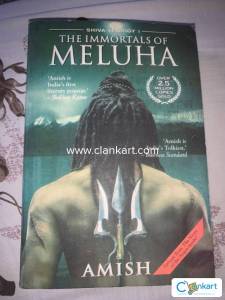
Today, He is a God. 4000 years ago, He was just a man. The hunt is on. The sinister Naga warrior has killed his friend Brahaspati and now stalks his wife Sati. Shiva, the Tibetan immigrant who is the prophesied destroyer of evil, will not rest till he finds his demonic adversary. His vengeance and the path to evil will lead him to the door of the Nagas, the serpent people. Of that he is certain. The evidence of the malevolent rise of evil is everywhere. A kingdom is dying as it is held to ransom for a miracle drug. A crown prince is murdered. The Vasudevs Shivas philosopher guides betray his unquestioning faith as they take the aid of the dark side. Even the perfect empire, Meluha is riddled with a terrible secret in Maika, the city of births. Unknown to Shiva, a master puppeteer is playing a grand game. In a journey that will take him across the length and breadth of ancient India, Shiva searches for the truth in a land of deadly mysteries only to find that nothing is what it seems. Fierce battles will be fought. Surprising alliances will be forged. Unbelievable secrets will be revealed in this second book of the Shiva Trilogy, the sequel to the #1 national bestseller, The Immortals of Meluha.
1900 BC. In what modern Indians mistakenly call the Indus Valley Civilisation. The inhabitants of that period called it the land of Meluha a near perfect empire created many centuries earlier by Lord Ram, one of the greatest monarchs that ever lived. This once proud empire and its Suryavanshi rulers face severe perils as its primary river, the revered Saraswati, is slowly drying to extinction. They also face devastating terrorist attacks from the east, the land of the Chandravanshis. To make matters worse, the Chandravanshis appear to have allied with the Nagas, an ostracised and sinister race of deformed humans with astonishing martial skills. The only hope for the Suryavanshis is an ancient legend: When evil reaches epic proportions, when all seems lost, when it appears that your enemies have triumphed, a hero will emerge. Is the rough-hewn Tibetan immigrant Shiva, really that hero? And does he want to be that hero at all? Drawn suddenly to his destiny, by duty as well as by love, will Shiva lead the Suryavanshi vengeance and destroy evil?
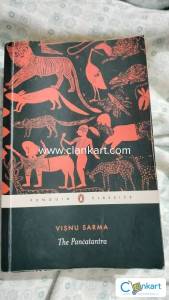
Panchatantra, is perhaps the oldest collection of Indian Fables still surviving. It is written around 200BC by the great Hindu Scholar Pandit Vishnu Sharma. Panchatantra means "the five books". It is a "Nitishastra" which means book of wise conduct in life. The book is written in the form of simple stories and each story has a moral and philosophical theme which has stood the test of time in modern age of atomic fear and madness. It guides us to attain success in life by understanding human nature. Panchatantra is commonly available in an abridged form written for children. Here is the complete translation of the book as written by Vishnu Sharma.
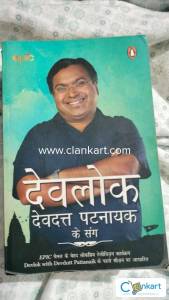
Devlok Devdutt Patnaik Ke Sang
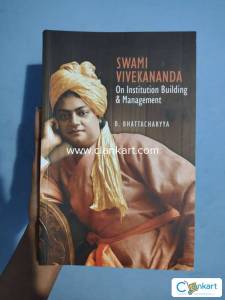
Apart from being a great religious leader popularly known to be preaching Practical Vedanta across the world, Swami Vivekananda was a successful institution-builder. A fact not generally recognised and appreciated. He was adept in modern management practices like team building, crowd-sourcing, mentoring and so on. He had definite ideas on how to remove poverty and industrialise India. This book deals with such lesser known dimensions of his personality and achievements.B. Bhattacharyya is an acclaimed academician, author and columnist. He was Dean, Indian Institute of Foreign Trade and also served as Senior Adviser, United Nations. His last published work is: Myths, Mythology and Management (2018).
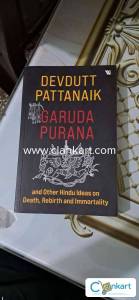
Why do Hindus feed their ancestors? Why is burning the dead preferred to the building of tombs? Are Swarga and Naraka not the Hindu equivalent of Heaven and Hell? Does Hinduism have a concept like Judgement Day? What is the impact of death on Hindu notions of womanhood and caste?Is the Vedic approach to death different from the Tantric one? What is the difference beTween bhuta, pishacha, preta, pitr and vetala?Ideas of death, rebirth and immortality are embedded in the Hindu mind through ritual and story. Death is not just tragic, but ambiguous too. It is the end of one journey, and also the beginning of another. The dead are venerable, yet death is inauspicious, a source of impurity.In Garuda Purana and Other Hindu Ideas on Death, Rebirth and Immortality, Devdutt Pattanaik explores the many concepts around death across the spectrum of Hindu mythology, tracing the roots of certain practices to as far back as the Harappan times. A unique enquiry into the Hindu response to death, the book serves as a guide to the choices we make in life.