Buy used History & Archaeology Books online in India
Buy Second Hand Books, Used Books Online In India
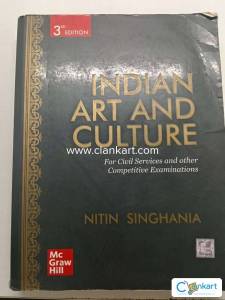
Indian art and culture by nitin singhania
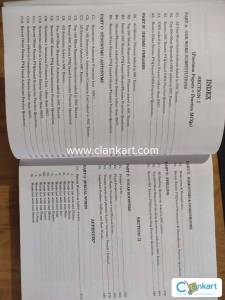
Meant for aspirants of Civil Services Preliminary and Main Examination, this book covers the syllabus of Indian Heritage and Culture for General Studies Paper I. A wide ranged knowledge base of the Indian, Art, paintings, music and architecture has been presented with the help of several pictures and diagrams which will arouse the readers interest. There are questions at the end of each chapter which will help students prepare for the examinations.
Blackbook of English Vocabulary-Nikhil Gupta 2024 edition
DID THE GREAT FLOOD OF INDIAN LEGEND ACTUALLY HAPPEN? WHY DID THE BUDDHA WALK TO SARNATH TO GIVE HIS FIRST SERMON? HOW DID THE EUROPEANS MAP INDIA? The history of any country begins with its geography. With sparkling wit and intelligence, Sanjeev Sanyal sets off to explore India and look at how the country’s history was shaped by, among other things, its rivers, mountains and cities. Traversing remote mountain passes, visiting ancient archaeological sites, crossing rivers in shaky boats and immersing himself in old records and manuscripts, he considers questions about Indian history that we rarely ask: Why do Indians call their country Bharat? How did the British build the railways across the subcontinent? Why was the world’s highest mountain named after George Everest? Moving from the geological beginnings of the subcontinent to present-day Gurgaon, Land of the Seven Rivers is riveting, wry and full of surprises. It is the most entertaining history of India you will ever read.
Understanding the Theory and Design of Organizations
The story of Udayan, direct descendant of the great Pandava warrior Arjuna, is all that remains of the third great Indian epic, the Bruhatkatha. Though he is raised to be a warrior-King, whose sword must carry the blood of his enemies, as a supremely gifted veena maestro, his soul belongs to the Goddess of Music. As time passes, the great Vatsa Empire crumbles as its musician-King sits lost to the reality of intrigue, espionage and war which threatens to wipe out both his kingdom and the Pandava line forever. This is the epic tale of Udayan, his devoted Minister, Yaugandharayan, his fiercely loyal General, Rumanwan, and the brilliant Court Jester, Vasantak. It is also the story of Pradyot, proud King of Avanti, and Udayan’s abduction of his vivacious and beautiful daughter, Vasavdatta. As the thrilling narrative sweeps across the plains and mountains of Bharatvarsh, raising the dust of history. Events long past come to life as the forgotten Pandava lives again.
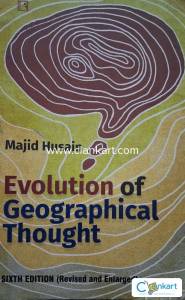
Evolution of Geographical Thought
Evolution of Geographical Thought covers a wide canvas of the story of geographical thoughts, ideas and knowledge right from the early Greek period to modern contemporary geography. Presenting an introduction to the philosophy, history and methodology of geography, the book maps the intellectual changes in the discipline over the years. To keep the students abreast with the recent trends in geography, and its methodological problems, the book has been updated and revised, making it a comprehensive textbook on geographical thought. The main objective of the sixth edition is to incorporate a number of relevant new topics and concepts to streamline the text which may go a long way in expanding the geographical base of the interested students about the philosophy and methodology of geography. This new edition is presented in a larger format with all improved maps and illustrations. A whole new chapter now introduces to the students a contemporary sub-discipline of Feminist Geography. A new comprehensive list of biographic notes on selected geographers is also included in this edition. It is hoped that the present edition will prove of immense help for the students and teachers of geography alike. It will also serve the need of the aspirants of various competitive examinations, especially the Indian Administrative Service, the NET and other state level civil services examinations.
Complete Oswaal ICSE Class 10 Question Bank Combo (3 Books)
Looking to score high in your ICSE Class 10 board exams? Get this complete, well-maintained 3-book combo of Oswaal Question Banks at a highly discounted price. These books are excellent for thorough practice, chapter-wise revision, and understanding exam patterns. Subjects included in this combo: 1.History & Civics2.Geography3.Computer ApplicationsCondition: Very good condition with clean pages and no heavy markings. Perfect for students looking to save money on premium study material instead of buying expensive new sets. Available for quick local pickup in Siliguri. Message me to grab the complete set!
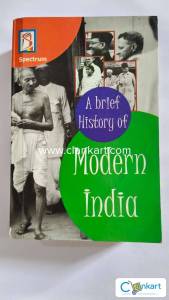
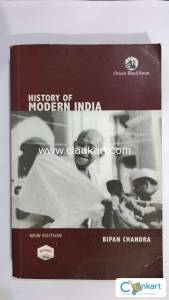
History of Modern India
The SAGE Series in Modern Indian History consists of well-researched volumes with a wider scope and is intended to bring together the growing volume of historical studies that share a broad common historiographic focus. The approach that the authors have tried to evolve looks sympathetically, though critically, at the Indian national liberation struggle and other popular movements such as those of labour, peasants, lower castes, tribal peoples and women. The series also looks at colonialism as a structure and a system, and analyzes changes in economy, society and culture in the colonial context as also in the context of independent India. It focuses on communalism and casteism as major features of modern Indian development. The volumes in the series will tend to reflect this approach as also its changing and developing features. At the broadest plane this approach is committed to the Enlightenment values of rationalism, humanism, democracy and secularism. This set includes: Volume 1: Independence and Partition: The Erosion of Colonial Power in India by Sucheta Mahajan Volume 2: A Narrative of Communal Politics: Uttar Pradesh, 1937–39 by Salil Misra Volume 3: Imperialism, Nationalism and the Making of the Indian Capitalist Class, 1920–1947 by Aditya Mukherjee Volume 4: From Movement to Government: The Congress in the United Provinces, 1937–42 by Visalakshi Menon Volume 5: Peasants in India’s Non-Violent Revolution: Practice and Theory by Mridula Mukherjee Volume 6: Communalism in Bengal: From Famine to Noakhali, 1943–47 by Rakesh Batabyal Volume 7: Political Mobilization and Identity in Western India, 1934–47 by Shri Krishan Volume 8: The Garrison State: Military, Government and Society in Colonial Punjab, 1849–1947 by Tan Tai Yong Volume 9: Colonializing Agriculture: The Myth of Punjab Exceptionalism by Mridula Mukherjee Volume 10: Region, Nation, “Heartland”: Uttar Pradesh in India’s Body-Politic by Gyanesh Kudaisya Volume 11: National Movement and Politics in Orissa, 1920–29 by Pritish Acharya Volume 12: Commun
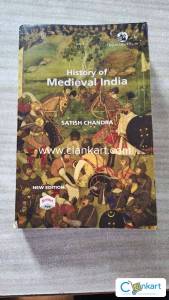
History of Medieval India
Satish Chandra's History of Medieval India is a comprehensive overview of the history of the Indian subcontinent during the thousand-year period between the eighth and the eighteenth century. History of Medieval India studies this interesting period in Indian history when the land underwent drastic changes and was deeply influenced by the invading armies, religious movements, and the vicissitudes of the changing political, economic and cultural scene. To tell the history of a land spanning the geographical dimensions and the political divisions of the Indian subcontinent is in itself a formidable task. Satish Chandra executes this difficult mission withthe eye of an enquirer and the pen of a scholar.
Arihant objective chemistry volume 2
From being elected as Congress president in 1929 till his death in 1964, Jawaharlal Nehru remained a towering figure in Indian politics, a man who left an indelible stamp on the history of South Asia. As a leading light of the nationalist struggle and as India's first and longest-serving prime minister, his ideas shaped the political contours of the country and left an imprint so deep that his legacy continues to be debated furiously today. In life, as in afterlife, Nehru was many things to many people. Going beyond the imposed labels of contemporary discourse, this book illuminates four encounters that Nehru had with contemporaries from across the political spectrum - Muhammad Iqbal, Muhammad Ali Jinnah, Sardar Patel and Syama Prasad Mookerjee - that are critical to understanding his ideas, and his long afterlife and impress on the present. Nehru may no longer be alive to answer his critics today, but there was a time when he pitted himself vigorously against his opponents in the marketplace of ideas, debating the most profound questions in South Asian history and decisively influencing political events. It is this intellectually combative Nehru whom we meet in this book - voicing ideological disagreements, forging political alliances, moulding political opinion, offering visions of the future and staking out the political field - a key figure in the debates that defined India
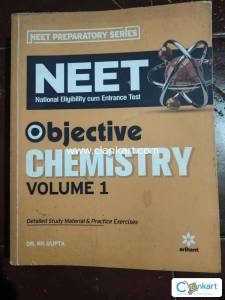
Objective chemistry volume 1 for NEET
From being elected as Congress president in 1929 till his death in 1964, Jawaharlal Nehru remained a towering figure in Indian politics, a man who left an indelible stamp on the history of South Asia. As a leading light of the nationalist struggle and as India's first and longest-serving prime minister, his ideas shaped the political contours of the country and left an imprint so deep that his legacy continues to be debated furiously today. In life, as in afterlife, Nehru was many things to many people. Going beyond the imposed labels of contemporary discourse, this book illuminates four encounters that Nehru had with contemporaries from across the political spectrum - Muhammad Iqbal, Muhammad Ali Jinnah, Sardar Patel and Syama Prasad Mookerjee - that are critical to understanding his ideas, and his long afterlife and impress on the present. Nehru may no longer be alive to answer his critics today, but there was a time when he pitted himself vigorously against his opponents in the marketplace of ideas, debating the most profound questions in South Asian history and decisively influencing political events. It is this intellectually combative Nehru whom we meet in this book - voicing ideological disagreements, forging political alliances, moulding political opinion, offering visions of the future and staking out the political field - a key figure in the debates that defined India
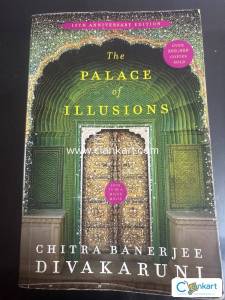
The Palace of Illusion
Taking us back to a time that is half history, half myth and wholly magical, bestselling author Chitra Banerjee Divakaruni gives voice to Panchaali, the fire-born heroine of the Mahabharata, as she weaves a vibrant retelling of an ancient epic saga.Married to five royal husbands who have been cheated out of their father's kingdom, Panchaali aids their quest to reclaim their birthright, remaining at their side through years of exile and a terrible civil war. But she cannot deny her complicated friendship with the enigmatic Krishna—or her secret attraction to the mysterious man who is her husbands' most dangerous enemy—as she is caught up in the ever-manipulating hands of fate.