Buy used Engineering Books online in India
Buy Second Hand Books, Used Books Online In India
Distributed operating system (pearson)
As distributed computer systems become more pervasive, so does the need for understanding how their operating systems are designed and implemented. Andrew S. Tanenbaums Distributed Operating Systems fulfills this need. Representing a revised and greatly expanded Part II of the best-selling Modern Operating Systems, it covers the material from the original book, including communication, synchronization, processes, and file systems, and adds new material on distributed shared memory, real-time distributed systems, fault-tolerant distributed systems, and ATM networks. It also contains four detailed case studies: Amoeba, Mach, Chorus, and OSF/DCE. Tanenbaums trademark writing provides readers with a thorough, concise treatment of distributed systems.
Discrete mathematics
Designed to meet the requirements of UG students, the book deals with the theoretical as well as the practical aspects of the subject. Equal emphasis has been given to both 2D as well as 3D geometry. The book follows a systematic approach with adequate examples for better understanding of the concepts.
Electrical Engineering
The General Response to the first edition of the book was very encouraging.The authors feel that their work has been amply rewarded and wish to express their deep sense of gratitude,in common to the large number of readers who have usedit,and in particular to those them who have sent helpful suggestions from time to time for the improvement of the book.To Ehance the utility of the book,it has been decided to bring out the multicolor edition of book.There are three salient features multicolor edition.
Probability and statistics
Designed as a text for the undergraduate students of all branches of engineering, this compendium gives an opportunity to learn and apply the popular drafting software AutoCAD in designing projects. The textbook is organized in three comprehensive parts. Part I (AutoCAD) deals with the basic commands of AutoCAD, a popular drafting software used by engineers and architects. Part II (Projection Techniques) contains various projection techniques used in engineering for technical drawings. These techniques have been explained with a number of line diagrams to make them simple to the students. Part III (Descriptive Geometry), mainly deals with 3-D objects that require imagination. The accompanying CD contains the animations using creative multimedia and PowerPoint presentations for all chapters. In a nutshell, this textbook will help students maintain their cutting edge in the professional job market. KEY FEATURES : Explains fundamentals of imagination skill in generic and basic forms to crystallize concepts. Includes chapters on aspects of technical drawing and AutoCAD as a tool. Treats problems in the third angle as well as first angle methods of projection in line with the revised code of Indian Standard Code of Practice for General Drawing.
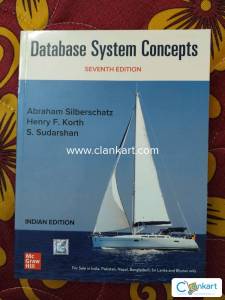
Database system concepts
This acclaimed revision of a classic database systems text offers a complete background in the basics of database design, languages, and system implementation. It provides the latest information combined with real-world examples to help readers master concepts. All concepts are presented in a technically complete yet easy-to-understand style with notations kept to a minimum. A running example of a bank enterprise illustrates concepts at work. To further optimize comprehension, figures and examples, rather than proofs, portray concepts and anticipate results.
Fundamentals of data structure in c
The classic data structure textbook provides a comprehensive and technically rigorous introduction to data structures such as arrays, stacks, queues, linked lists, trees and graphs, and techniques such as sorting hashing that form the basis of all software. In addition, it presents advanced of specialized data structures such as priority queues, efficient binary search trees, multiway search trees and digital search structures. The book now discusses topics such as weight biased leftist trees, pairing heaps, symmetric min-max heaps, interval heaps, top-down splay trees, B+ trees and suffix trees. Red-black trees have been made more accessible. The section on multiway tries has been significantly expanded and several trie variations and their application to Interner packet forwarding have been disused.