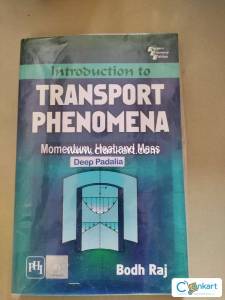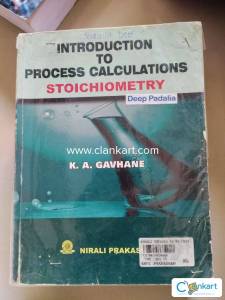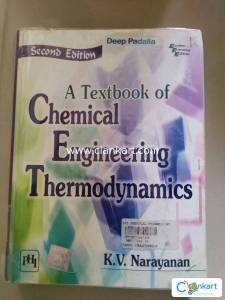
Buy used Engineering Books online in India
Buy Second Hand Books, Used Books Online In India
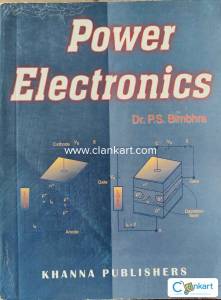
Digital signal processing
Various measures of information are discussed in first chapter. Information rate, entropy and mark off models are presented. Second and third chapter deals with source coding. Shannon's encoding algorithm, discrete communication channels, mutual information, Shannon's first theorem are also presented. Huffman coding and Shannon-Fano coding is also discussed. Continuous channels are discussed in fourth chapter. Channel coding theorem and channel capacity theorems are also presented. Block codes are discussed in chapter fifth, sixth and seventh. Linear block codes, Hamming codes, syndrome decoding is presented in detail. Structure and properties of cyclic codes, encoding and syndrome decoding for cyclic codes is also discussed. Additional cyclic codes such as RS codes, Golay codes, burst error correction is also discussed. Last chapter presents convolutional codes. Time domain, transform domain approach, code tree, code trellis, state diagram, Viterbi decoding is discussed in detail.
Head First Java 2nd edition by Kathy Sierra and Bert Bates
Learning a complex new language is no easy task especially when it's an object-oriented computer programming language like Java. You might think the problem is your brain. It seems to have a mind of its own, a mind that doesn't always want to take in the dry, technical stuff you're forced to study. The fact is your brain craves novelty. It's constantly searching, scanning, waiting for something unusual to happen. After all, that's the way it was built to help you stay alive. It takes all the routine, ordinary, dull stuff and filters it to the background so it won't interfere with your brain's real work--recording things that matter. How does your brain know what matters? It's like the creators of the Head First approach say, suppose you're out for a hike and a tiger jumps in front of you, what happens in your brain? Neurons fire. Emotions crank up. Chemicals surge. That's how your brain knows. And that's how your brain will learn Java. "Head First Java combines puzzles, strong visuals, mysteries, and soul-searching interviews with famous Java objects to engage you in many different ways. It's fast, it's fun, and its effective. And, despite its playful appearance, Head First Java is serious stuff: a complete introduction to object-oriented programming and Java. You'll learn everything from the fundamentals to advanced topics, including threads, network sockets, and distributed programming with RMI. And the new. second edition focuses on Java 5.0, the latest version of the Java language and development platform. Because Java 5.0 is a major update to the platform, with deep, code-level changes, even more careful study and implementation is required. So learning the Head Firstway is more important than ever. If you've read a Head First book, you know what to expect--a visually rich format designed for the way your brain works. If you haven't, you're in for a treat. You'll see why people say it's unlike any other Java book you've ever read. By exploiting how your brain works, "Head First Java compresses the time