Buy used Classics online in India
Buy Second Hand Books, Used Books Online In India

Henry V part 2
This edition offers a fully modernized text of one of Shakespeare's most fascinating plays. Henry IV, Part 2 is the only play in the canon whose structure almost exactly mirrors that of its predecessor, and thereby affords unique perspectives on Shakespeare's art and craft. Far from being the impoverished country cousin of an illustrious work, Part 2 introduces unforgettable new characters like Pistol and Shallow, and memorable minor players such as Doll Tearsheet and the reluctant Goucestershire recruits. Above all, it gives us more Falstaff. Although he is now politically distanced from Hal, he looms larger than ever as a mischievous figure who never ceases to fascinate with his unique blend of native wit, inventiveness, and corruption. Through a radical reconsideration of the play's text(s) and date, it is argued here for the first time that the character of Falstaff was called Oldcastle in Part 2 as well as in as in Part 1 , and that it was the vetting of Part 2 for the 1596-7Christmas performances at Court which led to the change of name in both plays. This edition moreover takes the view that the Folio-only passages in the play reflect the text of the original prompt-book.
The merchant of venice
In this lively comedy of love and money in sixteenth-century Venice, Bassanio wants to impress the wealthy heiress Portia but lacks the necessary funds. He turns to his merchant friend, Antonio, who is forced to borrow from Shylock, a Jewish moneylender. When Antonio's business falters, repayment becomes impossible--and by the terms of the loan agreement, Shylock is able to demand a pound of Antonio's flesh. Portia cleverly intervenes, and all ends well (except of course for Shylock).
The Hamlet
This above all: to thine own self be true;And it must follow, as the night the day,Thou canst not then be false to any man.The searing tragedy of young student Hamlet, tormented by his father's death and confronting each of us with the mirror of our own mortality in an imperfect world.
The Othello
In Othello, Shakespeare creates a powerful drama of a marriage that begins with fascination (between the exotic Moor Othello and the Venetian lady Desdemona), with elopement, and with intense mutual devotion and that ends precipitately with jealous rage and violent deaths. He sets this story in the romantic world of the Mediterranean, moving the action from Venice to the island of Cyprus and giving it an even more exotic coloring with stories of Othello's African past. Shakespeare builds so many differences into his hero and heroine—differences of race, of age, of cultural background—that one should not, perhaps, be surprised that the marriage ends disastrously. But most people who see or read the play feel that the love that the play presents between Othello and Desdemona is so strong that it would have overcome all these differences were it not for the words and actions of Othello's standard-bearer, Iago, who hates Othello and sets out to destroy him by destroying his love for Desdemona. As Othello succumbs to Iago's insinuations that Desdemona is unfaithful, fascination—which dominates the early acts of the play—turns to horror, especially for the audience. We are confronted by spectacles of a generous and trusting Othello in the grip of Iago's schemes; of an innocent Desdemona, who has given herself up entirely to her love for Othello only to be subjected to his horrifying verbal and physical assaults, the outcome of Othello's mistaken convictions about her faithlessness.
ROMEO AND JULIET
In Romeo and Juliet, Shakespeare creates a world of violence and generational conflict in which two young people fall in love and die because of that love. The story is rather extraordinary in that the normal problems faced by young lovers are here so very large. It is not simply that the families of Romeo and Juliet disapprove of the lover's affection for each other; rather, the Montagues and the Capulets are on opposite sides in a blood feud and are trying to kill each other on the streets of Verona. Every time a member of one of the two families dies in the fight, his relatives demand the blood of his killer. Because of the feud, if Romeo is discovered with Juliet by her family, he will be killed. Once Romeo is banished, the only way that Juliet can avoid being married to someone else is to take a potion that apparently kills her, so that she is burried with the bodies of her slain relatives. In this violent, death-filled world, the movement of the story from love at first sight to the union of the lovers in death seems almost inevitable.What is so striking about this play is that despite its extraordinary setting (one perhaps reflecting Elizabethan attitudes about hot-blooded Italians), it has become the quintessential story of young love. Because most young lovers feel that they have to overcome giant obstacles in order to be together, because they feel that they would rather die than be kept apart, and especially because the language Shakespeare gives his young lovers is so exquisite, allowing them to say to each other just what we would all say to a lover if we only knew how, it is easy to respond to this play as if it were about all young lovers rather than about a particular couple in a very unusual world. (When the play was rewritten in the eighteen century as The History and Fall of Caius Marius, the violent setting became that of a particularly discordant period in classical Rome; when Leonard Berstein rewrote the play as West Side Story, he chose the violent world of New York street gangs.)
The tempest
Edición bilingüe inglés/español.La tempestad está considerada como la invención más sincera y original de Shakespeare. Es también la summa de su cultura acumulada a través de los años, y sobre todo de su experiencia teatral. Es ante todo un experimento en el ámbito del espectáculo: explota, deliberadamente, como ninguna otra obra precedente, los recursos y trucos de escena y hace del elemento musical y de todos los efectos sonoros una estructura que recorre la obra.La figura de Próspero se contempla esencialmente en La tempestad en su contexto natural que no es sino teatral. Su magia, su arte, con una reflexión sobre el arte del dramaturgo. Metateatro y psicodrama jugando sobre una serie de sugerencias que inducen a los personajes a autorrevelarse y a la vez a reconocerse como parte de una inteligencia más amplia que los incluye, como parte del diseño con el que el mago-dramaturgo se explica a sí mismo.
Julius Caesar
Shakespeare may have written Julius Caesar as the first of his plays to be performed at the Globe, in 1599. For it, he turned to a key event in Roman history: Caesar’s death at the hands of friends and fellow politicians. Renaissance writers disagreed over the assassination, seeing Brutus, a leading conspirator, as either hero or villain. Shakespeare’s play keeps this debate alive.
Jane Eyre Charlotte bronte
Orphaned as a child, Jane has felt an outcast her whole young life. Her courage is tested once again when she arrives at Thornfield Hall, where she has been hired by the brooding, proud Edward Rochester to care for his ward Adèle. Jane finds herself drawn to his troubled yet kind spirit. She falls in love. Hard. But there is a terrifying secret inside the gloomy, forbidding Thornfield Hall. Is Rochester hiding from Jane? Will Jane be left heartbroken and exiled once again?
Black Beauty - By Anna Sewell (Wordsworth classics)
As a young horse, Black Beauty is well-loved and happy. But when his owner is forced to sell him, his life changes drastically. He has many new owners—some of them cruel and some of them kind. All he needs is someone to love him again.... Whether pulling an elegant carriage or a ramshackle cab, Black Beauty tries to live as best he can. This is his amazing story, told as only he could tell it.
The best books to read
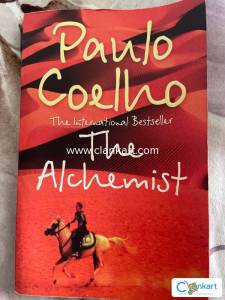
Like the one-time bestseller Jonathan Livingston Seagull, The Alchemist presents a simple fable, based on simple truths and places it in a highly unique situation. And though we may sniff a bestselling formula, it is certainly not a new one: even the ancient tribal storytellers knew that this is the most successful method of entertaining an audience while slipping in a lesson or two. Brazilian storyteller Paulo Coehlo introduces Santiago, an Andalusian shepherd boy who one night dreams of a distant treasure in the Egyptian pyramids. And so he's off: leaving Spain to literally follow his dream. Along the way he meets many spiritual messengers, who come in unassuming forms such as a camel driver and a well-read Englishman. In one of the Englishman's books, Santiago first learns about the alchemists--men who believed that if a metal were heated for many years, it would free itself of all its individual properties, and what was left would be the "Soul of the World." Of course he does eventually meet an alchemist, and the ensuing student-teacher relationship clarifies much of the boy's misguided agenda, while also emboldening him to stay true to his dreams. "My heart is afraid that it will have to suffer," the boy confides to the alchemist one night as they look up at a moonless night. "Tell your heart that the fear of suffering is worse than the suffering itself," the alchemist replies. "And that no heart has ever suffered when it goes in search of its dreams, because every second of the search is a second's encounter with God and with eternity." --Gail Hudson
Steve sons best selling work
Is it a book? Is it a comic? No, it's a classic!Sinister rumours fill the streets. The police are looking for an evil-looking man called Mr Edward Hyde.He was last seen entering the house of the respected doctor, Henry Jekyll. What is the connection between Dr Jekyll and Mr Hyde?A new version of this chilling tale, given fresh animation by Chris Mould's vibrant strip-cartoon style.
BUSINESS AND MONEY
Think and Grow Rich is a motivational personal development and self-help book written by Napoleon Hill and inspired by a suggestion from Scottish-American businessman Andrew Carnegie. While the title implies that this book deals only with how to get rich, the author explains that the philosophy taught in the book can be used to help people succeed in all lines of work and to do or be almost anything they want
A Little Princess
Frances Hodgson Burnett's enduring tale, brought to life in a new book-plus-audio edition. In one of the best-loved classic tales for children, Sara Crewe is sent to England to attend Miss Minchin's boarding school for girls. Her time there starts wonderfully as she is treated just like a princess. Unfortunately it is because Miss Minchin is hoping to gain a piece of Sara's family fortune. But when Sara's wealthy father dies and leaves her penniless, Miss Minchin makes Sara do the worst chores in the house. Still, as badly as Miss Minchin treats Sara, with a little help from her friends and her imagination, Sara is determined to find happiness no matter what. A Little Princess is read by Royal Shakespeare actor Lucy Whybrow, with music and effects to set the mood. With the included audio you can HEAR the entire book, word for word, READ ALONG with the audio, or READ the story on your own. Each HEAR IT READ IT classic presents the world's greatest stories in an easy-to-read abridged format. The included audio contains a dramatic reading-with music and sound effects-that match the text, word for word, so children of all ages and reading levels can read along.
The little prince
Moral allegory and spiritual autobiography, The Little Prince is the most translated book in the French language. With a timeless charm it tells the story of a little boy who leaves the safety of his own tiny planet to travel the universe, learning the vagaries of adult behaviour through a series of extraordinary encounters. His personal odyssey culminates in a voyage to Earth and further adventures.
Royalty Of Palace
This treasured historical satire, played out in two very different socioeconomic worlds of 16th-century England, centers around the lives of two boys born in London on the same day: Edward, Prince of Wales and Tom Canty, a street beggar. During a chance encounter, the two realize they are identical and, as a lark, decide to exchange clothes and roles--a situation that briefly, but drastically, alters the lives of both youngsters. The Prince, dressed in rags, wanders about the city's boisterous neighborhoods among the lower classes and endures a series of hardships; meanwhile, poor Tom, now living with the royals, is constantly filled with the dread of being discovered for who and what he really is.
Tom Sayers
Bring a timeless treasure from Mark Twain to another generation. Miffed about being made to whitewash the fence on a Sunday morning, Tom Sawyer tricks his friend to do the work for him, while he sits on the pavement, happily munching an apple. So begins the series of Tom's adventures and misadventures. Orphaned and staying with his Aunt Polly, the mischievous Tom manages to create quite a stir in the small village. He runs away to an uninhabited island, falls in love, digs up treasure, and saves an innocent man. The book will take older children through a journey of evolving friendships, budding romance, and thrilling adventures. European English spelling/language conventions
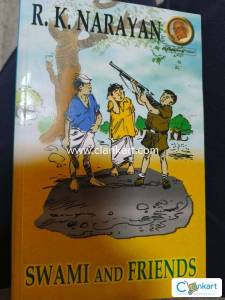
Swami And Friends
An unusual and witty travel book about the United States of America. At the age of fifty, when most people have settled for the safety of routine, R. K. Narayan left India for the first time to travel through America. In this account of his journey, the writer’s pen unerringly captures the clamour and energy of New York city, the friendliness of the West Coast, the wealth and insularity of the Mid-West, the magnificence of the Grand Canyon...Threading their way through the narrative are a host of delightful characters—from celebrities like Greta Garbo, Aldous Huxley, Martha Graham, Cartier Bresson, Milton Singer, Edward G. Robinson and Ravi Shankar to the anonymous business tycoon on the train who dismissed the writer when he discovered Narayan had nothing to do with India’s steel industry. As a bonus, there are wry snapshots of those small but essential aspects of American life—muggers, fast food restaurants, instant gurus, subway commuters, TV advertisements, and American football. An entrancing and compelling travelogue about an endlessly fascinating land.
Hamlet william shakespear
This above all: to thine own self be true;And it must follow, as the night the day,Thou canst not then be false to any man.The searing tragedy of young student Hamlet, tormented by his father's death and confronting each of us with the mirror of our own mortality in an imperfect world.
The Wealth Of Nations by Adam Smith
Adam Smith's masterpiece, first published in 1776, is the foundation of modern economic thought and remains the single most important account of the rise of, and the principles behind, modern capitalism. Written in clear and incisive prose, The Wealth of Nations articulates the concepts indispensable to an understanding of contemporary society; and Robert Reich's Introduction both clarifies Smith's analyses and illuminates his overall relevance to the world in which we live. As Reich writes, "Smith's mind ranged over issues as fresh and topical today as they were in the late eighteenth century--jobs, wages, politics, government, trade, education, business, and ethics."Introduction by Robert Reich - Commentary by R. H. Campbell and A. S. Skinner - Includes a Modern Library Reading Group Guide
The Secret Garden
"One of the most delightful and enduring classics of children's literature, The Secret Garden by Victorian author Frances Hodgson Burnett has remained a firm favorite with children the world over ever since it made its first appearance. Initially published as a serial story in 1910 in The American Magazine, it was brought out in novel form in 1911. The plot centers round Mary Lennox, a young English girl who returns to England from India, having suffered the immense trauma by losing both her parents in a cholera epidemic. However, her memories of her parents are not pleasant, as they were a selfish, neglectful and pleasure-seeking couple. Mary is given to the care of her uncle Archibald Craven, whom she has never met. She travels to his home, Misselthwaite Manor located in the gloomy Yorkshire, a vast change from the sunny and warm climate she was used to. When she arrives, she is a rude, stubborn and given to stormy temper tantrums. However, her nature undergoes a gradual transformation when she learns of the tragedies that have befallen her strict and disciplinarian uncle whom she earlier feared and despised. Once when he's away from home, Mary discovers a charming walled garden which is always kept locked. The mystery deepens when she hears sounds of sobbing from somewhere within her uncle's vast mansion. The kindly servants ignore her queries or pretend they haven't heard, spiking Mary's curiosity. The Secret Garden appeals to both young and old alike. It has wonderful elements of mystery, spirituality, charming characters and an authentic rendering of childhood emotions and experiences. Commonsense, truth and kindness, compassion and a belief in the essential goodness of human beings lie at the heart of this unforgettable story. It is the best known of Frances Hodgson Burnett's works, though most of us have definitely heard of, if not read, her other novel Little Lord Fauntleroy. The book has been adapted extensively on stage, film and television and translated into all the world's major languages. In 199