Clankart Logo

Buy used Classics online in India

Buy Second Hand Books, Used Books Online In India
Political History

Political History

₹350

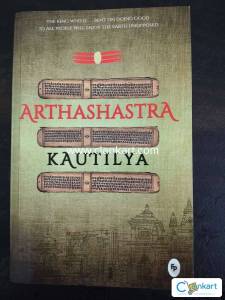
The Arthashastra is an ancient Indian treatise on statecraft, economic policy and military strategy, written in Sanskrit. It identifies its author by the names 'Kauṭilya' and 'Vishnugupta', both names that are traditionally identified with Chanakya (c. 350–283 BC), who was a scholar at Takshashila and the teacher and guardian of Emperor Chandragupta Maurya, founder of the Mauryan Empire. The text was influential until the 12th century, when it disappeared. It was rediscovered in 1904 by R. Shamasastry, who published it in 1909. The first English translation was published in 1915.Roger Boesche describes the Arthaśāstra as "a book of political realism, a book analysing how the political world does work and not very often stating how it ought to work, a book that frequently discloses to a king what calculating and sometimes brutal measures he must carry out to preserve the state and the common good."Centrally, Arthaśāstra argues how in an autocracy an efficient and solid economy can be managed. It discusses the ethics of economics and the duties and obligations of a king. The scope of Arthaśāstra is, however, far wider than statecraft, and it offers an outline of the entire legal and bureaucratic framework for administering a kingdom, with a wealth of descriptive cultural detail on topics such as mineralogy, mining and metals, agriculture, animal husbandry, medicine and the use of wildlife. The Arthaśāstra also focuses on issues of welfare (for instance, redistribution of wealth during a famine) and the collective ethics that hold a society together.

1 month ago
Advertisement
Want to see your books here? Have Used Books?
Make some extra cash by selling your old books for actual money in your UPI/Bank account. Go on, it's quick and easy.
Classic Novels

Classic Novels

₹200

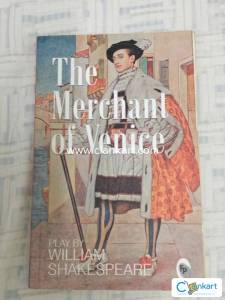
"It is a world of disappointment: often to the hopes we most cherish, and hopes that do our nature the greatest honour." Born into a life of impoverishment, orphaned at birth, Oliver Twist begins his life in a workhouse. Apprenticed to Mr. Sowerberry, he flees to London on being beaten. What happens as he meets Jack Dawkins, goes to work with him without knowing the nature of work, and is taken to the police when mistaken for a thief? Follow Oliver Twist as he strives to overcome the miserable conditions of the mid-19th century lower class, and searches for an identity. Centred round the rise of capitalism and industrial revolution, Dickens' Oliver Twist is a notable example of a social novel. Adapted into numerous art forms, it continues to remain a classic sensation. About the Author Charles Dickens was one of the most popular English writers of all time. He created some of the world's most well-known fictional characters and is generally regarded as the greatest novelist of the Victorian period. Born in Portsmouth, England, on 7 February, 1812, his early childhood experiences were much like those depicted in his novel-David Copperfield. He published his first novel, Oliver Twist, in 1837. It was followed by Nicholas Nickleby (1838) and The Old Curiosity Shop (1841). A Christmas Carol (1843) is the most popular perhaps of all his works. In 1859, he published A Tale of Two Cities, his best known work of historical fiction. Dickens suffered a stroke and died on 9 June, 1870, aged 58.

1 month ago
Advertisement
Advertisement
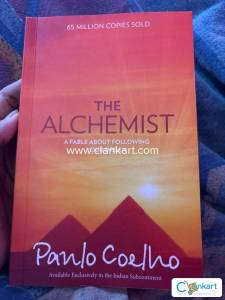
The Alchemist

The Alchemist

₹300 ₹350
14% off

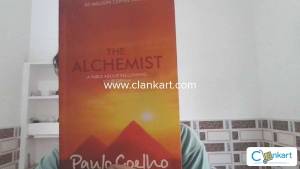
Like the one-time bestseller Jonathan Livingston Seagull, The Alchemist presents a simple fable, based on simple truths and places it in a highly unique situation. And though we may sniff a bestselling formula, it is certainly not a new one: even the ancient tribal storytellers knew that this is the most successful method of entertaining an audience while slipping in a lesson or two. Brazilian storyteller Paulo Coehlo introduces Santiago, an Andalusian shepherd boy who one night dreams of a distant treasure in the Egyptian pyramids. And so he's off: leaving Spain to literally follow his dream. Along the way he meets many spiritual messengers, who come in unassuming forms such as a camel driver and a well-read Englishman. In one of the Englishman's books, Santiago first learns about the alchemists--men who believed that if a metal were heated for many years, it would free itself of all its individual properties, and what was left would be the "Soul of the World." Of course he does eventually meet an alchemist, and the ensuing student-teacher relationship clarifies much of the boy's misguided agenda, while also emboldening him to stay true to his dreams. "My heart is afraid that it will have to suffer," the boy confides to the alchemist one night as they look up at a moonless night. "Tell your heart that the fear of suffering is worse than the suffering itself," the alchemist replies. "And that no heart has ever suffered when it goes in search of its dreams, because every second of the search is a second's encounter with God and with eternity." --Gail Hudson

2 months ago
Advertisement
Advertisement