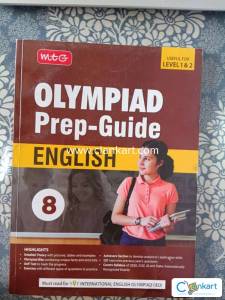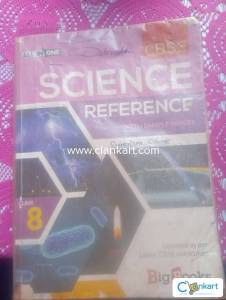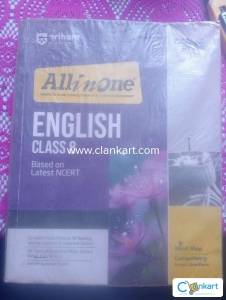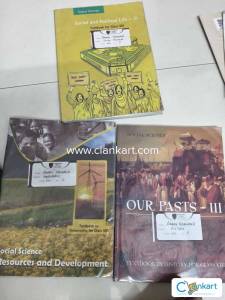
Buy used Class 8 Books online in India
Buy Second Hand Books, Used Books Online In India
NCERT GEOGRAPHY FOR CLASS 12
Part ‘A’ : Fundamentals of Human Geography Unit 1 : Human Geography: Nature and Scope 1. Human Geography : Nature and Scope, Unit 2 : People 2.Population of the World : Distribution, Density and Growth, 3. Population Composition, 4. Human Development, Unit 3 : Human Activities 5.Primary Activities, 6. Secondary Activities, 7 . Tertiary and Quarternary Activities, Unit 4 : Transport, Communication and Trade 8. Transport and Communication, 9. International Trade, Unit 5 : Human Settlements 10.Human Settlements, Part ‘B’ : India—People and Economy Unit 6 : People 1. Population : Distribution, Density, Growth and Composition, 2. Migration—Types, Causes and Consequences, 3. Human Development, Unit 7 : Human Settlements 4. Human Settlements, Unit 8 : Resources and Development 5. Land Resources and Agriculture, 6. Water Resources, 7. Mineral and Energy Resources, 8. Manufacturing Industries, 9. Planning and Sustainable Development in Indian Context, Unit 9 : Transport, Communication and International Trade 10. Transport and Communication, 11. International Trade, Unit 10 : Geographical Perspective on Selected Issues and Problems 12.Geographical Perspective on Selected Issues and Problems, Part ‘C’ : Practical Work Unit 1 : Processing of Data and Thematic Mapping 1. Data : Source and Collection, 2. Processing of Data, 3. Representation of Data, 4. Use of Computers in Data Processing and Mapping, Unit 2 : Field Study or Spatial Information Technology 1. Field Study, 2. Spatial Information Technology, Board Examination Papers.
a textbook of practival phayiolgy CL Ghai
The book covers the syllabi and course of practical physiology laid down by the Medical Council of India. It has three sections- contains information on electronic recorders ans stimulators. Explain principles, use of apparatus, a step by step procedures with instruction on applicatiobn of devices of experiments. The book describes to students to work with their hands in devising and setting up an experiment making careful observatins, critically analyzing the results and the drawing appropriate conclusions. It aims to strenghen their ability to solve problems which is the ultimate skill of a sucessful physicians. It provides clear cut solutions to remove confusion in undertaking any experiment. 1. The Compound Microscope, 2. The Study of common objects, 3. Collection of Blood Samples, 4. Hemocytometry (Cell Counting) The Diluting Pipettes, 5. Hemocytometry (Cell Counting) The Counting Chamber, 6. Examination of fresh blood (A) Drop Preparation, (B) Preparing a Peripheral Blood Film, 7. Estimation of Hemoglobin, 8. The Red Cell Count, 9. Determination of Hematocrit (Hct), 10. Normal Blood Standard, 11. The Total Leucocyte Count, White Cell Count, 12. Staining a Peripheral Blood Film The Differential Leucocyte Count, 13. The Cooke-Arneth Count, 14. Absolute Eosinophil Count, 15. Study of Morphology of Red Blood Cells, 16. The Reticulocyte Count, 17. The Erythrocyte Sedimentation Rate, 18. Blood Grouping, 19. Tests for Hemostasis, 20. Osmotic Fragility of Red Blood Cells, 21. Specific Gravity of Blood and Plasma, 22. Determination of Viscosity of Blood, SECTION Human Experiments; SECTION Clinical Examination; SECTION Experimental Physiology.
Arihant Trigonometry For Jee Main And Advanced (Amit M. Agarwal)
1. Skill in Mathematics’ series is prepared for JEE Main and Advanced papers 2. It is a highly recommended textbook to develop a strong grounding in Differential Calculus 3. The book covers the entire syllabus into 8 chapters 4. Each chapter includes a wide range of questions that are asked in the examinations Good foundational grip is required in the Differential Calculus, while you are preparing for JEE Mains & Advanced or any other engineering. Bringing up the series “Skills in Mathematics for JEE Main & Advanced for Differential Calculus” that is carefully revised with the sessionwise theory and exercise; to help candidates to learn & tackle the mathematical problems. The book has 8 Chapters covering the whole syllabus for the JEE Mains and Advanced as prescribed. Each chapter is divided into sessions giving complete clarity to concepts. Apart from sessionwise theory, JEE Type examples and Chapter Exercise contain huge amount of questions that are provided in every chapter under Practice Part. Prepared under great expertise, it is a highly recommended textbook to develop a strong grounding in Algebra to perform best in JEE and various engineering entrances. TOC: Essential Mathematical Tools, Differentiation, Functions, Graphical Transformations, Limits, Continuity and Differentiability, dy/dx As a Rate Measurer & Tangents, Normals, Monotonicity, Maxima and Minima.
Arihant Integral Calculus JEE Main and Advanced (Amit M Agarwal)
1. Skill in Mathematics’ series is prepared for JEE Main and Advanced papers 2. It is a highly recommended textbook to develop a strong grounding in Differential Calculus 3. The book covers the entire syllabus into 8 chapters 4. Each chapter includes a wide range of questions that are asked in the examinations Good foundational grip is required in the Differential Calculus, while you are preparing for JEE Mains & Advanced or any other engineering. Bringing up the series “Skills in Mathematics for JEE Main & Advanced for Differential Calculus” that is carefully revised with the sessionwise theory and exercise; to help candidates to learn & tackle the mathematical problems. The book has 8 Chapters covering the whole syllabus for the JEE Mains and Advanced as prescribed. Each chapter is divided into sessions giving complete clarity to concepts. Apart from sessionwise theory, JEE Type examples and Chapter Exercise contain huge amount of questions that are provided in every chapter under Practice Part. Prepared under great expertise, it is a highly recommended textbook to develop a strong grounding in Algebra to perform best in JEE and various engineering entrances. TOC: Essential Mathematical Tools, Differentiation, Functions, Graphical Transformations, Limits, Continuity and Differentiability, dy/dx As a Rate Measurer & Tangents, Normals, Monotonicity, Maxima and Minima.
Arihant Vectors and 3D Geometry JEE Main & Advanced (Amit Agarwal)
1. Skill in Mathematics’ series is prepared for JEE Main and Advanced papers 2. It is a highly recommended textbook to develop a strong grounding in Differential Calculus 3. The book covers the entire syllabus into 8 chapters 4. Each chapter includes a wide range of questions that are asked in the examinations Good foundational grip is required in the Differential Calculus, while you are preparing for JEE Mains & Advanced or any other engineering. Bringing up the series “Skills in Mathematics for JEE Main & Advanced for Differential Calculus” that is carefully revised with the sessionwise theory and exercise; to help candidates to learn & tackle the mathematical problems. The book has 8 Chapters covering the whole syllabus for the JEE Mains and Advanced as prescribed. Each chapter is divided into sessions giving complete clarity to concepts. Apart from sessionwise theory, JEE Type examples and Chapter Exercise contain huge amount of questions that are provided in every chapter under Practice Part. Prepared under great expertise, it is a highly recommended textbook to develop a strong grounding in Algebra to perform best in JEE and various engineering entrances. TOC: Essential Mathematical Tools, Differentiation, Functions, Graphical Transformations, Limits, Continuity and Differentiability, dy/dx As a Rate Measurer & Tangents, Normals, Monotonicity, Maxima and Minima.
NEET OBJECTIVE PHYSCIS (VOL. 1)
1. Best-selling study guide and well-structured study resource for NEET, AIIMS, JIPMER. 2. NEET Objective Physics Vol 1. – for class 11 3. The book follows the NCERT pattern for MBBS & BDS entrance preparation along with their school studies. 4. Diagrams, tables, figures etc support theory 5. Practice exercises after every chapter 6. Coverage of last 8 Years Questions of NEET, CBSEE AIPMT and Other Medical Entrances. The “NEET Objective Physics Volume – 01” is a complete comprehensive book designed for the medical students preparing for NEET. As the title suggests the volume -1 covers the complete NEET syllabus along with NCERT Textbook of class 11th into 17 Chapters for the simultaneous preparation of both school & exam. Every chapter is well supported by theories, diagrams, tables, figures. Important points and Notes are given in the topics to enrich students. In order to help, Check Point Exercises are given in between the text of all chapters to make students linked with the topic. Solved Examples are given with the different concepts of chapters to make students learn the problem solving skills. Exercises provided in the chapters are divided into 3 parts. Part – A: Taking it Together deals with objective questions arranged according to level of difficulty for the systematic practice. Part – B: Medical Entrance Special Format Questions – covers all special types of questions, generally asked in NEET & other Medical Entrances, Part – C: Medical Entrances’ Gallery – asked questions in Last 10 years’ (2020-2011) in NEET and other medical entrances. TOC Basic Mathematics, Units, Dimensions and Error Analysis, Vectors, Motion in One Dimension, Motion in a Plane and Projectile Motion, Laws of Motion, Work, Power and Energy, Circulation Motion, Rotation, Gravitation, Simple Harmonic Motion, Elasticity, Fluid Mechanics, Thermometry, Thermal Expansion and Kinetic Theory of Gases, Laws of Thermodynamics, Calorimetry and Heat Transfer, Wave Motion.
arihant (all in one) science class 10
BOOK STRUCTURE 1. Complete syllabus coverage in 13 chapters 2. Experiments 3. Periodic Tests 4. Statewise NTSE Questions 5. Junior Science Olympiad Chapterwise Questions 6. CBSE Examination Paper 2023 7. Latest CBSE Sample Paper 8. 3 Sample Question Papers BOOK FEATURES 1. Formulated as per the Rationalised NCERT & Latest CBSE Syllabus 2023-24 2. Complete theory in each chapter 3. Check Points for a smooth part-by-part understanding of each chapter 4. NCERT Folder includes solutions of all the NCERT Solutions 5. Chapter Summary to quickly revise each chapter 6. Exam Practice Section contains Exam Pattern Questions 7. Selected NCERT Exemplar Problems for School/Board Exam Practice 8. In-detailed solved Board Exam Questions in each chapter 9. Unsolved Exercises having Exam Pattern Questions for Self-Assessment 10. Solved Examples in between theories to easily explain the application of concepts 11. Statewise NTSE Questions and Junior Science Olympiad Questions in chapterwise format 12. Sample Question Papers prepared exactly on the latest syllabus &pattern of examination WHY THIS BOOK? 1. Fully revised for class 10th and CBSE Exams 2024 2. Complete Well-explained theories in each chapter 3. Complete NCERT Exemplar Problems, Exam Pattern Exercise, and board exams' questions 4. Complete 3 Sample Questions Papers for rigorous practice 5. The study material is in a clear & concise form 6. The book ensures complete preparation and practice to succeed in the exam TABLE OF Chemical Reactions and Equations, Acids, Bases and Salts, Metals and Non-Metals, Carbon and Its Compounds, Life Processes, Control and Coordination, How Do Organisms Reproduce, Heredity, Reflection and Refraction, Human Eye and the Colourful World, Electricity, Magnetic Effects of Electric Current, Our Environment, Experiments, Periodic Tests, Statewise NTSE Questions, Junior Science Olympiad Chapterwise Questions, CBSE Examination Papers 2023, Latest CBSE Sample Question Paper, Sample Paper (1-3)
Cambridge IGCSE for Class 8
Develop your learners' skills in creative writing and writing for a purpose. Introduce your learners to creative writing and writing for a purpose. They'll learn about naming words with the Patel family as well as captions and lists on the farm, helping build their extended writing skills as they progress through the units. Each unit focuses on a different text type such as dialogue, recounts, reports or instructions. Model texts in each chapter show learners good examples of each writing type and specific activities are included to help them practise their grammar. Planning tools and an extended writing task develop learners' essential skills including editing, checking, planning and creative thinking.
Physics ncert fingertips for class 11 & 12
1. Best-selling study guide and well-structured study resource for NEET, AIIMS, JIPMER. 2. NEET Objective Physics Vol 1. – for class 11 3. The book follows the NCERT pattern for MBBS & BDS entrance preparation along with their school studies. 4. Diagrams, tables, figures etc support theory 5. Practice exercises after every chapter 6. Coverage of last 8 Years Questions of NEET, CBSEE AIPMT and Other Medical Entrances. The “NEET Objective Physics Volume – 01” is a complete comprehensive book designed for the medical students preparing for NEET. As the title suggests the volume -1 covers the complete NEET syllabus along with NCERT Textbook of class 11th into 17 Chapters for the simultaneous preparation of both school & exam. Every chapter is well supported by theories, diagrams, tables, figures. Important points and Notes are given in the topics to enrich students. In order to help, Check Point Exercises are given in between the text of all chapters to make students linked with the topic. Solved Examples are given with the different concepts of chapters to make students learn the problem solving skills. Exercises provided in the chapters are divided into 3 parts. Part – A: Taking it Together deals with objective questions arranged according to level of difficulty for the systematic practice. Part – B: Medical Entrance Special Format Questions – covers all special types of questions, generally asked in NEET & other Medical Entrances, Part – C: Medical Entrances’ Gallery – asked questions in Last 10 years’ (2020-2011) in NEET and other medical entrances. TOC Basic Mathematics, Units, Dimensions and Error Analysis, Vectors, Motion in One Dimension, Motion in a Plane and Projectile Motion, Laws of Motion, Work, Power and Energy, Circulation Motion, Rotation, Gravitation, Simple Harmonic Motion, Elasticity, Fluid Mechanics, Thermometry, Thermal Expansion and Kinetic Theory of Gases, Laws of Thermodynamics, Calorimetry and Heat Transfer, Wave Motion.
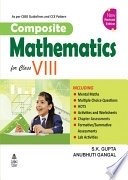
Rs Aggarwal for class 8
Lakhmir Singh’s Science is a series of books which conforms to the NCERT syllabus. The main aim of writing this series is to help students understand difficult scientific concepts in a simple manner in easy language. The ebook version does not contain CD.
Trigonometry (Jee mains & Adv) ~Arihant
1. The book is prepared for the problem solving in Physics 2. It is divided into 13 chapters 3. Each chapter is divided into 3 levels of preparation 4. At the end of the each chapter cumulative exercises for JEE Main & Advanced for practice A common phrase among JEE Aspirants that chemistry is the most scoring subject, but the problems asked in JEE Exams are not directly related but they are based on multiple applications. Introducing the all new edition of “Problem Physical Physics JEE Main & Advanced Volume – 1” which is designed to develop the use of the concepts of chemistry in solving the diversified problems as asked in JEE. The book divides the syllabus into 8 chapters and each chapter has been topically divided in quick theory, different types of Solved Examination. At the end of each chapter there are 3 Levels; where Level 1 ‘Starter Level’, Level 2 ‘JEE Main Level’ and Level 3 ‘JEE Advanced Level’ making a solid preparation. Detailed and explanatory solutions provided to all the questions for the better understanding. TOC Vectors, Calculus in Physics, Units & Dimensions, Significant Figures & Errors in Management, Rectilinear Motion, Projectile Motion, Relative Motion, Kinematics Calculus, Kinematics Graphs, Newton’s Laws of Motion, Friction, Work Energy & Power, Circular Motion.
Principles of physics (wiley)
The 10th edition of halliday's fundamentals of physics builds upon previous issues by offering several new features and additions. The book provides a very robust collection of high-quality problem sets, offering immediate and meaningful feedback to students, along with varying levels of question assistance. In addition to offering the end-of-chapter problem sets, table of contents: chapter 1: measurement chapter 2: motion along a straight line chapter 3: vector chapter 4: motion in two and three dimensions chapter 5: force and motion i chapter 6: force and motion ii chapter 7: kinetic energy and work chapter 8: potential energy and conservation of energy chapter 9: center of mass and linear momentum chapter 10: rotation chapter 11: rolling, torque and angular momentum chapter 12: equilibrium and elasticity chapter 13: gravitation chapter 14: fluids chapter 15: oscillations chapter 16: waves i chapter 17: waves ii chapter 18: temperature, heat and the first law of thermodynamics chapter 19: the kinetic theory of gases chapter 20: entropy and the second law of thermodynamics chapter 21: electric charge chapter 22: electric fields chapter 23: gauss' law chapter 24: electric potential chapter 25: capacitance chapter 26: current and resistance chapter 27: circuits chapter 28: magnetic fields chapter 29: magnetic fields due to currents chapter 30: induction and inductance chapter 31: electromagnetic oscillations and alternating current chapter 32: maxwell's equations; magnetism of matter chapter 33: electromagnetic waves chapter 34: images chapter 35: interference chapter 36: diffraction chapter 37: relativity chapter 38: photons and matter waves chapter 39: more about matter waves chapter 40: all about atoms chapter 41: conduction of electricity in solids chapter 42: nuclear physics chapter 43: energy from the nucleus chapter 44: quarks, leptons and the big bang
Inderbir Singh's human embryology.
Section 1: Surface Anatomy 1. Introduction 2. Surface Anatomy of Upper Limb 3. Surface Anatomy of Lower Limb 4. Surface Anatomy of Thorax 5. Surface Anatomy of Abdomen 6. Surface Anatomy of Head and Neck 7. Dermatomes Section 2: Radiological Anatomy 8. Introduction 9. Principles of Radiology 10. Newer Imaging Techniques 11. Radiology of Upper Limb 12. Radiology of Lower Limb 13. Radiology of Thorax 14. Radiology of Abdomen and Pelvis 15. Radiology of Head and Neck 16. Ossification Centers of Human Skeletal System Index
Certificate physical and human geography
This book is a textbook approach that aims at providing an understanding of our planet's physical topography, climatic and vegetative environment, and the relationship that human beings share across regions. The Physical Geography section deals with topics that span the planet's various topographies like the Earth's Crust, Weathering, Mass Movement and Groundwater; Landforms of Glaciation, The Ocean, Lakes, Coastal Landforms, etc. Each chapter has a questions section to help readers evaluate their understanding of the subject explained in that chapter. Various illustrations and photographs enhance the text, to enable all students to easily understand the concepts. Part two of the book, The Weather, Climate and Vegetation section, covers subjects like different climates and climatic zones like Equatorial, Savanna, Tropical or Arctic climates. Table Of Contents PART I PHYSICAL GEOGRAPHY 1. The Earth and the Universe 1 Exploring the Universe 2. The Earth's Crust 3. Vulcanism and Earthquakes 4. Weathering, Mass Movement and Groundwater 5. Landforms made by Running Water 6. Landforms of Glaciation 7. Arid or Desert Landforms 8. Limestone and Chalk Landforms 9. Lakes 66 General, 10. Coastal Landforms 11. Islands and Coral Reefs 12. The Oceans PART 2 WEATHER, CLIMATE AND VEGETATION 13. Weather 14. Climate 15. The Hot, Wet Equatorial Climate 16. The Tropical Monsoon and Tropical Marine Climates 17. The Savanna or Sudan Climate 18. The Hot Desert and Mid-Latitude Desert Cli-mates 19. The Warm Temperate Western Margin (Mediterranean) Climate 20. The Temperate Continental (Steppe) Climate 21. The Warm Temperate Eastern Margin (China Type) Climate 22. The Cool Temperate Western Margin (British Type) Climate 23, The Cool Temperate Continental (Siberian) Climate 24. The Cool Temperate Eastern Margin (Lauren-tian) Climate 25. The Arctic or Polar Climate .